

The Simple Way White Castle Helped Turn Around Beef's Bad Reputation In The 1920s
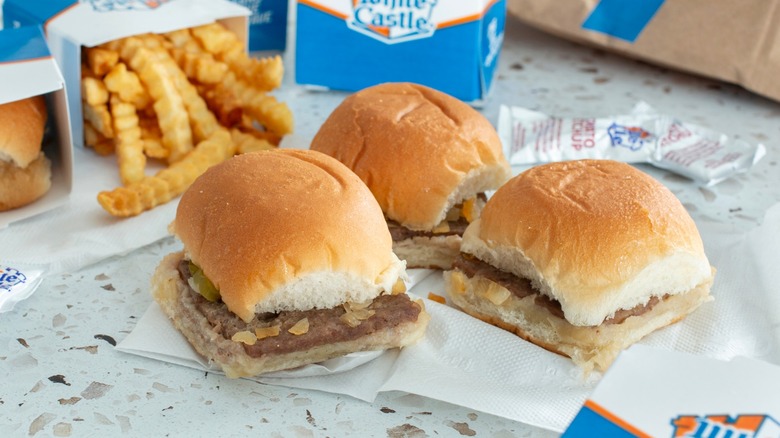
Long before Burger King's flame-grilled Whoppers and McDonald's best-selling menu item had won America's hearts, White Castle pioneered what is now a 221-billion-dollar industry by some estimates. The chain began slinging its signature onion-covered square sliders in 1921, making it the first fast food restaurant in the United States. But when founders Walter Anderson and Billy Ingram set out to put the hamburger joint on the map, they faced a unique challenge.
In the early 20th century, beef didn't enjoy the generally favorable reputation it does today. The 1906 publication of "The Jungle" by Upton Sinclair highlighted the horrors rampant in the meatpacking facilities and deteriorated the public's faith in the beef industry. Years of scandals had led people to view it as unclean meat, and as such, hamburgers weren't a highly sought-after food.
But Anderson and Ingram weren't about to let a little thing like a bad reputation stand between them and success. The entrepreneurial duo drummed up the idea that just a name could combat the negative perspectives towards beef. Their establishment was dubbed White Castle because nothing screamed clean and sanitary more than "white." Meanwhile, "castle" conveyed a sense of strength and dependability. Anderson and Ingram hoped the name and the building's all-white appearance would help customers trust the food's quality.
Beef's bad rap wasn't easy to overcome
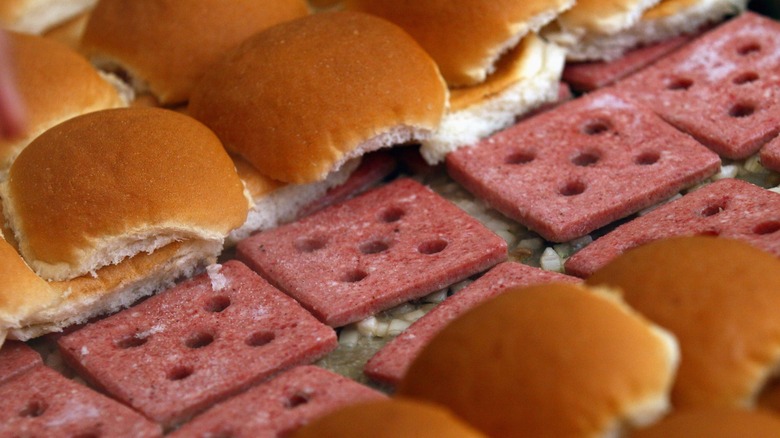
Still, a clever name could only do so much to convince people that beef was safe and nutritious. In the early 1900s, stories about beef containing borax and glycerin, which were used to clean mold off tainted meat, had helped ruin America's appetite for the protein. So did tales about formaldehyde being used to preserve old beef before it was sold to the public. Tuberculosis commonly spread around unsanitary meatpacking facilities, and accounts of rodents, their droppings, and even human tissue being carelessly mixed into the product enhanced America's anti-beef sentiment.
Giving White Castle a name that insinuated cleanliness was somewhat effective at swaying public opinion, but Walter Anderson and Billy Ingram knew more had to be done. They wanted beef to be recognized as safe and good for you, too. The head of a physiological chemistry department at a major university convinced a college student to eat only White Castle burgers during the summer at the company's behest. After consuming sometimes two dozen burgers a day during that time, the student was still standing (and healthy in the chemist's opinion), providing "proof" to the public that beef was nutritious and safe to eat.
The founders also went the extra mile to entice customers by employing women around the country to act as tour guides of sorts for locals. All employees worked under the name "Julia Joyce," showing people around White Castle stores so they could see for themselves how sterile and above board the operation was. It was no simple task, but the efforts by Anderson and Ingram to repair beef's unsavory reputation allowed White Castle to walk so that other beloved fast food staples could run today.