

Why Restaurants Warm Plates Before Serving (It Works At Home Too)
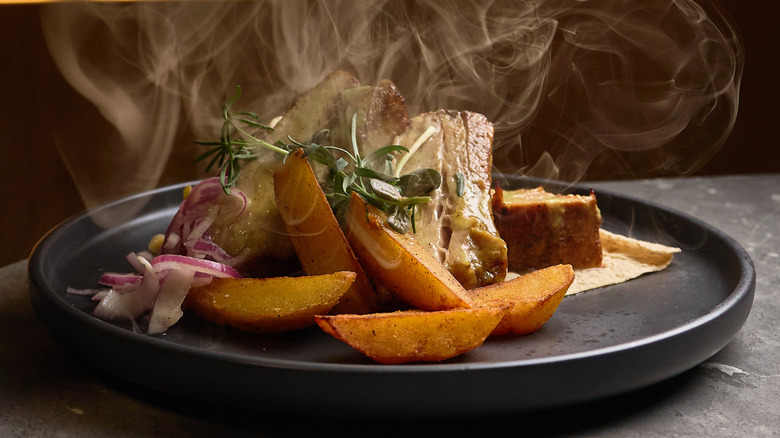
"Be careful! The plate is hot," says a restaurant server as they make meaningful eye contact with you. Sometimes the dishes come out hot because the food hung out under a heat lamp or broiler, but in plenty of other cases, the restaurant has dedicated plate warmers. It's actually one of those restaurant industry secrets that makes your meal more enjoyable, and you can even take advantage of it in your home kitchen. The reason simply heating the dishes makes food better comes down to science.
To explain, let's recall an elementary science class on the topic of conduction. According to ScienceDirect, "Heat conduction is defined as a mode of heat transfer where heat flows within a substance due to the exchange of energy among molecules at different temperatures." Basically, when a hot thing is touching a cooler object, the cooler object will warm up — by way of conduction, that thermal energy is being transferred. In practice, hot food will warm up a cool plate, which means that heat is flowing out of the food into the plate. The result: tepid food and a lukewarm plate.
However, when the plate is the same temperature as the food, the majority of that thermal energy stays put, and if the plate is warmer than the food, it helps the food maintain its temperature while it travels from the kitchen to your table. Now, heat is also lost to the environment (like the air in the restaurant and the towel holding the hot plate), but warming the dishes prevents the food from quickly losing its heat to the plate itself.
Just like at a restaurant, serve food on warm plates at home
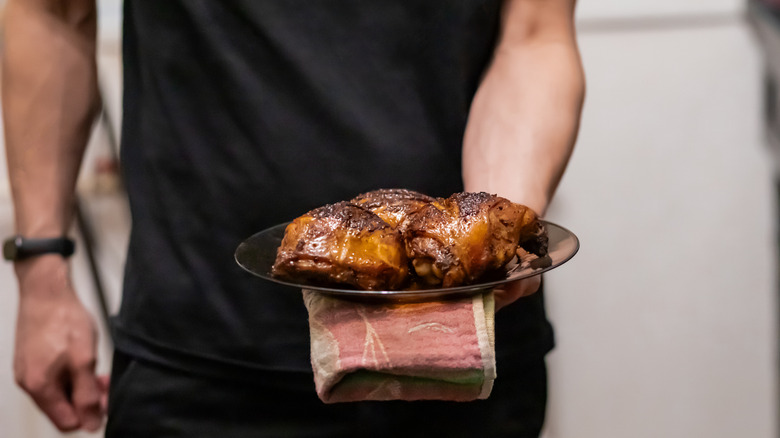
Now, there's no need to invest in a specialized plate warmer when you can easily replicate this restaurant trick at home, but the most important first step you need to take is checking that your dishes are heat-safe. Materials such as stoneware, china, fine ceramic, and certain types of tempered glass and porcelain are okay to put in the oven. Check the bottom of the dish for the fine print, or go online to the manufacturer's page to be sure.
Once you've confirmed that your dishes are safe to go in the oven, put them in while the appliance is still off, and then set it to the lowest temperature. This ensures the plates are warmed slowly, further ensuring that they don't crack.
If your dishes aren't oven-safe but they can go in the microwave, you're in luck! Just pop in a plate or bowl and zap it for a few seconds. The downside here, of course, is that you'll have to heat them one at a time, but this is perfect if you just need to warm up one or two items (or if you don't have an oven). Alternatively, heat a plate using hot water from the tap or a kettle — just make sure to dry it well with a clean cloth before serving your meal. With this simple plate trick, you can elevate your everyday eggs or make your homemade steak taste like it's from a restaurant.