

Why Pork Chops From Restaurants Are So Much Better Than Homemade
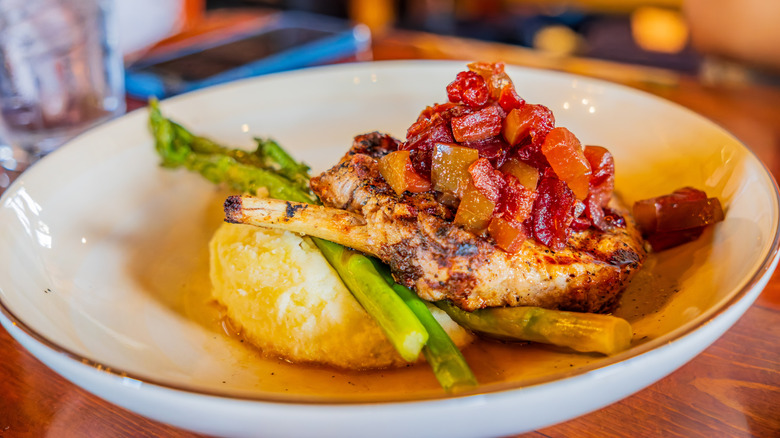
Pork chops are, at times, an underrated protein in the world of meat. While some home cooks love the taste of pork chops made in a slow cooker, many find themselves stuck and unsure how to create restaurant-quality pork chops from the comfort of their kitchens. We spoke to recipe developer and founder of Pinch and Swirl, Marissa Stevens, to get a better understanding of what separates the good pork chops we make at home from the great pork chops we eat at restaurants. "Restaurants start with thick, bone-in chops, get the pan genuinely hot before anything goes in, and finish with butter," Stevens revealed. "Most home cooks skip at least one of these steps. Do all three, and your pork chops will taste completely different."
These three variables come into play in very different ways, but all likely contribute to your favorite restaurants' pork chops. Using bone-in pork chops — Stevens recommended at least an inch thick — rather than the boneless variety leads to more flavorful meat and retains more moisture. Plus, considering just how prone to drying out boneless pork chops often are, bone-in pork chops are understandably considered the far superior option for restaurants.
Furthermore, in the same way that, according to Anthony Bourdain, restaurant vegetables always taste better due to the use of butter, restaurant pork chops benefit greatly from butter being added, especially later on in the cooking process. "Add a tablespoon of butter in the last few minutes and flip often so the chops baste as the butter melts," Stevens advised.
Why high heat is vital to high-quality pork chops
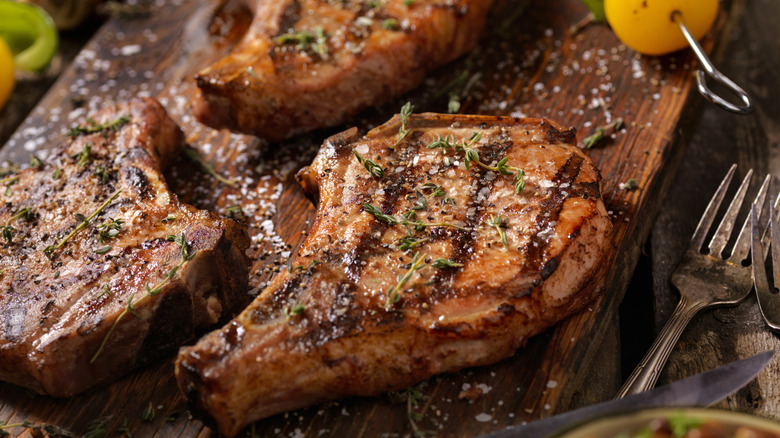
While both the cut of meat and the use of butter are pivotal to great pork chops, the high heat used to cook them at restaurants is arguably the biggest difference-maker of the three. It's vital to create a well-seared crust that can greatly improve a pork chop. "The crust is really what makes or breaks a pork chop," Marissa Stevens reminded. "A great pork chop has a deeply browned exterior that adds flavor the meat alone can't give you. You only get that when the surface is bone dry, and the pan is really hot."
Nonetheless, using high heat often scares those worried about drying out the pork, which is why Stevens advised being incredibly cognizant of the internal temperature at all times. "Pull them at 145 degrees Fahrenheit and rest for five minutes before you cut in," Stevens added. However, another tip to avoid drying out pork chops is to dry-brine them before grilling or cooking. Not only does this help the cut of pork remain juicy, but it also helps make the crust in particular even more flavorful, caramelized, and crispy at the same time.