

Give Alfredo Pasta A Twist With These Easy Noodle Swaps
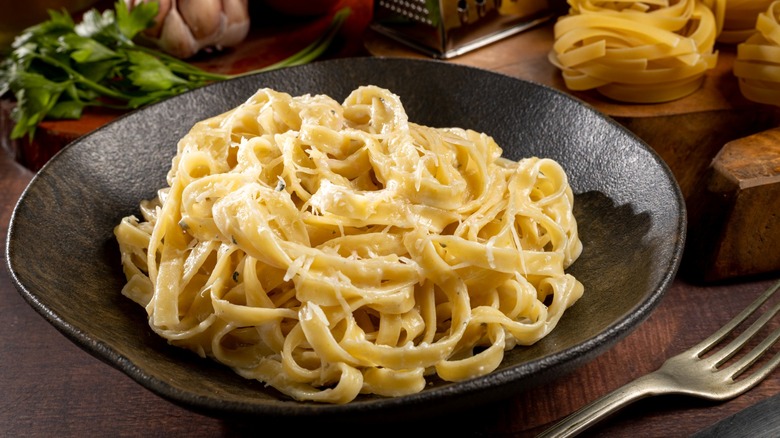
Plenty of complicated Italian dishes aren't enticing to make after a long day, but if you're really craving a taste of the old country, whipping together an Alfredo pasta isn't all that taxing. Whether you're making a luscious three-ingredient Alfredo or giving the sauce a smoky upgrade using bacon (what can't bacon make better?), it doesn't take much time. Still, if fettuccine Alfredo is your go-to when Italian is calling your name, it can get old after a while. Breathing new life into the dish is as easy as exchanging fettuccine for other types of noodles, though it's important to consider why fettuccine works so well.
Angelo Caruso, the chef and owner of Angelo's Ristorante in Stoneham, Massachusetts, suggested making simple pasta swaps that can put a new spin on the dish without manipulating the sauce, creating an appealing new eating experience. "Fettuccine's flat, wide ribbons are ideal for Alfredo because they offer plenty of surface area for the creamy sauce to cling to," Caruso said. "The pasta's chewiness balances the rich, velvety texture of the sauce, creating that signature harmony in every bite."
You can indeed use other pasta shapes, but there are positive and negative impacts. "If you swap in spaghetti, you'll get a noticeably lighter feel," shared Caruso. However, he added that the rounded, slim noodles don't hold onto the sauce quite as well. "The result is a dish that's less cohesive and less creamy, though still tasty," he said. "It's a different experience: more delicate, less indulgent."
The best Alfredo pasta swaps
Angelo Caruso has more pasta swaps up his sleeve, and some offer a different culinary adventure compared to using fettuccine or spaghetti. Two that are particularly adept at getting the sauce to stick to the noodles are tagliatelle and pappardelle. "Both are excellent ribbon-style alternatives," Caruso said. "Tagliatelle is nearly identical to fettuccine but slightly narrower, while pappardelle is much wider, offering an ultra-luxurious, sauce-laden bite."
Using stuffed pastas such as ravioli, tortellini, or tortelloni also works. Because Alfredo sauce generally has an uncomplicated flavor profile, it allows the goodies within to shine. Caruso said, "Alfredo's buttery creaminess complements filled pastas perfectly; it coats the outside without overshadowing the delicate flavors inside."
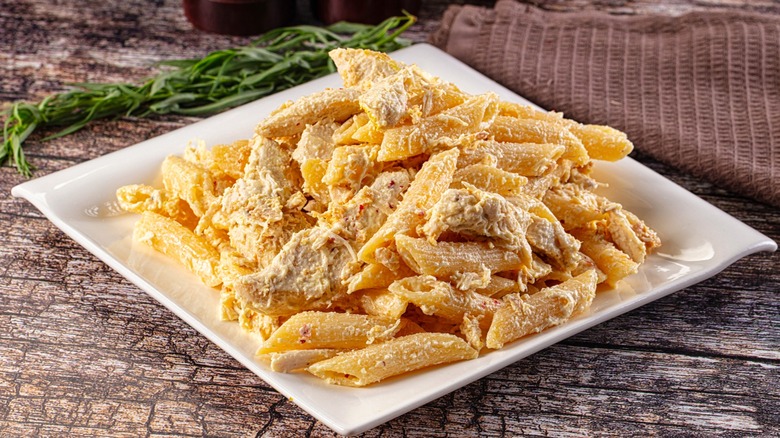
Penne and rigatoni are excellent choices as well, and they are ideal when you're tossing more into the sauce than just noodles. "These tube-shaped pastas trap Alfredo sauce inside and out, giving satisfying bursts of creamy flavor in every bite," Caruso said. "They're perfect for baked Alfredo dishes or versions with added ingredients like chicken, pancetta, or broccoli." Cupped shapes like orecchiette or shells also do a good job holding onto sauce and extras.
If you plan on baking the dish, you can always stick with Caruso's spaghetti suggestion. Instead of the sauce pooling at the bottom, baking it allows the noodles to soak up all that creamy goodness. Think of the pasta as your paint for a blank Alfredo canvas, affording you fresh ways to make an old dish new.