

The Harmful Toxin Hiding In A Popular Type Of Rice
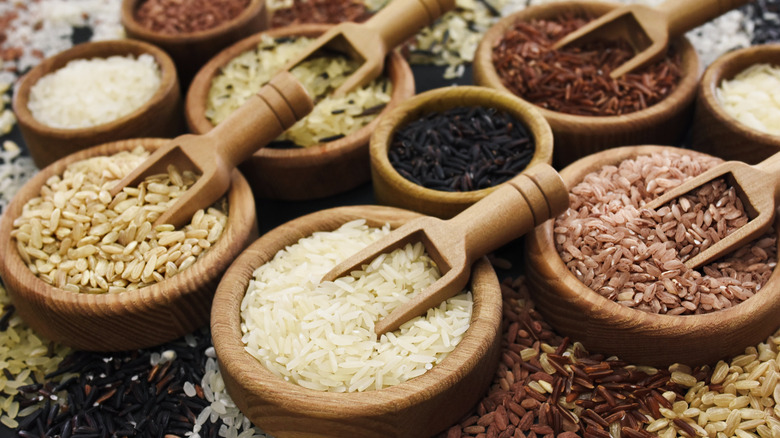
We've long been told that brown rice is healthier for you than white rice, largely because unlike white rice, brown rice is a whole grain. However, there's another side to the story. Brown rice contains high levels of arsenic (the stuff historically used in rat poison), regardless of where it's grown. Before you vow to stop eating brown rice entirely, though, it's important to understand the factors that determine its actual health risk. These include the type of arsenic (organic or inorganic), level of exposure, pregnancy, and age.
You may be wondering where the arsenic is coming from. Well, similar to how lead ends up in food, arsenic is naturally produced by the earth. It first forms on certain rocks and minerals, but over time it seeps into the soil and groundwater. As it moves through this process, it sometimes converts into inorganic arsenic; the more toxic form commonly found in rice. Rice absorbs significantly more inorganic arsenic than other grains — nearly 10 times more — largely because its grown in flooded paddies where the wet soil conditions make it easier for the plant to take up more arsenic. Since brown rice isn't processed to remove its outer layers, like white rice, it retains more arsenic.
Research shows that brown rice grown in the Southeastern United States contains some of the highest levels of inorganic arsenic; between 100 and 150 parts per billion (ppb). However, researchers say there are no major long-term health risks for the average person unless consumed in high amounts daily. Pregnant women and children under five years old are particularly at risk.
The safest brown rice to choose and how to cook it (or what rice to eat instead)
For individuals considered high-risk, experts often recommend limiting or avoiding all rice, not just brown rice. For babies, this includes infant rice cereals. If you're not at high-risk and are a die-hard brown rice fan, some brands may be safer to consume than others. Some popular American brands that produce brown rice have been shown to contain the most inorganic arsenic concentrations, including Ben's Original, Mahatma, First Street, Hannaford, and Kroger. It's worth noting that the brand Lundberg Family Farms has some of the lowest levels of inorganic arsenic across all its rice varieties.
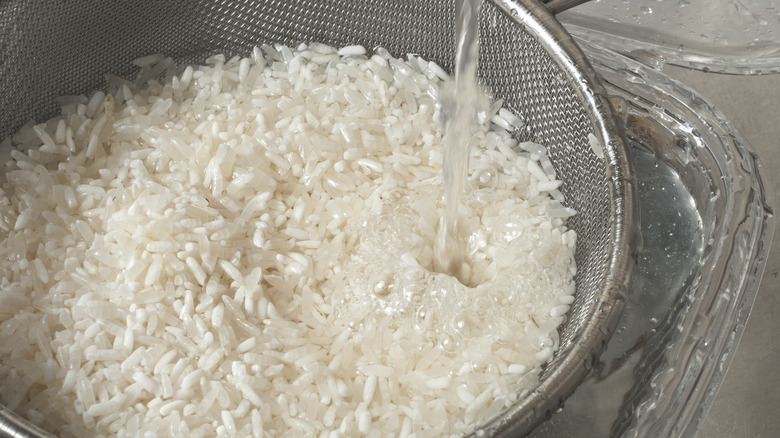
The good news is that how you prepare brown rice (or any rice) can significantly reduce arsenic levels. One of the most effective methods (reducing arsenic by up to 85%) involves cooking the rice using a coffee percolator. If that sounds odd, the next most effective preparation method is more typical. It involves rinsing the rice for several minutes before cooking it in a saucepan with water. With any method it's necessary to rinse your rice for several minutes, but it's nice to know the stovetop absorption method reduces arsenic levels by as much as 73%.
While all rice contains some level of arsenic, certain varieties and growing regions tend to produce the lowest concentrations. These include sushi rice grown in California, jasmine rice from Thailand, and Basmati rice from India.