

When You Should Always Use Room Temperature Eggs
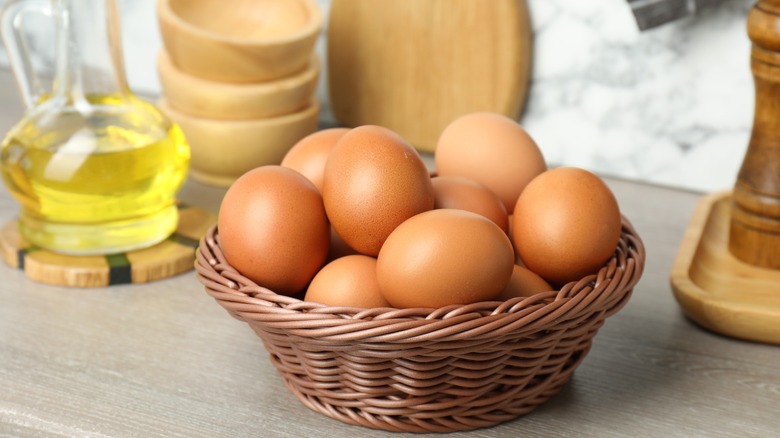
Recipes can be funny. Sometimes they specify that certain ingredients should be room temperature, and sometimes they don't acknowledge temperature at all. Eggs are one ingredient people will notice this with, and according to chef and director of innovation at The American Egg Board, Nelson Serrano-Bahri, whether they're warm or cold can significantly impact the outcome of some dishes.
When a recipe calls for room temperature butter in baking, that's not a mere suggestion. Likewise, the temperature of eggs in baked goods and desserts plays a crucial role in the dish's outcome. "This matters most in baking applications like cakes, custards, cheesecakes, and some batters where texture is important," Serrano-Bahri said. "Room temperature eggs mix more easily and evenly, which can help the final product turn out smoother and more consistent."
In other cases, cold eggs will work just fine. "If you are scrambling, frying, boiling, or making something rustic where precision is less critical, cold eggs are usually less of an issue," he continued. Still, because many recipes don't mention anything about it, knowing when you can toss them in cold and when they need to be room temperature can be challenging.
Serrano-Bahri noted that instead of digging into every recipe that calls for eggs, people should simply focus on why they're needed. "If eggs are being used to build structure, create lift, stabilize an emulsion, or combine smoothly with butter or dairy, room temperature is often helpful," he said. "If they are simply being cooked on their own, it is usually not as important. That functional mindset is more useful in the kitchen than trying to remember a long list of specific recipes."
Warm eggs up or cook at your own risk
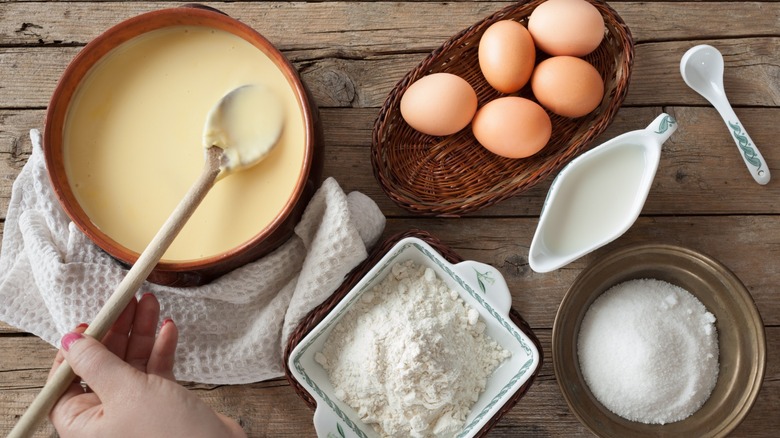
When Serrano-Bahri refers to room temperature eggs, he's not talking about an un-air-conditioned room in sweltering July heat. What room temperature means in baking can vary slightly, but with eggs you're looking for 68 to 72 degrees Fahrenheit. If you need them on the fly, you can put them under warm, running water for 2 to 5 minutes or let them sit in a warm water bath for 5 to 10 minutes. When they're ready, they should feel about as warm as a human touch (alternatively, you can break one open and get a more accurate temperature reading from a thermometer).
However you go about it, you do want to make sure your eggs are warm, considering what Serrano-Bahri reveals can go wrong if they're not. "Cold eggs can make a batter or mixture harder to bring together smoothly," he said. "In creamed cake batters, for example, cold eggs can cause the butter mixture to look curdled or broken. That can affect texture and volume."
It can also affect your favorite desserts. "In custards or cheesecakes, cold eggs may not incorporate as evenly, which can leave the mixture less smooth," Serrano-Bahri said. You could avoid the problem altogether with a three-ingredient, no-bake cheesecake, as it doesn't call for eggs, but it's best to play it safe with a more traditional recipe.
Using cold eggs doesn't necessarily guarantee trouble, but why risk the quality of your cuisine over a step that takes mere minutes? "It does not always ruin a recipe, but it can make the process less forgiving and the final texture less polished," Serrano-Bahri said.