

The Secret To Michelin Star Mashed Potatoes Is One Overlooked Kitchen Tool
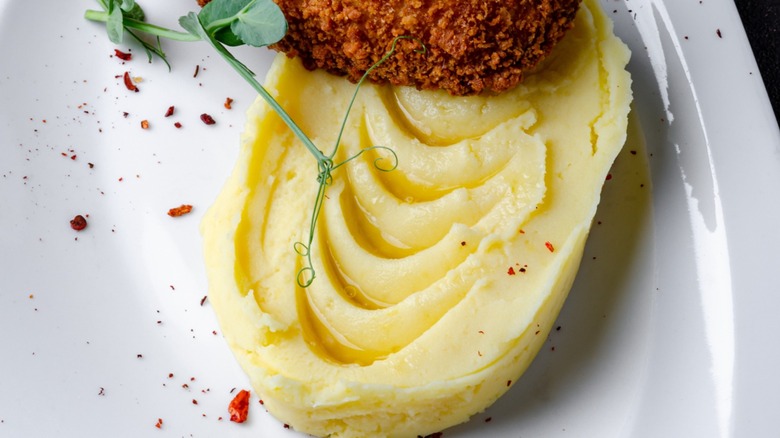
If you like to visit Michelin-starred restaurants or watch cooking shows, you'll know that "fancy" mashed potatoes are very different from the more rustic renditions we tend to make at home. The home cook's mashed potatoes are usually light and fluffy with lumps permitted and varying amounts of butter, cream, or milk added. The mashed potatoes served in Michelin-starred restaurants, such as some of those of the legendary late chef Joël Robuchon, on the other hand, are an ultra-smooth pureed emulsion using a particular type of potato, a huge amount of butter, and a very specific tool — the tamis.
You might have heard of people using a hand blender to make smooth mashed potatoes, but this is actually a major no-no. While it will blitz all of the lumps out of your mash, a blender will also overwork the starch in the potatoes, causing a glue-like texture that nobody wants. A tamis, however, can puree potatoes without overly damaging the starch molecules, allowing them to create a creamy emulsion with the butter and dairy you add later.
The tool looks like a round cake pan, but with a fine mesh strainer on the bottom. Using a rubber spatula or a scraper, you can coax substances like cooked potatoes through the strainer to create a puree with a super-smooth and consistent texture. It takes time and effort, but the results are unbeatable, extra-creamy mashed potatoes.
How to make mashed potatoes with a tamis
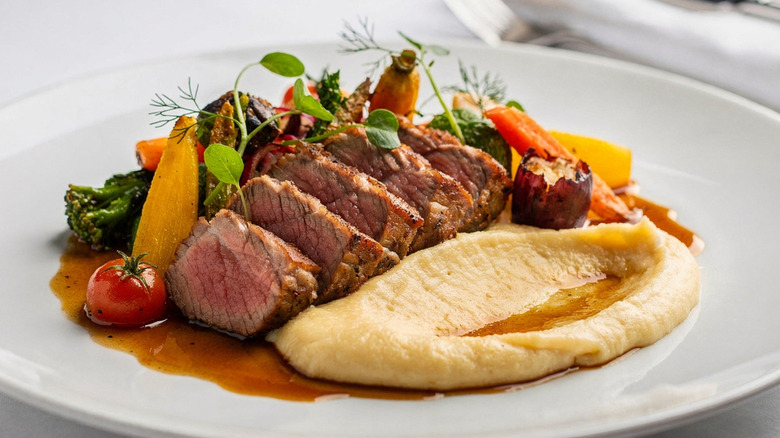
The job of a tamis is to create a consistent and lump-free texture without overworking the potato. It's similar to other mashing and pureeing tools like food mills or ricers, but the mesh on a tamis tends to be much finer. Pressing the cooked potatoes through the sieve using a light force gently separates the clumps without breaking the starch granules.
Some chefs use a ricer or food mill for the initial mashing process, and then pass the potatoes through a tamis for an even smoother texture. It's also possible, however, to coax whole cooked potatoes through the tamis without using the other tools first. When chefs aim for ultimate perfection, they may pass the potatoes through the tamis more than once to further improve the puree-like consistency of their mash.
Michelin-starred chefs often combine the tamis mashing technique with a famous pomme puree recipe that involves emulsifying the potato with copious amounts of butter — but you don't need to go that fancy to benefit from the tamis. You can use it to upgrade your usual mash recipe or make a fancier (but not quite Michelin-starred) version for a special occasion. Just remember that if silky-smooth mash is what you want, then a tamis is what you need — don't be tempted by the ease of a blender, as it will completely ruin your potatoes!