

The Canned Seafood Staple That Instantly Upgrades Mac And Cheese

Americans fell in love with mac and cheese in the years between the Great Depression and World War II, and have remained steadfast and true with the dish for more than a half-century. It's easy to see why: It's comforting, easy to make, and inexpensive (which helped seal the deal for many contending with the limits of wartime rationing). Mac and cheese is also quite versatile, and you don't have to stick to the classic 3-cheese mac and cheese recipe to enjoy it. You can also experiment with different cheese blends and even introduce various add-ins to the mix. For example, you can add umami flavor to boxed mac and cheese by mixing fish sauce with its creamy base. But if you're craving something more substantial — like, a rich protein — you might consider an unexpected upgrade with canned salmon.
At first glance, canned salmon may seem like an unusual choice, especially because chicken and pork are more typical go-to protein picks, and are also more readily available. However, this recipe actually has more practical undertones to it. Canned salmon, for one, is cheap — cheaper than fresh seafood and, depending on the store and brand, can cost less than chicken or pork. It's also comparable to chicken in terms of nutrition — but with more heart-healthy omega-3 — and doesn't require much prep work. Finally, there's canned salmon's distinct flavor. Its savory, slightly briny taste plays well with the sharp and nutty richness of a creamy mac and cheese.
How to incorporate canned salmon into mac and cheese
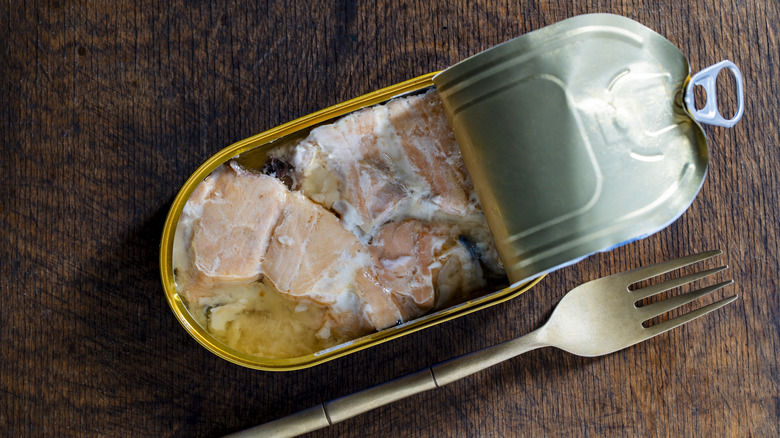
Making salmon mac and cheese isn't as easy and straightforward as simply tossing the meaty chunks of salmon from the can into a bowl of mac and cheese and mixing them with the rest of the ingredients. There are a few important steps you should first take in order to enhance the texture and flavor of canned salmon. The first step involves sautéing chopped onions before adding the fish and seafood seasoning and letting it cook for around 5 minutes. Not only will this remove the excess moisture from the briny canned salmon and allow the fish to absorb the seasoning, but it will also lightly sear the meat, leaving a flavorful brown crust.
The next step is to add red wine vinegar to the salmon after removing the pan or skillet from heat. This further enhances the taste of the fish as it soaks in the complex flavors of the vinegar. Once done, all that's left is to fold the salmon into the pasta dish's creamy sauce (and you can make it even creamier by using a blender). Meanwhile, to upgrade this recipe, consider adding peas, carrots, and corn kernels if you want an ultra-filling meal, not unlike a tuna casserole.