

The Pizza Sauce Mistake Leaving You With A Subpar Pie
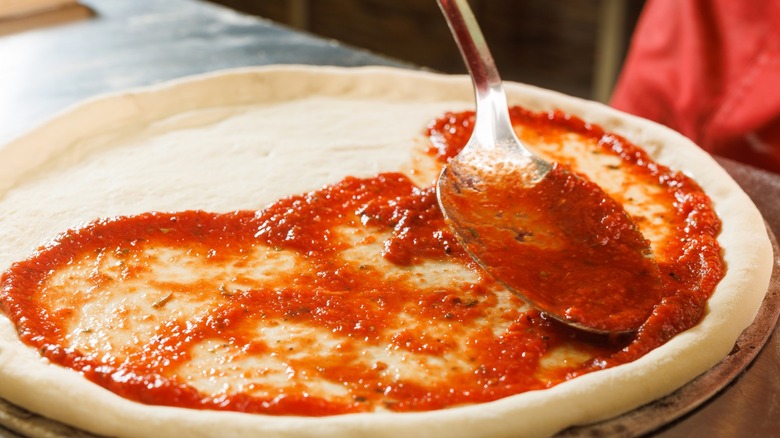
If you asked a dozen people what the most important element of pizza is, you're likely to receive varying responses. You obviously need exceptional dough — unless you're making a one-dish pizza casserole. Many would argue that quality cheese is essential to any pizza worth digging into, but some vegan variations skip that ingredient altogether. For my money, the sauce is the most important aspect of an outstanding pie. It acts as the flavor base that elevates the entire dish. Yet, according to Tony Gemignani, chef and owner of Tony's Pizza Napoletana in San Francisco, too many people make the mistake of overcomplicating it, resulting in a dish that doesn't hit all the right notes.
Gemignani isn't just the owner of an exceptional pizza joint — he's a 13-time World Pizza Champion. The guy knows his stuff, and he urges folks to take a less-is-more approach to making a flavorful pizza sauce. "The most common mistake people make with pizza sauce is over-seasoning it," he said. Being heavy-handed with seasonings isn't such a bad thing if you're making other red sauces, but there's a reason you shouldn't substitute marinara for pizza sauce. "Pizza sauce should highlight the tomato — not mask it," Gemignani said.
Some pizza experts claim you only need three ingredients for a perfect pizza sauce, but Gemignani indicated that folks can be a bit more liberal with ingredients than that. "A good sauce should be naturally sweet with a touch of acidity, without relying on added sugar," he said. "Simple ingredients like oregano, fresh basil, salt, pepper, and a bit of garlic or onion powder are more than enough."
Another mistake that can ruin pizza sauce
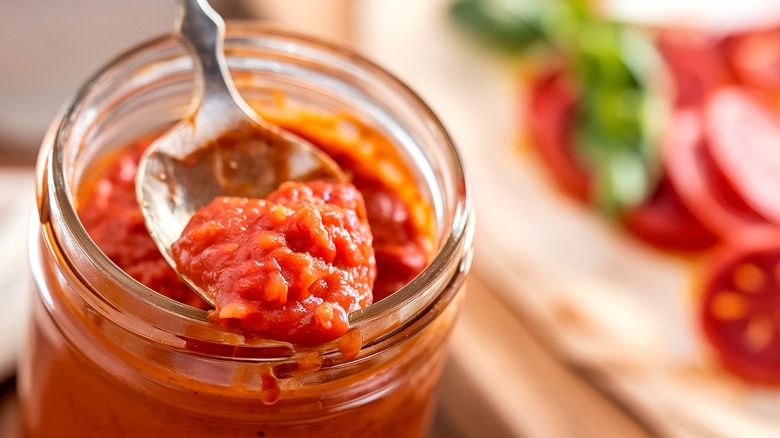
Tossing ingredients into a pizza sauce willy-nilly is a recipe for a convoluted foundation of flavor, but it's not the only mistake that can wreck it. Some dishes thrive on a minimalist approach, and Tony Gemignani noted that pizza sauce should not only consist of limited ingredients, but it also shouldn't be overworked in the pot. "Another key mistake is overcooking the sauce," he said. So, how much is too much cooking? Well, according to Gemignani, sometimes any at all. "In many traditional pizza styles, the sauce isn't cooked before baking — it cooks on the pizza itself," he said.
Even if you do choose to give all the ingredients a chance to meld by heating the pizza sauce, Gemignani noted that it's crucial to preserve the integrity of the main ingredient. "Overcooking it beforehand can dull the fresh tomato flavor," he shared. "This is especially important for styles like Detroit or grandma pizza, where sauce is sometimes added after baking — keeping it uncooked preserves its brightness."
Whether you choose to cook the sauce ever so slightly or forgo heating altogether, another significant step Gemignani indicated is too often overlooked is giving the ingredients enough time to get to know each other. "A lot of people season their sauce and use it immediately," he said. "The issue is that the flavors haven't had time to develop. Letting your sauce rest in the refrigerator for a few hours allows the ingredients to fully absorb and balance out, resulting in a more cohesive, less aggressive flavor."