

The State With The Cheapest (And Most Expensive) McDonald's Big Arch Burger
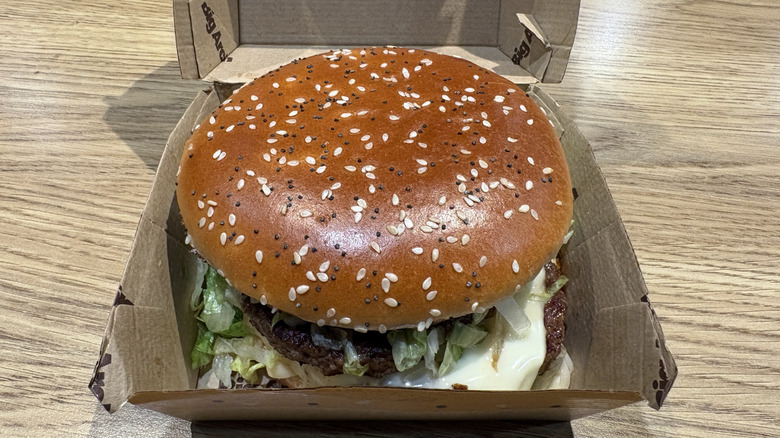
McDonald's Big Arch burger is the fast food chain's new offering and what the company is calling its "biggest and boldest burger yet" (per Restaurant Dive). It is indeed a massive beast of a burger, at least by McDonald's standards, with two quarter-pound beef patties, three slices of white cheddar cheese, crispy and fresh onions, lettuce, pickles, and a toasted sesame and poppy seed bun that's all tied together with tangy Big Arch sauce. Because of the size and the new ingredients, McDonald's is positioning this burger as a premium product and has been pricing it accordingly.
That means it's an expensive burger in relation to all the others on McDonald's menu, and due to multiple factors, its cost can vary widely depending on where you live. According to a report from content marketing agency NeoMam Studios that was shared with The Takeout, the state that has the cheapest Big Arch is Oklahoma, at $8.05 on average. The highest price for the new burger is in Alaska, where it costs $10.32 when averaged out. These numbers aren't entirely surprising when you factor in basic economic factors by region, like ingredient costs, transportation, labor costs (like minimum wage by state), and more — Alaska is just an expensive place overall, and Oklahoma's cost of living tends to be on the low side for the United States.
The cheapest and most expensive burgers can be found in these specific cities
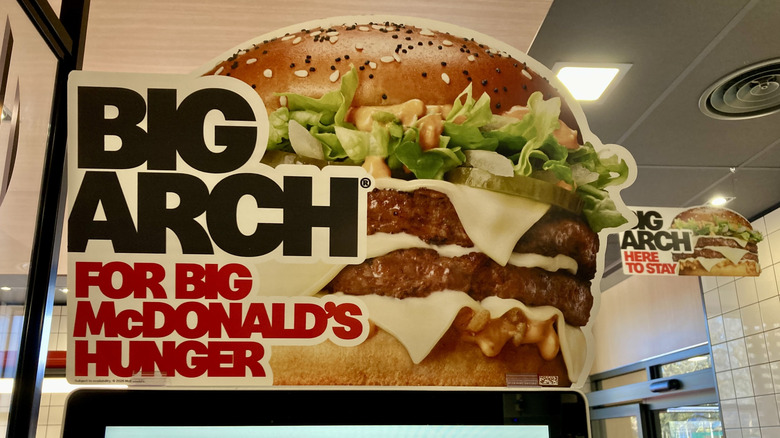
There are a few cities that stand out when compared in terms of extremes. If we're really zooming in, the cheapest Big Arch can be found in Columbia, South Carolina (at $7.46), while the most expensive Big Arch clocks in at an eye-watering $12.99 in Lewiston, Maine, according to NeoMam Studios — this is $2.67 more than Alaska's average price for the burger. But Alaska's got the second-most expensive burger when looking at specific cities, with Juneau's Big Arch coming in at $11.49.
Though the price for the Big Arch may vary, there's no denying how hefty this thing is (I've tried one, and it's genuinely huge — you can see that in The Takeout's McDonald's Big Arch review too). A burger that big is naturally going to command a higher price even at a fast food restaurant. Since the Big Arch is running as a limited-time promotion, it's likely it won't take over as the price gauge for the Big Mac Index — which is an informal benchmark that uses the cost of a McDonald's Big Mac to demonstrate purchasing power parity across the world. But if this burger eventually sticks around in the United States, it could be the temperature check for higher-end fast food spending — for those who can afford it.