

This Cheap Kitchen Tool Can Be Used For Mashed Potatoes, But Should It?
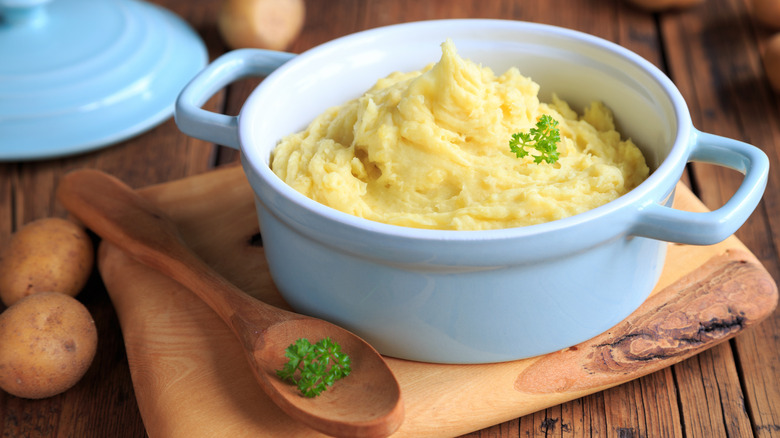
There are a lot of tools in the kitchen that you can use to make the silkiest mashed potatoes, but we wanted to know if this particular cooking utensil that most households contain could be repurposed for mashing spuds. So we spoke to Kathleen Boureston, owner of recipe blog Gonna Want Seconds, about whether or not a fine mesh strainer could potentially help you make some smooth mashed potatoes.
Boureston says it's certainly possible. If you'd like to try it, she says that the cooking method is about the same as most. After boiling the potatoes until tender in salted water, drain them, and then toss them back in the pan on a low flame so that the extra water can evaporate. "Add the potatoes to the fine mesh strainer, and push through with a large wooden spoon. Continue until all of the potatoes are 'riced.' Add hot cream, milk, or butter to the potatoes and stir gently to combine. Add salt to taste," Boureston instructs.
But the truth is, it's not her tool of choice when it comes to making the best mashed potatoes. "A fine mesh strainer can work well as a substitute for a potato ricer in a pinch, but it is a messier, slower process," she says. "Potato ricers are specially designed for the task at hand, relatively inexpensive, and long-lasting." If you're stuck with using a strainer, she explains that you could also have to do some extra cleaning up afterwards. "The drawback mainly is that it can be messy and awkward to maneuver that strainer, plus the catch bowl, and the wooden spoon or spatula used to push it through," Boureston shares.
Why a ricer works better than a mesh strainer for mashed potatoes
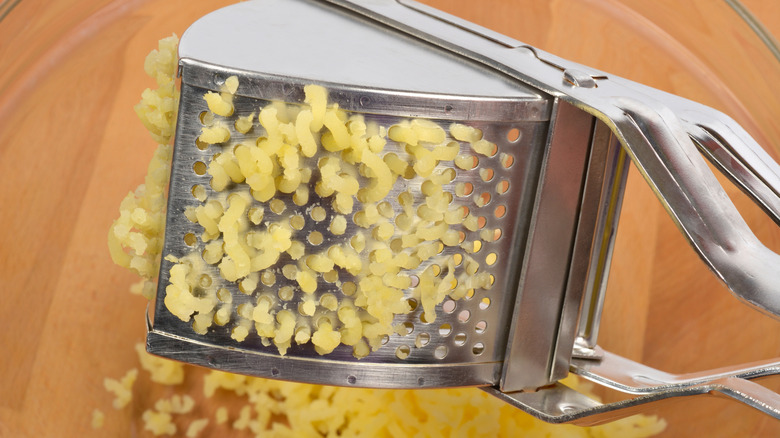
The reason why a potato ricer works so well is because of a few key things. First of all, you can think of a potato ricer like a giant garlic press, and once you squeeze potatoes through one, you'll watch as the softened bits of potato come out in squiggles that are loosely the width of rice grains. But where it truly comes into play is that now that the cooked potato has been evenly broken down, you won't have forced extra starch out of it (which is what happens when you over-agitate mashed potatoes). Too much starch being released is what can potentially create gluey, gummy mashed potatoes – that's why most recipes insist you don't over-mix your mash.
So you can see why a strainer isn't your best bet. If you do insist on using a strainer anyway, or if you don't have any other choice, just know that it does come with a few drawbacks. But if mashed potatoes made from scratch are a regular feature on your dinner table, investing in a potato ricer is your best bet.