

10 Tips For Enjoying Oysters At Home
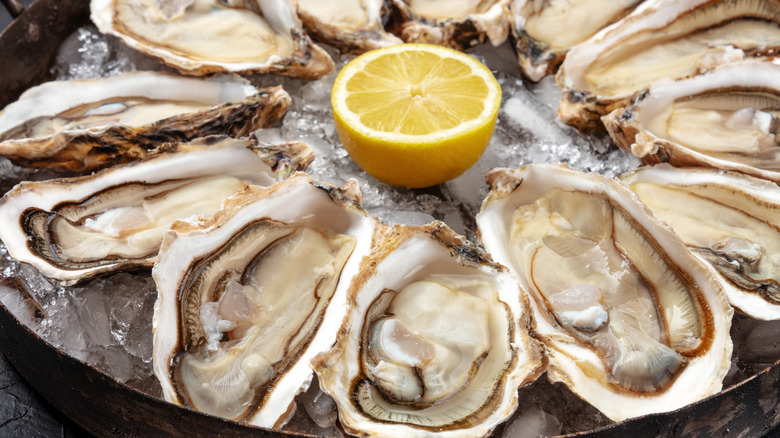
When you picture yourself eating oysters, you might not think of enjoying them at home. They're more likely part of a fancy seafood tower at your favorite upscale restaurant, or maybe you're slurping them down at a seaside shack during summer vacation. But oysters? At home? For many, that's not a go-to. After all, there's so much to worry about: The shucking can be a total pain, and if you're concerned about food safety, you might feel a bit of unease around buying and eating raw seafood unsupervised. (How do you even properly store oysters so that they remain safe to eat, anyway?)
If you've had any of the above thoughts, it's time to put your worries to rest. You can easily enjoy oysters at home, whether you consume them cooked or raw — no, really! To understand how you can replicate restaurant-worthy oysters in your very own kitchen, just take into consideration some of the top tips from industry pros. We spoke with a handful of chefs from around the country, all of whom know a thing or two about the best ways to serve oysters. Here's some of their best advice.
Buy your oysters from a reputable source
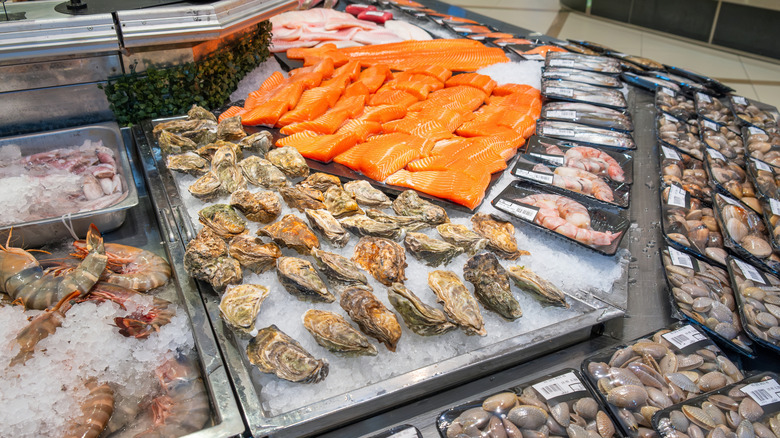
Before you even get into the kitchen, you'll need to ensure that you're buying your oysters from a reputable source. If not, you're going to be in for a bad time, no matter how you prepare those oysters once you get them home.
According to Chef Michael King of New York City's Sungold and NoMad Diner, "Buy from a busy, trusted location. Oysters are expensive, and the last thing you want is to spend that money only to get home and find that half of them aren't fresh enough to serve." King also said, once you've properly sourced them and have them home, "Keep your oysters on ice in the fridge, toward the back." Don't store them near the door, where they'll be exposed to temperature fluctuations. Laurence Cohen, Corporate Brand Chef of Thompson Restaurants, likewise said, "With oysters and any shellfish of any sort, it is imperative that you only buy from approved vendors and fish markets. The danger of not knowing the chain of custody can be detrimental to your health."
In general, to ensure freshness, you should look for retailers that are selling oysters quickly and frequently. Additionally, the store should always be keeping them on ice. You might also want to check that the store is displaying the oysters' harvest date. It's legally required that stores have this info on hand, so if a retailer can't tell you when the oysters it's selling were harvested, that's a big red flag.
Buy pre-shucked oysters
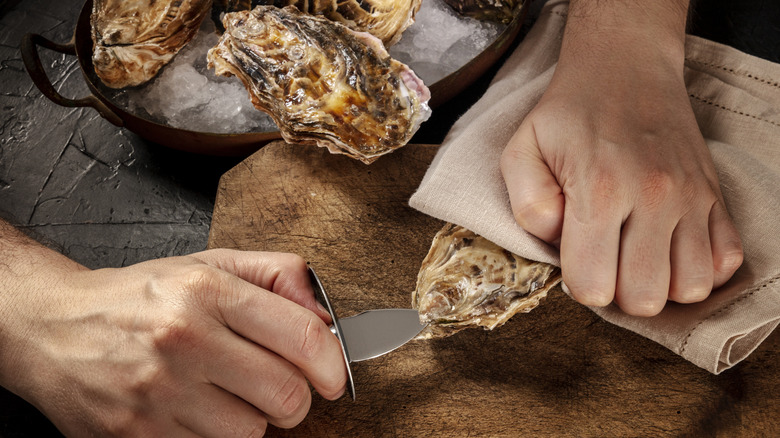
One thing that's going to make your life infinitely easier is buying pre-shucked oysters. As Chef Laurence Cohen explained it, buying them by the gallon pre-shucked will save you time and the headache of fighting to free the oysters from their shells later.
Robert Liberato, Executive Chef at STK, agreed and said, "Shucking takes practice, and you can still create restaurant-quality dishes without being an expert." This is great news for those intimidated by the process, but Liberato also provided some tips for those who want to try the DIY approach, saying, "If you want to shuck yourself, invest in a good oyster knife and a chain mail glove. Watch a few videos, practice, and be patient."
Along the same lines, Chef Michael King offered some words of wisdom: Don't try to go it alone without a proper oyster knife. He said, "Unless you've opened thousands of oysters, don't try to get creative with a paring knife or a wine key. You'll end up breaking the shells and most likely cutting yourself in a spot that does not do well with bandages." If you want to correctly shuck oysters like a pro, first grip the oyster in a towel with the hinge facing you. Insert your knife into the hinge, and then pop the oyster open. Slide the knife along the shell until you've separated the top from the bottom, and there you go.
Buy the right supplies ahead of time
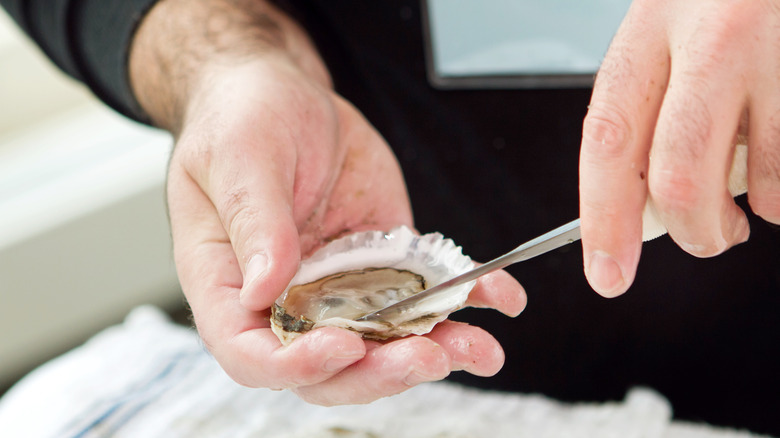
As already mentioned, you're going to need some supplies ahead of your at-home oyster experience. For example, you'll have to grab a good oyster knife and a chain mail glove to protect your hand. And of course, you'll want to purchase your oysters from a fresh, local source. But that's not all; there are a few other supplies you'll need to get sorted.
Chef Mitchell Hesse from Delilah Miami recommended investing in a hard-bristle brush. A nail scrub brush will also work, he said, "to scrub oysters thoroughly. This removes debris and gives them that restaurant-ready finish." Likewise, make sure you also have a strainer on hand. Hesse described how this basic kitchen tool will become crucial to your oyster service, and provided this useful insider tip: "Shuck oysters before guests arrive, placing them in a strainer set over a bowl to catch the brine. When ready to serve, return them to their shells and spoon a bit of the reserved liquid back over each oyster to keep them glossy and plump."
You'll need to get the right kind of ice, too; don't just rely on the standard cubes from your fridge's ice-maker. Chef Michael King said oysters should be served on crushed ice, which will keep them stable and cold the entire time they're out. If you place the oysters on ice cubes instead of crushed ice, when those cubes begin to melt, "they'll tip over and you'll lose that briny liquid."
Don't overcomplicate things
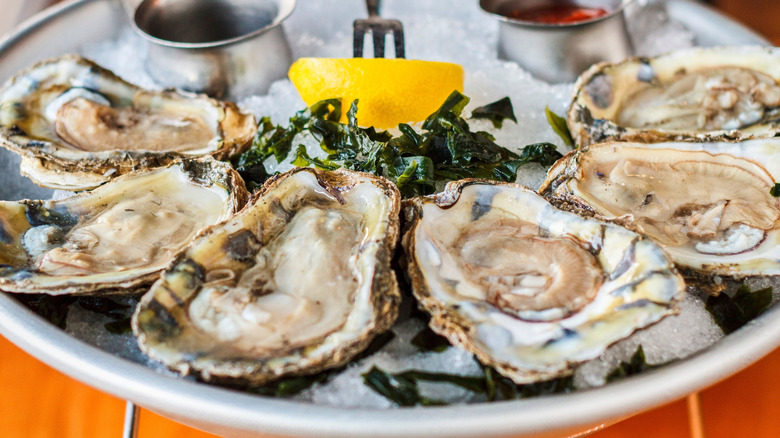
Oysters may feel a little fancy, but that doesn't mean that you have to make things more complicated than they need to be. When it comes to fresh oysters, simpler is better, so don't try to adorn your shellfish with all sorts of extras. This can take away from the experience, rather than add to it.
As Chef Michael King said, "Keep your garnishes simple. A lot of restaurants get creative with mignonettes and sauces, and you can, too, but all you really need is a simple mignonette and some lemon. Oysters are a luxury meant to be enjoyed. You don't need to spend time making something like a passion fruit cocktail sauce for your guests."
This emphasis on simplicity is made easier once you've really focused on buying high-quality oysters in the first place. After all, the better the individual ingredients in a dish, the less finessing they need. Chef Robert Liberato expanded on this point, saying that at his restaurant, "We focus on showcasing premium oysters ... We typically serve them raw on the half shell with mignonettes and cocktail sauce, and also alongside other seafood in our shellfish platter. The key is starting with the freshest oysters possible and keeping preparations simple. You don't want to overcomplicate it." So, on that note, don't wring your hands over a complicated preparation or extra condiment — simple can truly be perfect, and that's definitely the case when it comes to serving oysters at home.
Serve your oysters raw
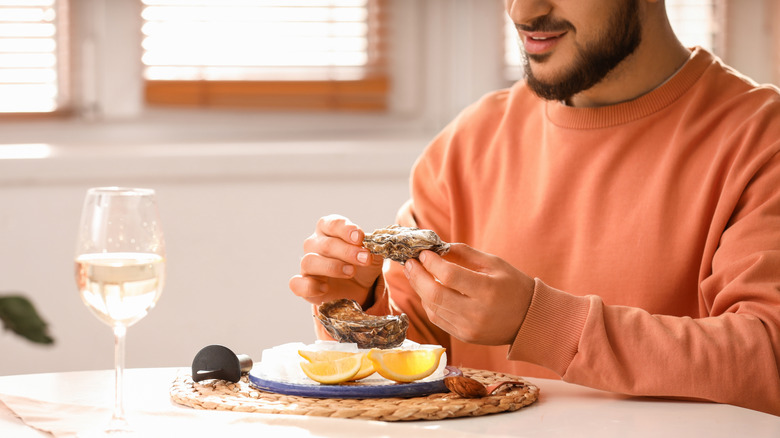
The easiest way to serve oysters at home is, of course, to not even bother cooking them at all. Just go the raw route. While it's true that there are reasons why eating raw oysters is risky, it's not really any different from eating any seafood raw. Sure, the practice comes with a degree of risk, but not a risk so large that it deters the hungry diners all across the planet who are slurping down oysters by the dozens.
If you do decide to take the plunge and serve your oysters raw, you'll want to be sure that you pick the correct mignonette. You'll find a variety of mignonette recipes floating around out there, but traditionally, the requisite sauce served with raw oysters is made simply with vinegar, minced shallots, sugar, and salt. It's typically offered alongside the raw oysters at the time of serving, allowing diners to portion out a bit of the sauce onto their shellfish before diving in.
While you could certainly start by whipping up a basic vinegar and shallot mignonette, consider expanding your options further. David Bracha, Chef and Owner of The River Oyster Bar in Miami, gave us one idea that's creative but still quick to put together: "For raw oysters, I like to do a play on an Asian-style mignonette. In a bowl, combine finely chopped ginger, a green chili with the seeds removed, finely chopped cilantro stems, white soy sauce, mirin, fish sauce, and fresh lime juice."
Fry your oysters
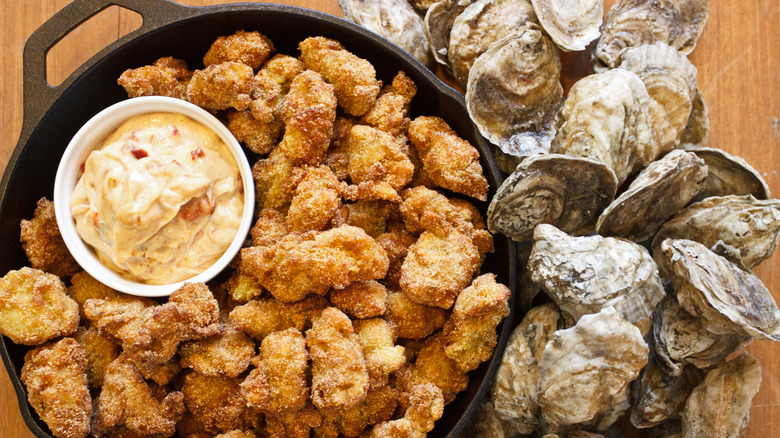
If you don't like the idea of eating raw oysters, that's okay — and there's nothing stopping you from cooking them. Frying oysters is one popular option, and it's a very simple cooking method. According to Chef Laurence Cohen, all you need to do to prep shucked oysters for frying is pat them dry using a paper towel. Meanwhile, put together a quick egg wash by whisking eggs with sriracha, and also a dry mix of cornmeal, flour, Old Bay seasoning, onion powder, and garlic powder. Just as you would when frying pretty much anything, you'll dip your oysters into the egg wash, then the cornmeal mix, and then finally fry them in a neutral oil. They only need about 90 seconds to cook through.
If you're wondering how best to enjoy fried oysters, Sebastian Markowitz, the Chef de Cuisine at Snackbar in Oxford, Mississippi, suggested that they "can be put on po-boys or eaten with comeback sauce, or lemon juice as is." Now, are you wondering, what is comeback sauce? Well, it's a Southern specialty that's a bit reminiscent of Thousand Island dressing. Typical ingredients include mayonnaise, ketchup, Worcestershire sauce, and spices. The original invention of the sauce is credited to The Rotisserie, the first Greek restaurant in Jackson, Mississippi, and you're still not likely to find it in many places outside of the South. Thankfully, it's easy to make your own at home.
Broil the oysters
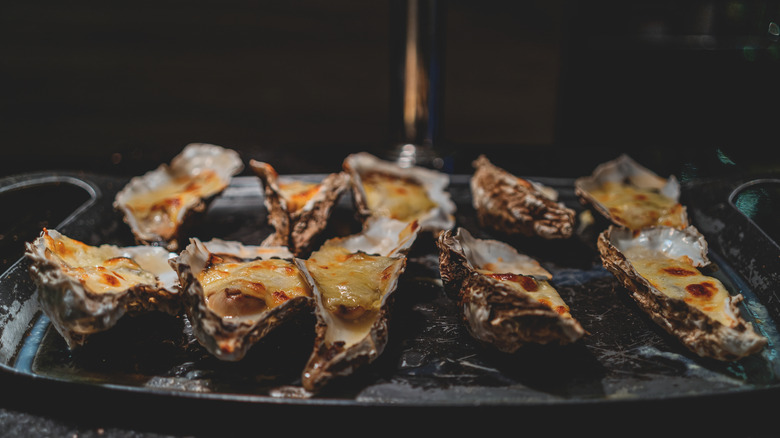
Broiling is another good option for oysters, if you prefer your shellfish cooked rather than raw. Chef Laurence Cohen takes his broiled oysters to the next level by sautéing spinach with garlic and thyme, deglazing the pan with wine and Pernod liqueur, then adding a little butter and lightly cooked, chopped bacon. This creates a topping that is added to each oyster before the oysters are placed beneath the broiler for a few minutes until they're cooked through. Cohen's recipe isn't too far off from a classic seafood dish that's worth adding to your own repertoire: Oysters Rockefeller. The dish is made by broiling oysters on the half shell, then topping them with a combination of creamed spinach and cheese, sometimes with breadcrumbs added in as well.
Some believe that Oysters Rockefeller can be traced back to a snail shortage — a time when chefs were eager to find a replacement for escargot. Meanwhile, the name can be credited to the dish's richness and green hue — because, after all, what is the color of cold, hard cash? As such, connecting Oysters Rockefeller to John D. Rockefeller seemed fitting at the time.
Don't have the deep pockets needed to buy fresh oysters for this dish? Use canned oysters, an overlooked canned seafood overdue for a comeback, to make a "poor man's Oysters Rockefeller." You can literally keep the oysters in their tin, prepare the topping, and then bake the oysters until the cheesy breadcrumbs are nice and golden.
Grill the oysters
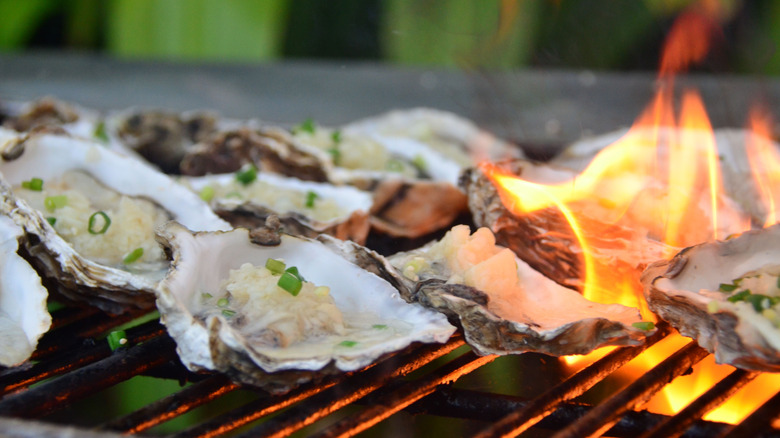
Grilling is a popular option for cooking oysters as well, and it's a relatively easy consideration for the average home cook. According to Chef Sebastian Markowitz, "Grilled oysters can be done open on the half shell or kept whole. When they pop open you can add butter, herbs, Creole seasoning, hot sauce, citrus, or cheese. Make sure the heat isn't too high."
Chef David Bracha likewise advised, "For a quick and easy grilled or roasted preparation, I love making hot sauce butter roasted oysters. Start by bringing the butter to room temperature, then mix in finely chopped garlic, your favorite hot sauce — I like Crystal for this recipe — and a squeeze of fresh lemon juice. Shuck the oysters and drain off the liquor, then top each one with a tablespoon of the hot sauce butter. Then, place the oysters on the grill or in the oven and cook until the butter is bubbling and the edges of the oyster just begin to lightly char."
Regardless of the seasonings you choose, the key is to make sure that you don't overcook your grilled oysters. Oysters that are overcooked will be rubbery and, well ... gross, for lack of a better description. As soon as the oysters begin to open after being placed on the grill, that's a sign that they're ready to be taken off the heat. It should really only take a few minutes, whether you're grilling oysters whole or on the half shell.
Choose the right toppings
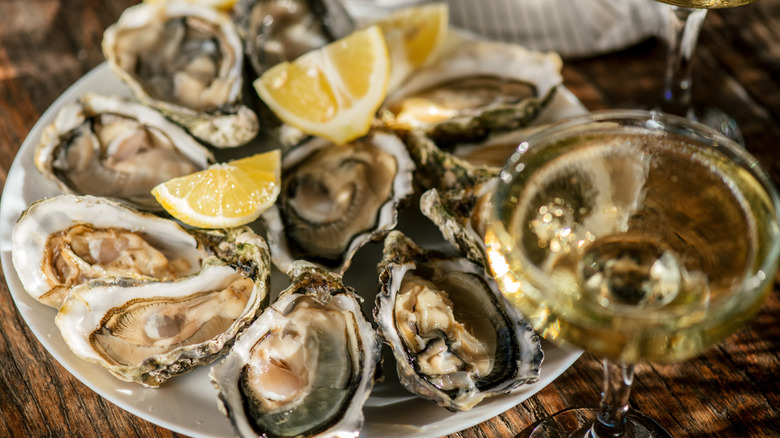
One might argue that the toppings you choose for your oysters are just as important as the oysters themselves — but again, as mentioned, you don't need to go wild. Simple is can absolutely best, but you should still give your few toppings proper consideration. Some foolproof accoutrements suggested by Chef Robert Liberato include cocktail sauce (a classic for a reason), a light mignonette (as already discussed), and fresh lemon juice (for the purists).
If you do decide to use a mignonette and want to play around with things, Chef Mitchell Hesse had some thoughts. "Don't be afraid to experiment. Playing with different vinegars adds depth, while a touch of fresh ginger juice can brighten the flavor and add a subtle kick," he said. "Balance flavor and texture: Whether raw or cooked, oysters shine when paired with contrasting elements — acid, heat, and a bit of richness — to enhance their natural brininess without overpowering it."
Austin Sumrall, Chef and Owner of Siren Social Club in Gulfport, Mississippi, similarly said, "One of my favorite things to do with fresh oysters on the half shell (after eating my fill of straight raw with a couple of drops of lemon) is to rummage in the refrigerator to see what condiments or leftovers might be tasty on an oyster. Combining a few Asian condiments into a spicy mignonette or firing up the oven to roast a few with leftover creamed spinach, so many delicious combinations. The world is literally your oyster."
Serve your oysters correctly
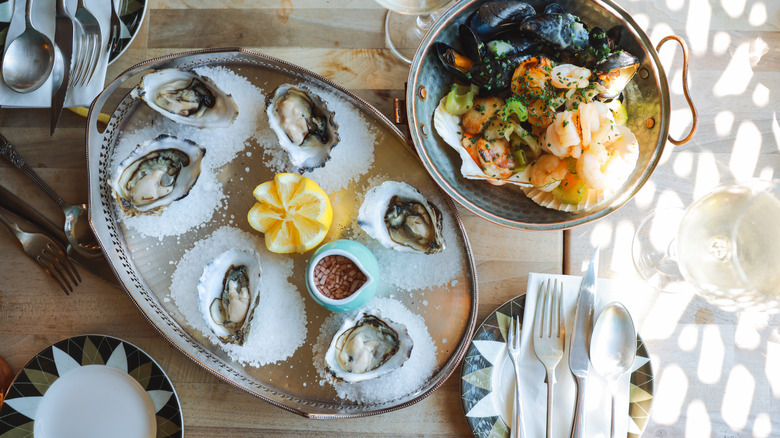
Last but certainly not least, it's important to serve your oysters correctly. No matter how you cooked (or didn't cook) your oysters, this is not a dish that you want to sloppily slap on a plate. Oysters deserve a little respect.
If you really want to wow your guests, Chef Robert Liberato said to offer a combination of both cooked and raw oysters, so there's something for everyone. Additionally, add a layer of rock salt or crushed ice to your serving platter to give the oyster shells something to nestle into; this will stabilize them. Chef Mitchell Hesse, meanwhile, offered another idea for keeping oysters stable on your serving platter: "If serving cooked oysters, create a simple salt paste (five parts salt to one part water) to anchor them on a platter. The texture should resemble damp sand — perfect for keeping shells steady and presentation clean."
Giving each diner a small fork and a range of sauces (like Tabasco) is also a good idea — and if you're trying to decide on wine pairings, Liberato recommends a crisp white or Champagne. If you're wondering why Champagne and oysters go so well together: It's due to the umami notes in both.