

The Olive Oil Aging Myth You Need To Stop Believing
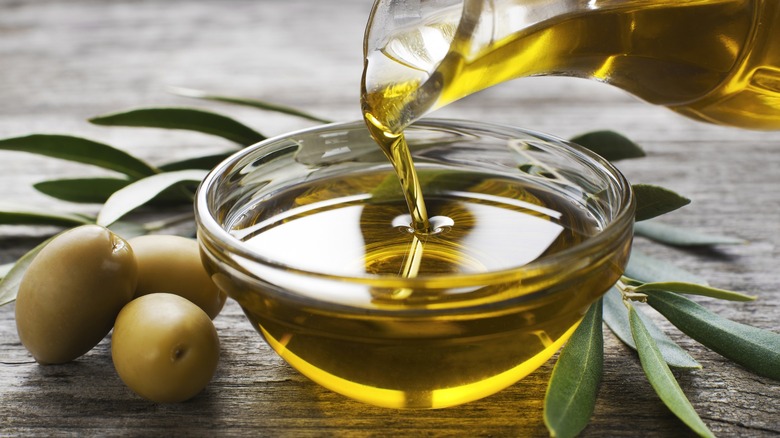
There have always been food myths circulating the globe that some folks believe with the utmost certainty. Sometimes they are presented as time-honored wisdom passed down for generations, while other times some yahoo on TikTok is clamoring for clicks. Either way, it doesn't make them any less false. One popular myth is that, like an expensive, sea-aged bourbon or a fine wine, olive oil gets better the longer you have it in your kitchen. Let's just put this one to bed right away: In no way, shape, or form does aging olive oil improve its quality.
Quite the contrary, as it happens. Olive oil has a fairly definitive shelf life, so letting it sit around for years essentially guarantees that when you finally want to use it, it will be rancid. That doesn't necessarily mean it'll be inedible, but it will be displaying telltale signs that it's gone bad. A musty smell and a weaker flavor are all you'll get from aging olive oil.
Like many foods, olive oil will oxidize as it sits in your pantry. That exposure to oxygen degrades the quality over time, meaning instead of getting better it does the exact opposite. It makes sense that someone who buys olive oil in bulk might want to believe it improves with age, but that's just not the case.
Getting the most shelf life out of olive oil
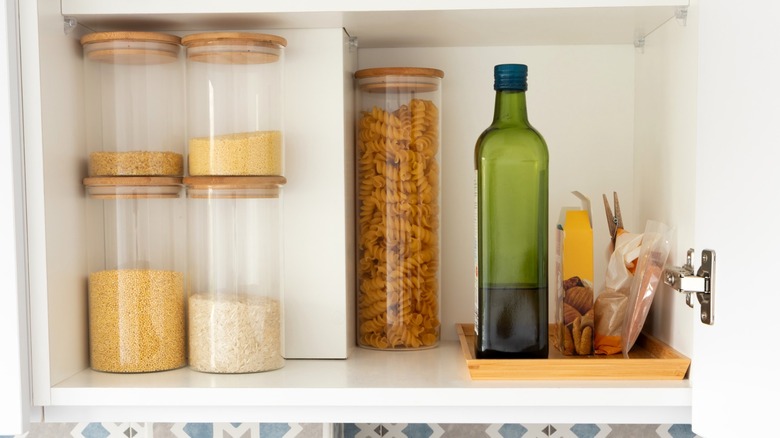
When olive oil is unopened, it will remain a fantastic part of your culinary arsenal for roughly two years from the time it was bottled. However, once you crack open the lid, you only have a few months before you'll start to notice it losing some of its appeal. Opened or unopened, the best way to prevent quality decline is to keep it in a spot that isn't exposed to heat or sunlight. Once a bottle has been opened, ensuring that the lid is closed tightly after using it can reduce its vulnerability to oxidization, giving you a little extra time to use it up before it starts to turn.
Many brands of olive oil won't print the date it was bottled on the label, but companies will typically stamp a best-by or use-by date on the package which at least reflects the bottling date. For first-rate flavor, it's crucial to keep that date in mind. If you have more than one bottle, use the older product first before it begins to go bad. You can freeze olive oil, but if your intention is to extend the shelf life that way, you'll be sorely disappointed. It won't preserve the quality any more than storing it at room temperature, although it does allow you to plop an olive oil cube out of your ice tray for convenient use.