

11 Classic Hawaiian Comfort Foods That Need To Be On Your Radar
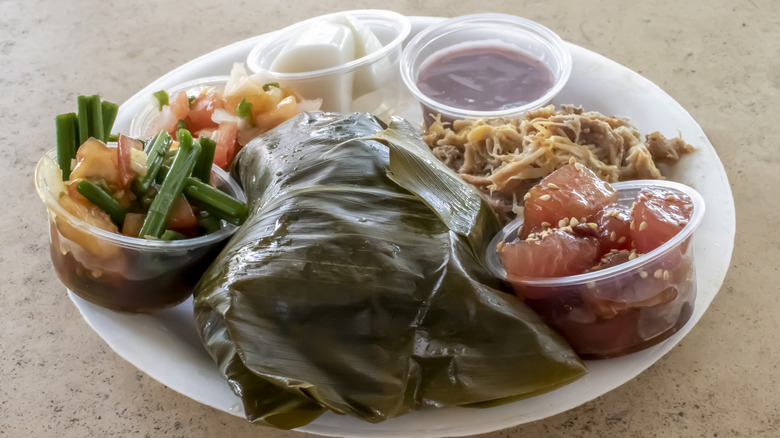
It's the land of rainbows, where warm ocean breezes dance along sun-kissed shores, while waves roll in with steady, soothing rhythms (and maybe towing a surfer or two). Of course, we're talking about Hawaii, where even the air breathed seems to have a healing, calming quality. Here, the days unfold gently, and locals live life on a slower time schedule. Nothing feels rushed, and all things are appreciated and revered. Life itself is savored, and this same spirit extends to Hawaiian food.
For locals and native Hawaiians, the cuisine of the islands is deeply connected to everything that surrounds, from the land itself to the sea, and even the community. As sure as one can close their eyes and picture those waves rolling in, those golden shores, and those island sunrises, the food served in Hawaii also paints quite the vivid picture, filled with aromatic fragrances and unique tastes and flavors that just can't be found anywhere else in exactly the same way.
It's a cuisine that has sparked curiosity in every corner of the globe, with chains featuring Hawaiian foods among the fastest growing restaurants in the U.S. This tracks, as it is just so 'ono (delicious in Hawaiian). And while you can visit the land of Aloha in person to sample these finds at one of the best U.S. food festivals, in the meantime, here are 11 classic Hawaiian comfort foods that need to be on your radar.
1. Loco moco
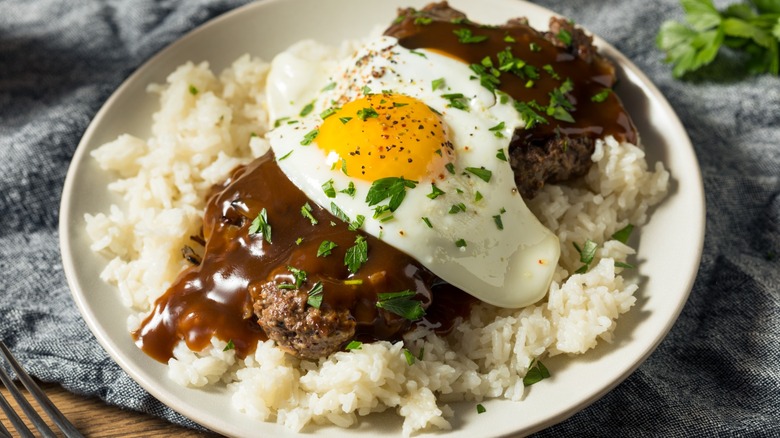
Imagine a warm plate resting in your hands. You're seated by the ocean as gentle island air drifts by. On that plate is loco moco, its fluffy white rice served with a sizzling hamburger patty stacked on top, plus a draping of richly satisfying brown gravy that's giving YES vibes with every forkful. But that's not all. The crowning feature is a perfectly fried egg acting as one final piece of flair, its still slightly runny yolk just waiting to spill across the meal, making each bite mouth-wateringly Hawaii to its core.
This dish traces back to the 1940s in Hilo, where some teens simply wanted an affordable and filling meal ... besides a boring sammie. Even the name carries a playful origin, born from a nickname of one of the youths, and a soft spot for a rhyme. Loco moco has since traveled far beyond its Big Island diner beginnings to become a trending staple across all the Hawaii islands, appearing on menus everywhere from local eateries (like the must-try drive-in restaurant and Oahu favorite, Rainbow Drive-In) to home-made renditions showing up at neighborhood gatherings in the backyard.
Variations have grown and evolved, now featuring everything from Spam to teriyaki beef, but the Hawaiian heart of the dish remains fixed. The very essence of loco moco is simplicity and accessibility to all. It's a food celebrating that feeling of being full, content, and completely at ease — and almost nothing is more Hawaiian than that.
2. Spam musubi
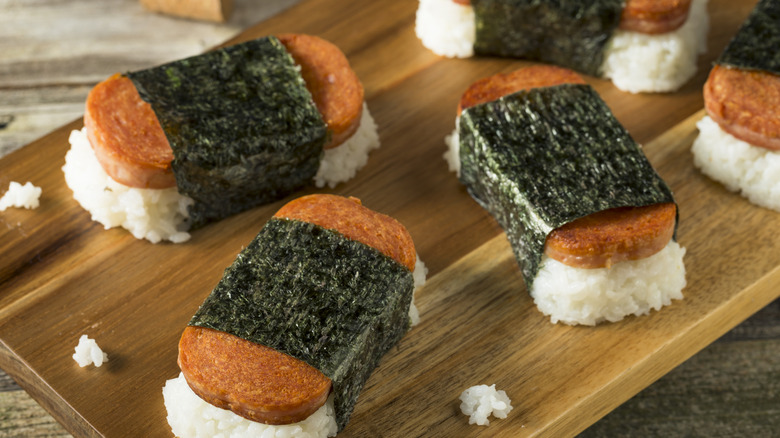
Long before 7-11 became iconic for slinging its scrumptious variations, the Spam musubi was already a daily staple in Hawaii. It's easy to see why, as it fits seamlessly into island life — imagine the warm sun on your skin, the sound of the ocean waves nearby, and your hand filled with a tasty treasure neatly ensconced in nori ... all the better if you've just come in from a swim or surf and need a quick fix.
For those unfamiliar, Spam musubi showcases a slice (let's call it what it really is: a big old slab) of Spam, which has been grilled and sometimes even caramelized using a thin glaze. This Spam portion is then perched on a packed-down handful of rice, before being banded together tightly in a single, wide band of nori. Basically, it comes together to form a compact block of salty, sweet-tinged, and oh-so-satisfying bliss that makes one want to say "bless you" to whoever invented it.
Speaking of that, there is an excellent reason why Hawaii loves Spam. The product first found its way into Hawaiian kitchens during World War II, when its long shelf life made it a super practical pick. As years went by, locals embraced it, weaving it into their everyday cuisine in creative ways. At the same time, Japanese culinary traditions (think rice-based snacks like onigiri) were simultaneously shaping Hawaii's food scene. And, voilà: The fusion of these dual influences birthed the gift that is Spam musubi.
3. Poi
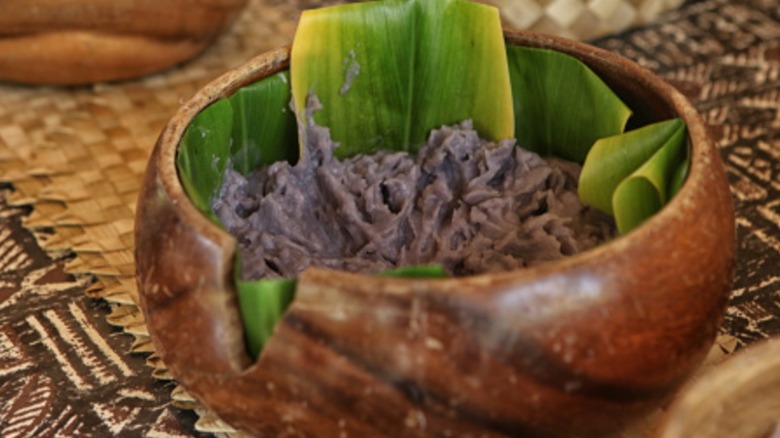
Upon first glance, poi is quite the curiosity. Some are timid to try it, not knowing quite what to expect from the smooth, pale, greyish gelatinous goo that shows up on many a Hawaiian plate. But don't let its appearance fool you — poi possesses both a taste and cultural importance that's seriously special. Made from taro root cooked until tender, then peeled and pounded, poi is created when this concoction is mixed with water, slowly, until it turns into a paste-like consistency and texture that results in a velvety mouthfeel.
It's a process not to be rushed, and one requiring patience, which only adds to its beauty. Ideally, when prepared the right way, poi's thickness will lend itself to being enjoyed the traditional way, using just your fingers to scoop it up and savor. As for its unique flavor, it's gently sweet, accompanied by a telltale zing of tang that renders it nearly impossible to put into words. The fact that the taste also changes depending on how fresh it is also contributes to the wide range of descriptors (poi takes time to appreciate, and the sour fermented iterations aren't for everyone).
Often served as an accompaniment to other dishes, the dish also carries a mighty cultural identity as a long cherished mainstay. In fact, some families even offer poi as one of the first foods introduced to their babies, which tracks, as the islands see it as a true and pure element of sustenance and nourishment.
4. Kalua pig
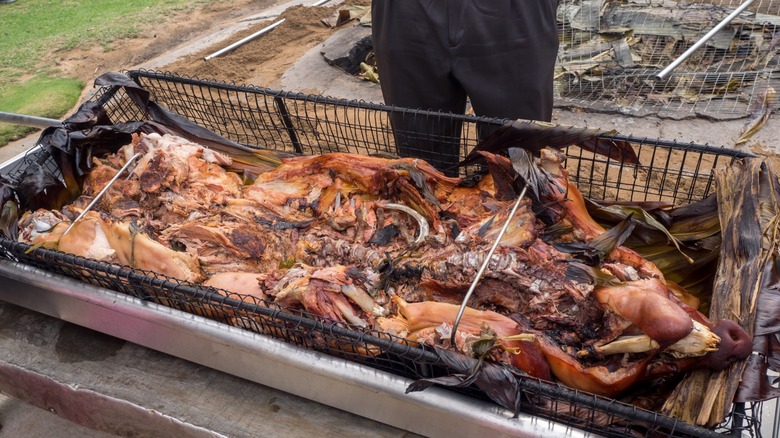
Kalua pig is a common dish in Hawaii, with the state's best hole-in-the-wall restaurant even utilizing this succulent meat in its most iconic sandwich. But what exactly is it? Well, what it isn't is fast food. Instead, the preparation of Kalua pig is a slow, intentional cooking process that takes place underground, combining simple ingredients in a subterranean "oven" (known as an imu) that results in such mouthwatering and tender meat that it feels like sheer sorcery.
The magic of this is that the pork meat is left to slow-cook for hours. Some Hawaiians even set neighborhood gatherings around it, complete with ukuleles and plenty of spirits, camping overnight to await the marvel of a meal that will then be shared in community. These hours allow the pig to absorb all heat, smoke, and moisture, making the end result a whole heck of a lot of mmmmm.
Let's talk specifics, though, as some may still be confused. First, a pit is carved deep into the earth, then usually lined with hot stones heated by a fire. Next, layers of banana or ti leaves are added — this will harness the steam that will infuse the meat with all that fabulous flavor. The seasoned pork is placed inside this makeshift oven, covered, then left to cook slowly — upwards of six to eight hours. When it's finally uncovered, the meat is as locals would say, "broke da mouth," practically falling apart (which is an excellent thing).
5. Lau lau
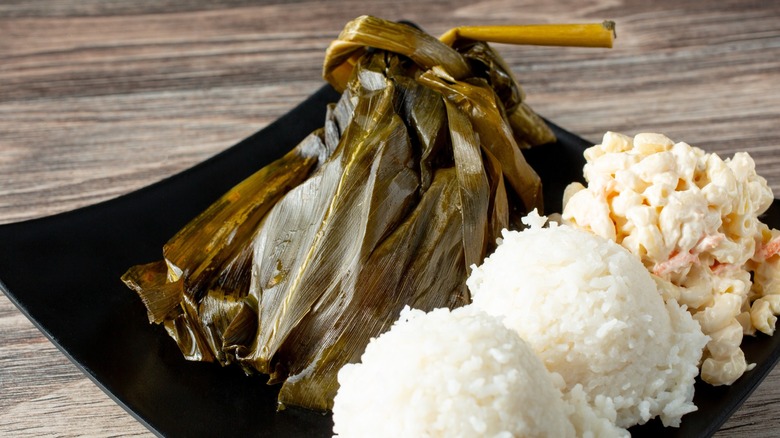
Forget Christmas gifts; unwrapping a fresh-made parcel of lau lau is the real present to savor when in the islands. Imagine slowly peeling back ti leaves, being pleasantly bombarded with an enticing array of aromas carrying every scent of the islands. And what's waiting inside this bundle of joy? A filling (ensconced in taro leaves) featuring tender portions of pork and butterfish that have been steaming, steaming, and steaming some more, just awaiting to unfold for your enjoyment.
Deeply rooted in ancient Hawaiian tradition, lau lau is more than an item on a menu or recipe written with words. The name itself nods to the preparation process (lau lau means leaf, leaf), where layers of taro leaves — aka luau leaves — enclose something sustaining inside them. The fact that taro are the type chosen is intentional — as with poi, it's an element tied to the essence of island identity and also considered to be a vital, even sacred, plant.
As for the outermost wrapping, made from sturdy ti leaves, this even has meaning, not only serving a purpose by holding everything together during the long cooking process, but also symbolizing protection and ritual. Traditionally, lau lau bundles were, like Kalua pork, placed in an underground imu, where they would slowly steam for hours alongside other foods. Today, modern kitchens may use ovens or steamers, and variations may include chicken, beef, or other fish — but the spirit of the dish doesn't waver.
6. Saimin
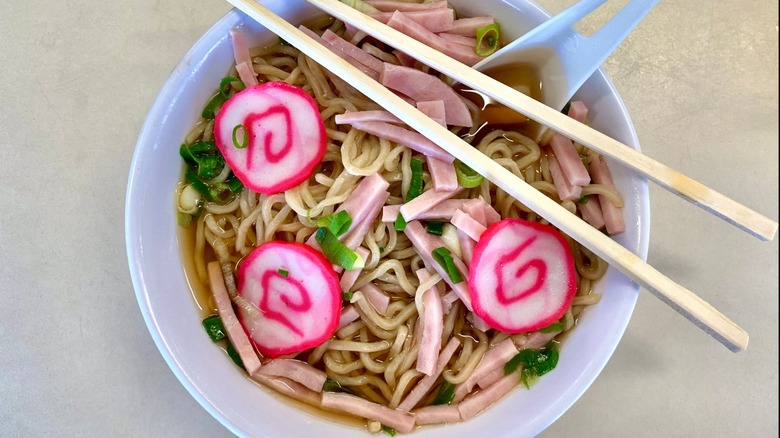
Like the mainland's version of old-school chicken soup (which famously soothes the soul), there's something truly comforting, maybe even healing, about spooning up a steaming bowl of saimin. The light broth swathing soft wheat noodles makes every sip and slurp stray into sublime territory. Topped with slices of meat, fish cake, and green onions, this is one dish that doesn't pull any punches. And if it's being enjoyed under an island sunset after a day of frolicking in the sea and sand? Chef's kiss.
Contrary to what some may assume, saimin wasn't originally ladled from a fine dining restaurant tureen. Instead, this dish can be traced to Hawaii's sugar plantation days, which saw field workers from every corner of the world (Chinese, Japanese, Filipino, the list goes on) bringing their own unique culinary traditions to the table. What resulted is a blending of ingredients and techniques that combined to create something entirely new: the sublime noodle soup we now know as saimin.
Pretty soon, saimin became an everyday enjoyment in the islands, where it was frequently sold at tiny stands specifically serving laborers working long hours. It was the perfect meal (affordable, filling, easy to prepare), which made its popularity fan out far, across all the islands. Eventually, it found its way into every establishment and island bowl, from restaurants to snack shops, and even featuring on fast-food menus. All we can say is mahalo (thank you) to those workers, bringing those flavors and ideas.
7. Poké
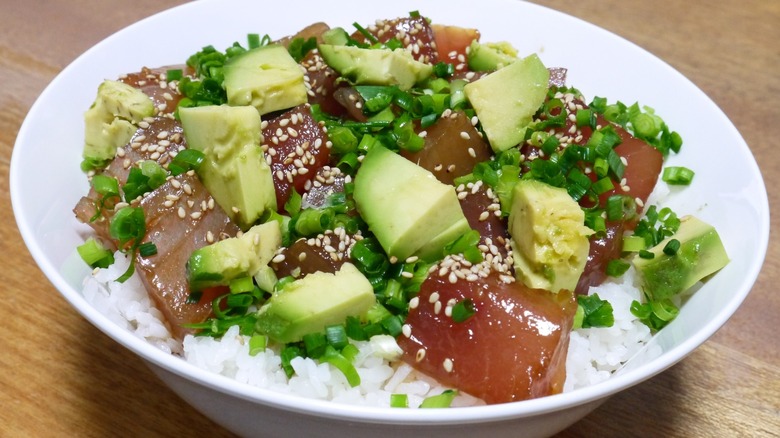
Listed among the best regional foods you can get anywhere, poké is deeply tied to Hawaii, yet has grown in popularity that's now reaching across the globe. Fresh, light, healthy, and satisfying, poké is inextricably linked to the islands' ocean tides, thus capturing the true essence of Hawaii. Imagine standing near the shoreline, the salt air lingering as the day's catch is transformed into your ready-made lunch. Cubes of raw fish (most often ahi tuna) are lightly tossed with soy sauce, sesame oil, and onions, coming together for a dish that feels as alive as the island waters it came from.
The origin story of poké traces straight to native Hawaiian fishermen, who prepared freshly caught reef fish by slicing it into bite-sized pieces before seasoning it with whatever was available (sea salt, seaweed, crushed kukui nut). As new cultures arrived in Hawaii, poké began to evolve, with Japanese influence (seen in ingredients like soy sauce and sesame oil) added to the mix. Over time, ahi tuna became the go-to anchor for meals, then the serving of this preferred and readily available fish over a bed of rice solidified into what we now officially know as poké.
Today, poké exists in many forms, from traditional preparations (you'll see it wolfed down by surfers from plastic bowls containing simply a scoop of rice and seasoned ahi cubes) to modern bowls filled with a dazzling array of pretty fancy pants toppings or add-ins. Any way you scoop it, it's onolicious.
8. Malasadas
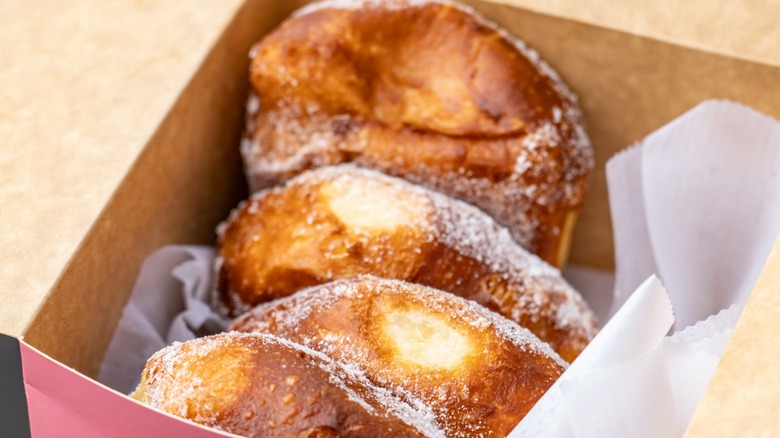
Leonard's Bakery, considered the best donut shop in the state of Hawaii, draws locals and visitors alike thanks to its famous mouthwatering malasadas. There's a distinct spark of joy that bubbles up when biting into a still-warm Hawaiian malasada, letting that straight-from-the-fryer bliss bring all the comfy, cozy feels. The outside is perfectly crisp (having been deep-fried to golden goodness), with a generous sugar coating to boot. Inside, that crunch of an exterior gives way to soft airiness that is epic as is, but sometimes filled with even more sweetness and flavors to up the ante.
Though now deeply woven into Hawaii island life, malasadas first began across the ocean, in a whole different set of islands (the Azores off the coast of Portugal). Brought to Hawaii by Portuguese immigrants arriving to work in the sugarcane fields, these fried dough treasures quickly caught on in popularity. Soon, a traditional Portuguese recipe grew into something uniquely tied to the islands — you guessed it, the modern day malasada.
Before you dare to lump it in with a donut, a malasada would have you take pause. This pastry treat (thanks to being enriched with eggs and milk) boasts a texture far richer, more dense, and infinitely tender than any run-of-the-mill donut. What's more, once these beauties are fried, they're then rolled in sugar, with many malasada iterations even including various fillings: think custard, chocolate, or tropical flavors like coconut and guava.
9. Manapua
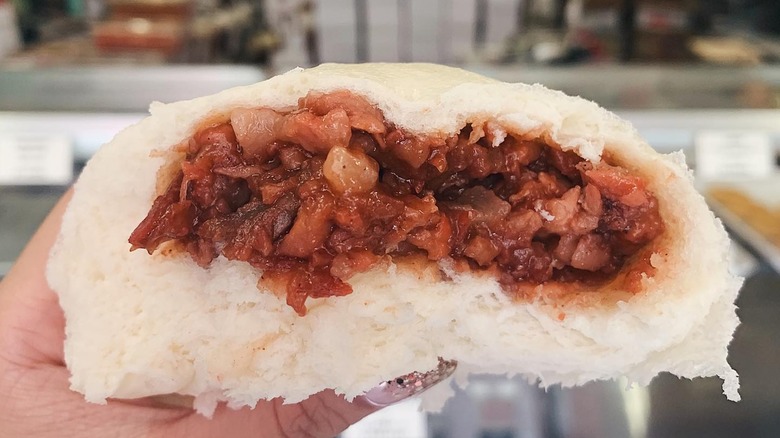
First impressions of Hawaii manapua may deceive. After all, many will mistakenly lump these island gems right in with Chinese steamed pork buns. And while there are indeed similarities (we'll get to that a bit later), Hawaii's version stands alone. Upon first glance, what appears to be a simple round bun, holds inside delectable delights showcasing myriad options. Manapua can be steamed or baked, with the filling most often seen being the tried-and-true char siu pork.
As alluded to above, Hawaiian manapua can trace its beginnings to Chinese char siu bao, which was brought to the Aloha State by immigrants coming to work on the plantations. But the Chinese version did not stay as such, thanks to islanders creating their own unique version (larger in size, plus adding various fillings spanning far beyond basic pork). You can even find sweet fillings for manapua (coconut, red bean, and Okinawan sweet potato to name a few). The name manapua itself can be attributed to local pidgin, meaning something akin to "delicious pork thing," which feels ... fitting?
The manapua also holds special sentimental meaning for Hawaiians. You see, these pastries are attached to a story, and Hawaiians love to talk story. This tale involves more of a tradition, in the way of the Manapua Man. Basically, he is the equivalent of the mainland's ice cream man, with traveling vendors of this cherished pastry canvassing neighborhoods and bringing their warm, pillowy buns to produce smiles and sweet memories.
10. Haupia
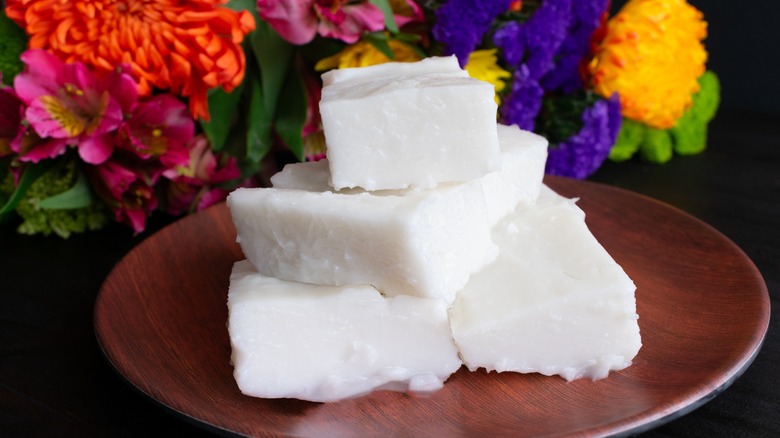
There is perhaps no better word to describe Hawaii's haupia than "heavenly." It's cool, creamy, velvety smooth in consistency, and just this edge of sweet without being cloying or overpowering. Most often arriving on the plate in little squares that are soft to the touch and appear quite simple — but one bite is enough to bring even the most diehard, dessert-averse diner to their knees. Facts. Did we mention there is a faint hint of coconut ribboned through each rich, velvety smooth square? It's subtle, but oh friend, it's there.
Haupia has a long history of being a star player in traditional Hawaiian cuisine. Visitors will often see it take center stage among the generous spread at luaus and social gatherings, or any place where food is shared and celebrated.
Now, down to details: Haupia is made from a mere handful of ingredients (coconut milk, sugar, water, and a thickening agent), but what is produced — a custard-adjacent cross between pudding and paradise — is a compilation of island flavors sufficient to calm even the fiercest dessert craving. Suffice to say, it's anything but basic. And although classic haupia can, and does, stand beautifully on its own (often seen served solo), it has also inspired countless variations that Hawaiians equally adore — haupia pies, haupia cakes, even haupia ice cream, and the list goes on.
11. Butter Mochi
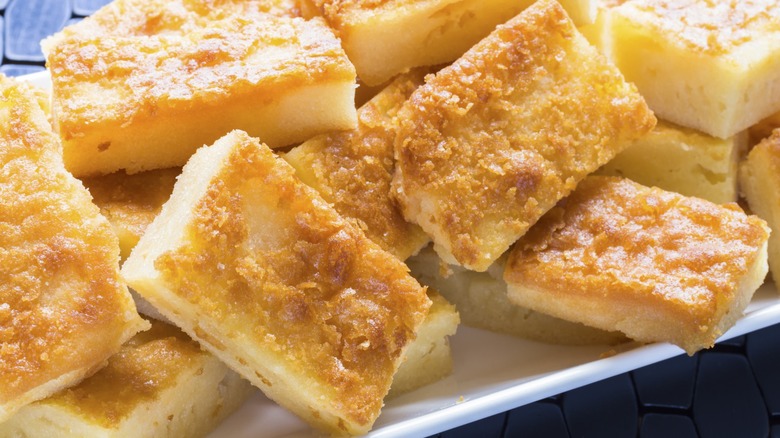
What may appear to the naked eye as any ordinary dessert square, butter mochi sets itself apart once samplers have taken that first bite. If we had to put a finger on exactly what makes butter mochi unique, it would likely be its texture. Best described as soft, even stretchy (Gumby visions dance into mind), the miracle is in those edges — delightfully crisp just a tad at the very furthest crimp.
And that's just explaining the epicness of its taste. Let's talk history. A bonafide creation of the land of Aloha, butter mochi is a delicious blend of cultural influences that have come together over the years to truly define the island community. Just looking at the ingredients list shares this history clearly: Glutinous rice flour nods to Japan's influence, while coconut milk is clearly taken from the tropics, and butter and sugar? Those are directly tied to plantation life and the melting pot of traditional recipes shared among families.
Visitors will regularly get a gander of butter mochi (and taste if they're lucky) at everything from potlucks to family gatherings, and even small mom and pop bakeries scattered throughout the islands. It's not difficult to make — simply mix those few ingredients into a batter before baking, then wait until the top turns just this side of golden and gently crisp. The hard part is allowing it to cool (not devouring it before then), so you can slice it into easily shareable squares.