

7 Egg Brands To Grab And 6 To Avoid, According To Reviews
We may receive a commission on purchases made from links.
Americans like eggs. Estimates of how many eggs are produced every year in the U.S. range from roughly 90 billion to well over 100 billion. Some phone calculator math works that out to about 300 eggs consumed or used per human annually. That's a lot of work from a lot of hens.
Eggs are used as ingredients for baking and cooking, and enjoyed as a standalone food when poached, fried, over-easy, in an omelet, or turned into fluffy scrambled eggs. As such, a carton or two is a staple in many a refrigerator. But are all eggs created equal? Absolutely not — especially when you look deeper into how producers go about their operations. You might not always know a bad egg when you're eating one –- until you have yourself a quality egg. Chances are, that quality egg came from a quality farm.
Some egg brands are more ubiquitous than others (and not always for good, chicken-friendly reasons). Others are more regionally available rather than nationwide (but worth it if you can get your hands on them). With that said, here are seven egg brands to grab and six to avoid on your next trip to the grocer or online shopping spree.
Grab: Eight Mile Creek Farm
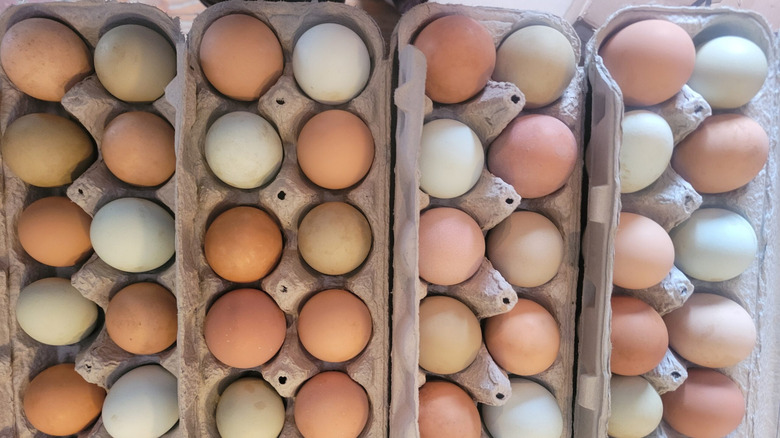
Eight Mile Creek Farm, located outside of Albany, has been doing it right according to folks for a number of years now. On review platform Local Harvest, customers describe Eight Mile Creek as having "the best farm fresh food around", and being "a great farm you can trust to be the best." (We're sensing a theme here.)
Its commitment to farming excellence extends to the company's eggs, which have accrued the highest points of any organic producer on The Cornucopia Institute's trusted industry scorecard. Eight Mile Creek nails near-perfect scores when it comes to organic label commitment, flock sizes (the smaller, the better), indoor and outdoor space for their birds, enrichment, transparency, and environmental impact.
If you're willing and able to venture over to the town of Westerlo, you can get Eight Mile Creek Farm eggs right from the source. Otherwise, you can get them via CSA shares. Either way, it's well worth the investment if you value quality in your eggs, and want them to come from a farm that's doing things right. This place is proof that farm fresh eggs are better than store bought eggs.
Avoid: Wellesley Farms (BJ's)
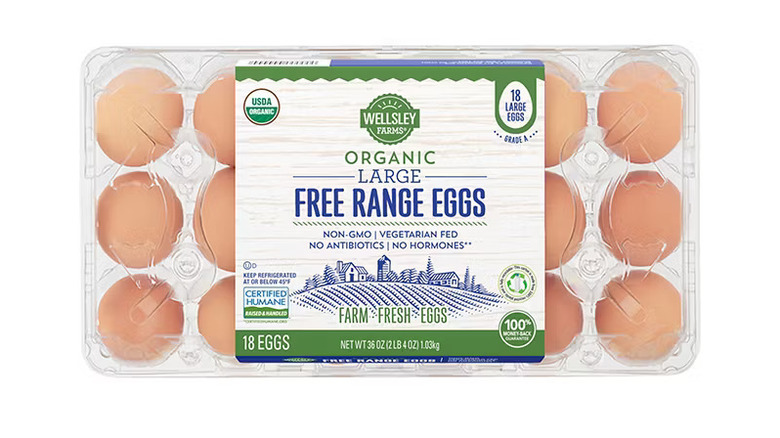
As BJ's shoppers know well, Wellesley Farms is the members-only grocer's house brand. There are over 600 products under the label, and they span nearly all categories of food — including eggs, which are often available at an affordable price. As of writing, an 18-count carton will only set you back about $5. And it's organic, right? It says so right on the label. And the eggs are brown. What else do you need to know? Well, a lot more.
Wellesley Farms eggs have an anemic assessment according to The Cornucopia Institute. The farm, like BJ's itself, is based in Massachusetts, but it often uses outside suppliers for its eggs. The problem with this is that it's a crapshoot when it comes to what you're actually getting. Customers speculate that BJ's slaps a Wellsley Farms label on whatever local egg distributor fits its needs, and some have even pinpointed a mega-corp as a supplier: "The majority of their eggs come from Cal-Maine foods," said a Redditor.
Because it keeps things so nebulous, the brand has the lowest scores possible for transparency, commitment to the organic label, and myriad other operational metrics. The eggs may not even be certified organic, and antibiotics could be used.
Grab: Alexandre Family Farm
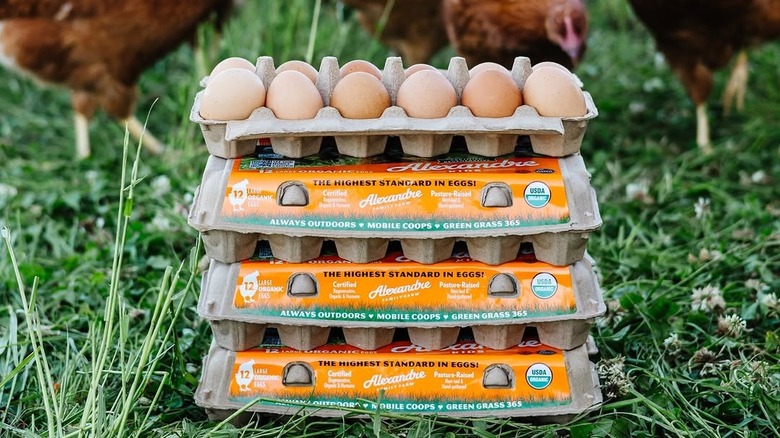
In an interview with Culture Apothecary with Alex Clark, Farmer Paul — who started Pasturebird, one of the biggest pastured poultry farms in the country — said his top choice for organic eggs at the grocery store is Alexandre Family Farms. And many other reviewers seem to agree. Alexandre Kids Eggs from the California farm are mainly found on the West Coast, but if you come across them, grab them.
These eggs have a robust score of 1600 on the Cornucopia organic egg scorecard. Some points were taken off for having relatively large flock sizes, which can lead to higher mortality rates and disease, but the farm more than makes up for it on other fronts. The egg producer has perfect scores when it comes to lack of alterations to their chickens, transparency, outdoor spacing, and having all of the relevant labels and certifications for organic farming.
Customers are happy with the brand, even if it costs a bit more. "Expensive and worth it," decreed one Redditor, and others agreed. When trying to choose the least evil eggs at the grocery store, look for one that emulates Alexandre Family Farms — or the real-deal, of course.
Avoid: The Farmer's Hen (Shoprite)
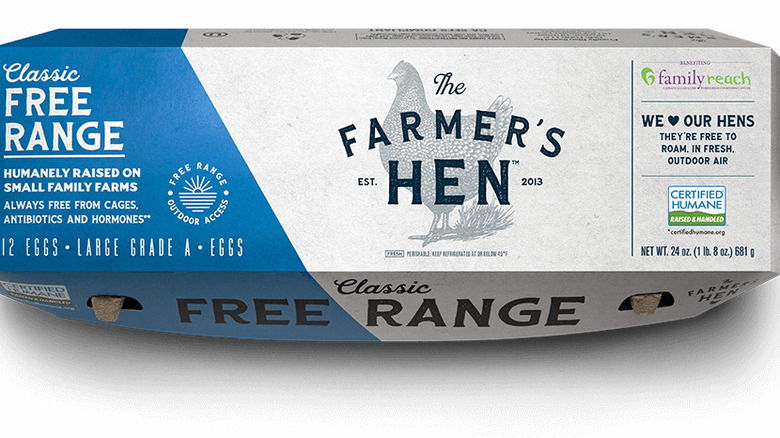
Shoprite's brand of organic eggs, The Farmer's Hen, is not held in high esteem by industry analyzers. The supermarket chain is headquartered in Elizabeth, New Jersey, but you're not going to find a farm there amid the waterfront industry. Instead, the Farmer's Hen label is made up of partnerships with over 75 farms across the country.
That kind of egg sourcing can create all kinds of problems with the customer's end product, as the vast majority of private label organic eggs are sourced from industrial farms. These are places where flocks are crowded together with little to no outdoor access — making chickens vulnerable to disease and injury, and giving them a low quality of life.
Since The Farmer's Hen's sources can't really be pinpointed, they can't really be assessed properly, so there's no transparency (and presumably much to hide). This is the reason the label has earned zero points on the scorecard. You just don't really know what you're getting in that carton — or how it got there. Customers have reported purchasing spoiled eggs, with one sharing on Facebook that, out of a whole 18-pack, "Only 5 were edible, the rest were rotten. I'll never buy their eggs again."
Grab: Pete & Gerry's
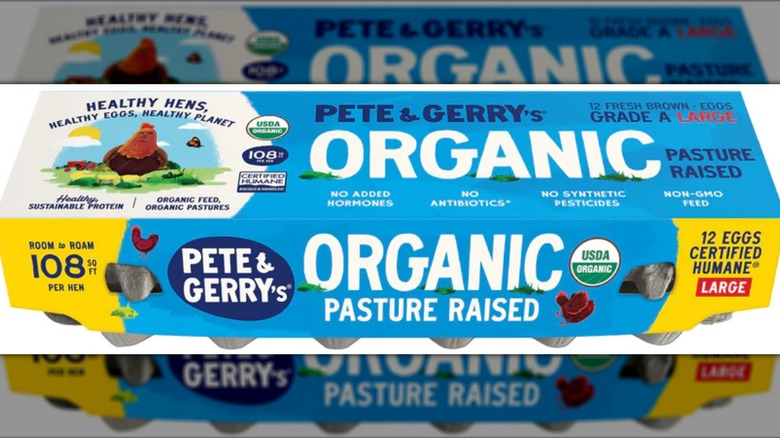
Pete & Gerry's has always put the wellbeing of the chicken at the forefront. In 2013, it was the first egg producer to earn B Corp Certification, meaning that the company meets the highest standards of environmental and social awareness in its operations. Customers have noticed the difference, and it's easy to find a ton of glowing reviews.
Even though it's considered a large-scale producer, Pete & Gerry's sources only from independent farms that meet its exacting standards. Its chickens live spacious, cage-free, GMO-free, and pesticide-free lives. With that said, the sheer volume of farm sources under its umbrella (and the relative flock sizes at those partner farms) does knock its Cornucopia score down a notch, giving it a four-egg rating instead of the perfect five-egg. But the same scorecard has awarded the producer with perfect 100s when it comes to maintaining the organic label, chicken mortality rates, and overall transparency.
The brand's wide availability makes it easy for shoppers to become fans. On the Pete & Gerry's website, positive reviews include one that raves, "They taste and look so much better than regular 'cage free' eggs ... I love that the hens are so well taken care of and are free to roam."
Avoid: Sprouts Organic
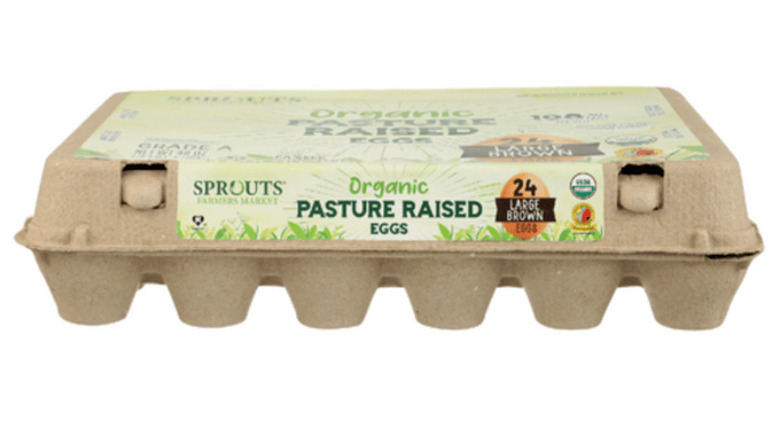
Sprouts Organic is the private label brand for the Phoenix-based grocery store chain, Sprouts Farmers Market. It's available nationwide, but like many store brands, the provenance of the eggs is unclear and therefore difficult to trust. Accordingly, Sprouts Organic eggs have the lowest possible rating from Cornucopia: one egg.
The main gripe is the corporate veiling that comes with a store brand like this. There is often no direct contact with the farmers producing the eggs, and any information that a consumer might want about where the eggs are coming from is blocked off as confidential (as though it were UFO files from Roswell or something).
This makes it difficult to prove how organic, if at all, Sprouts' eggs are, and whether or not antibiotics are used to combat diseases spread from overcrowding. Customers have noticed inconsistency and voiced suspicion regarding the health of the chickens. "Once I saw the light color of the yolk, I knew something was off," wrote a shopper on Sprouts' website. "What a disappointment." If you care about where your eggs come from, avoid Sprouts.
Grab: Happy Hens Truly Outdoors
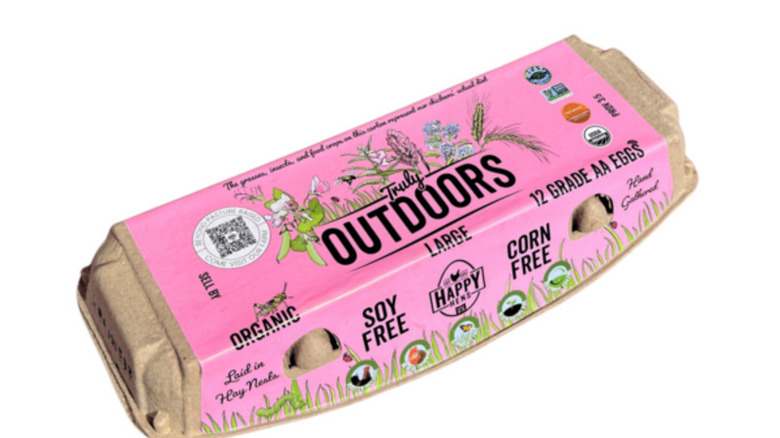
According to The Food Institute, Happy Hens is one of the top egg brands that are Certified Humane. Its chickens live a life that would be the envy of other chickens, had they the ability to be aware of such things. They're free to move across big spaces under an open sky, basking in the sunlight, breathing in crisp, clean air. In the same way that stress-free cows create great meat, stress-free chickens lay great eggs.
The product safety app Oasis (via Instagram) has given Happy Hens a perfect score. Cornucopia feels equally enthusiastic about the California-based egg producer, awarding a lofty 1670 (five out of five eggs). It received perfect marks up and down the card, including for spacing, hen housing, organic commitment, and even a score of 110 for how early the company exposes chicks to the outdoors. It also has satisfied customers spouting goofy puns, with one writing on Google, "I absolutely love the taste of their free ranging truly happy hens ... The eggs are egg-ceptionally yummy."
You can find this brand in local stores on the West Coast, and in some Whole Foods Markets in Southern California. (This makes sense given Whole Foods' strict rules about ingredients.) If you're in the area, be sure to grab yourself a carton of Happy Hens eggs.
Avoid: Farmhouse Eggs (Cal-Maine)
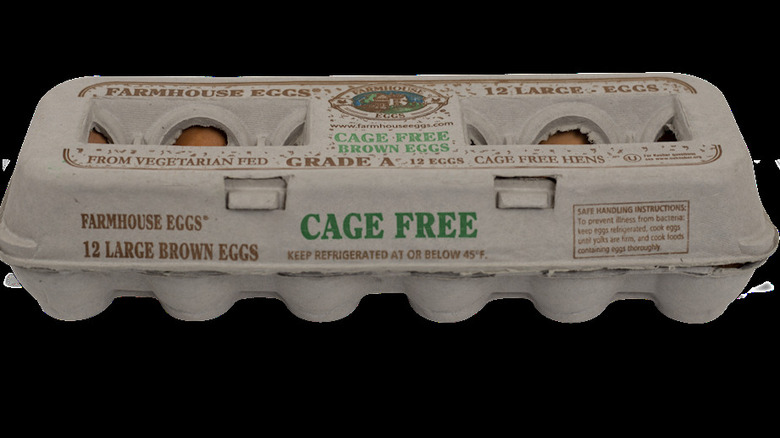
Farmhouse Eggs is a nationwide brand owned by Cal-Maine Foods, the largest producer and distributor of fresh shell eggs in the entire country. Based on the established criteria of this list, you can probably already see where this is going — but actually, it's even worse than you'd expect.
In 2020, Texas's Attorney General Ken Paxton filed a lawsuit against Mississippi-based Cal-Maine for raising the price of its eggs by roughly 300% during the COVID-19 pandemic. According to the suit, the company did this without experiencing any real problems with its supply chains or operations — so basically, it raised prices for no reason other than the fact that it could. And corporate greed aside, Farmhouse is widely known to sell some of the lowest quality eggs on grocery store shelves.
A few years prior, in what became known as the Walmart organic egg scandal, Cal-Maine was sued by a Walmart shopper for falsely advertising its eggs as organic while conditions at one of its facilities showed how very non-organic they were. The Cornucopia Institute was, of course, all over this. It's given Farmhouse Eggs the lowest possible score, explicitly calling the brand one that cares more about profit than ethics or organic farming practices. Just because Farmhouse Eggs are in stores everywhere, that doesn't mean you should go near them.
Grab: Sauder's Eggs
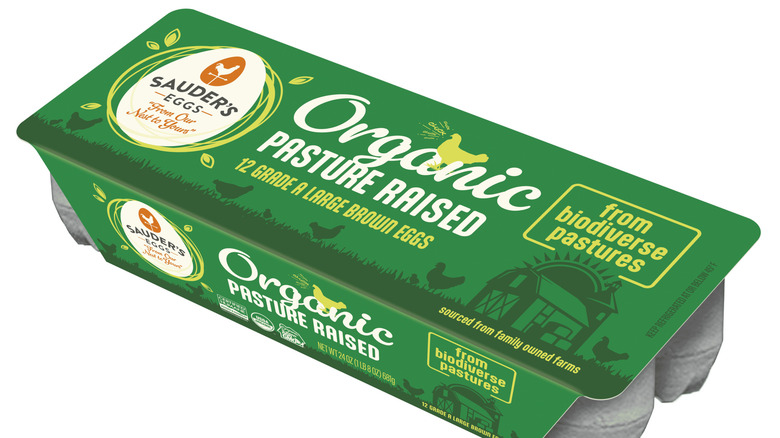
There's a reason Sauder's Eggs are number one on The Food Institute's list of the best Certified Humane egg brands. Actually, there are a number of reasons: The company embraces independent, third-party audits to live up to that certification. Its relationships with modest family farms are substantial and long-standing. Its supply chains are completely traceable and transparent. And it takes great pride in the comfort and wellbeing of its chickens.
As a Sauder's Eggs consumer, you're getting a top-quality product that's rich and full of flavor. But in fairness, though it's far from disparaging, The Cornucopia Institute isn't as sold on Sauder's as The Food Institute is. The former rates Sauder's four out of five eggs, taking points off for the fact that Sauder's sells both conventional and organic eggs (instead of being fully organic). It also feels like the outdoor access for the chickens is a bit wanting. Cornucopia does agree that the Pennsylvania-based producer is fully transparent, awarding a perfect score in that area.
Despite the slight disagreements between those egg assessors, it's fair to say that you should try to get your hands on Sauder's. And some customers have noticed a bonus: plenty of double yolks. As one wrote on Reddit, "Every egg I've opened from this carton has been a twin egg". Plus, Sauder's is available nationwide, so you don't have to go through the whole mess of having backyard chickens.
Avoid: Horizon Organic
Danone is a mega-super-giganto food corporation with worldwide reach; one of the globe's leading companies in this capacity. It has a number of massive brands under its stewardship, including Evian, Activia, Silk (which happens to make one of the best vanilla coffee creamers), and the ever-present Horizon. The red carton with the jumping cow is a staple on supermarket shelves everywhere, and the brand is also well represented in the egg department.
A brand this massive and pervasive is going to have all the pitfalls when it comes to producing organic eggs. In other words, it doesn't produce them. It sources them from multiple suppliers, making it nearly impossible to track down how the eggs are cultivated. The Cornucopia Institute has given Horizon a bottom-rung score, and even accused the brand's marketing of "greenwashing" or deceiving the public with inaccurate claims about the ethical nature of its operations.
"This is the most unnatural textured organic egg," complained a customer on Amazon, where another reported finding mold inside a shell. The brand may be readily available, and it may even be affordable, but it's best to go with another egg if you can.
Grab: Utopihen
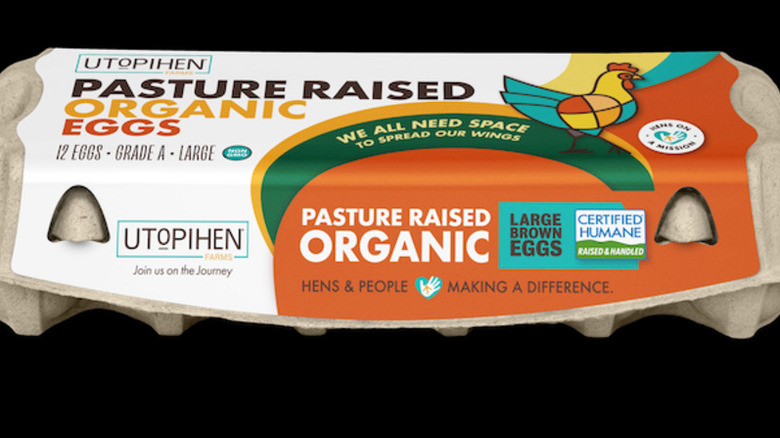
It's all in the name: Right smack on the carton, in big letters, this brand promotes the pasture-raised ethos of its operations. Utopihen really does aim to provide a paradise for its chickens. That takes effort, commitment, and a belief in doing the right thing. The result is that shoppers love these eggs, even if they are a little pricey. "Absolute best i've tried are from Utopihen," said a happy consumer on Reddit. "They're the only brand I'll buy."
Utopihen also gets props from Cornucopia, whose researchers recognize it with a very solid four-egg rating (out of five). The positives behind the score are the ample indoor and outdoor spacing, the enrichments provided for the flocks, and above-average transparency.
One caveat is that Utopihen produces both organic and non-organic eggs, but those are separated and handled on different properties. Also, Cornucopia does feel like Utopihen could expose its chicks to the outdoors a bit earlier in their lives. All in all, though, this is a solid egg with a beautiful, rich yolk. As they say, the proof is in the pudding.
Avoid: Eggland's Best
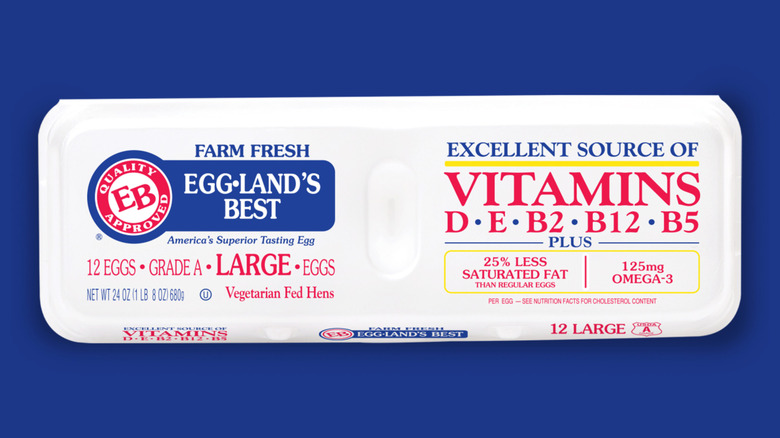
Similarly to Farmhouse Eggs, Eggland's Best is one of the big boys who's been naughty. That may not come as a surprise given that hubris is endemic to the way the company operates. (This could explain why Eggland's Best has so many patents on its eggs.) In this case (literally), a class-action suit that claimed that Eggland's cage-free eggs were anything but was filed in 2024.
In 2026, the egg giant's motion to dismiss the case was denied. Not only was the judge in the class-action suit not impressed with Eggland's Best, but neither was The Cornucopia Institute when it came time to rate the Pennsylvania-based brand. Being that the company is essentially a franchise (think Dunkin' Donuts or Subway, but, you know, supermarket eggs) with minimal oversight, it checks off all the boxes for getting the lowest score possible from the independent researcher.
The only points Eggland's Best received from Cornucopia were for the indoor spacing of its (multitudinous) chickens. Instead of an absolute zero like in all the other categories, it received a 20 there — so, okay, that's something. But it's not enough to raise its overall score to more than one out of five eggs. And it's not enough to convinced skeptical customers. "How are these people still in business," mused one Redditor, prompting another to reply, "They are s*** eggs with a stamp on them".
Grab: Oliver's Organic
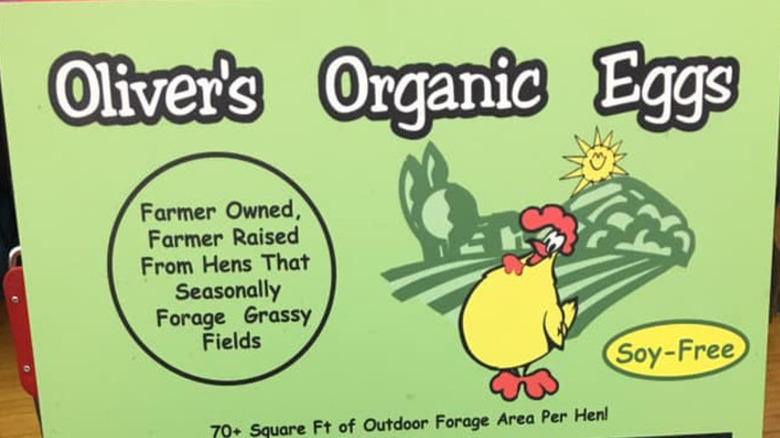
New York has no dearth of quality egg suppliers. Oliver's Organic is the latest in the Empire State to be held in high esteem. The Frankfort-based producer gets a big thumbs-up from local retailers (Chef Liz from Nature's Temptations says on Instagram, "Get them while they last!") and Cornucopia alike. The latter gives it a four-egg rating and a robust 1210 point score. The attributes that drove up those numbers were Oliver's Organic's high transparency, outdoor spacing, housing for its hens, flock size, and feed sourcing.
When it comes to that feed, the company claims to be self-sustainable, growing and harvesting its own grains to satiate its hens. This dedication has seemingly paid off, as evidenced by the impressive Cornucopia rating and also the fact that it's among the top 10 egg brands recommended on the Oasis app (via X, formerly Twitter), with an excellent score of 87 out of 100. If you're in or around the Hudson Valley (a short trip from NYC), there's a good chance you'll find Oliver's Organic Eggs everywhere. Pick them up if you can.
Methodology
When compiling information for this article, The Cornucopia Institute –- a leading investigator and assessor of organic foods and agriculture –- was a great resource, especially for its comprehensive organic egg scorecard. We took seriously the opinions of that industry watchdog, and compared them against customer reviews we found across retailer sites and review platforms to form our own. We also combed through news outlets, food blogs, and industry analysis from the likes of The Food Institute and the Oasis app to hopefully provide the reader with solid information for the next time they're shopping for eggs — and, you know, every time after that.