

12 Fast Food Restaurants That Used To Have Buffets
Ah, the buffet — where you're master of your domain. Some believe buffets are the greatest way to eat. They're the perfect melding of our hunter-gatherer past and our eating-on-demand present: You don't have to forage or chase your food, but you still have the excitement of picking up stuff and wielding a weapon (tongs). There was even a time, friends, when the world of fast food joined forces with the realm of the buffet.
Heady days indeed. They came and went in the blink of an eye and in a blaze of glory. It was like the Jimi Hendrix of combining ways to eat. Alas, those years have stayed dead and buried, with very few quote-unquote fast-food buffets around.
But those that previously existed –- including at the biggest names in the industry — have fallen into myth and legend. Heard about, regaled of, yet seldom seen. Until now. Here are twelve fast food restaurants that supposedly, allegedly, and apocryphally used to have buffets. Grab a mental plate and flatware and, please, help yourself.
Wendy's
When the last Wendy's salad bar was phased out in 2006, it marked the end of an era. Wendy's may not have been the first fast-food chain to boast a buffet, but it was the preeminent choice during the Golden Age of such things. The salad bar alone was enough to cement Wendy's royal status, but in the late 1980s, Dave Thomas's brainchild took things a step further: unleashing the humbly named SuperBar.
There was an almost retro-futuristic style to the SuperBar. Everything from the zoomy logo font to the display cases were right out of what people in the 1950s thought a space colony would look like. What really stood out, though, was the diversity of choice. The Garden Spot was your salad smorgasbord, Mexican Fiesta was your so-called culture counter, and the pasta station was the entire reason you came to Wendy's in the first place, of course.
Wendy's first experimented with the SuperBar in 1987, and customers liked it. Sales spiked, thanks to what was an affordable price structure even then. Kids ate at the buffet for $1.99, while lunch and dinner in general were only $2.99 and $3.59 each, respectively. Unfortunately, the buffet never saw the turn of the century, and now only exists in the collective mind museum of people in their forties and fifties.
KFC
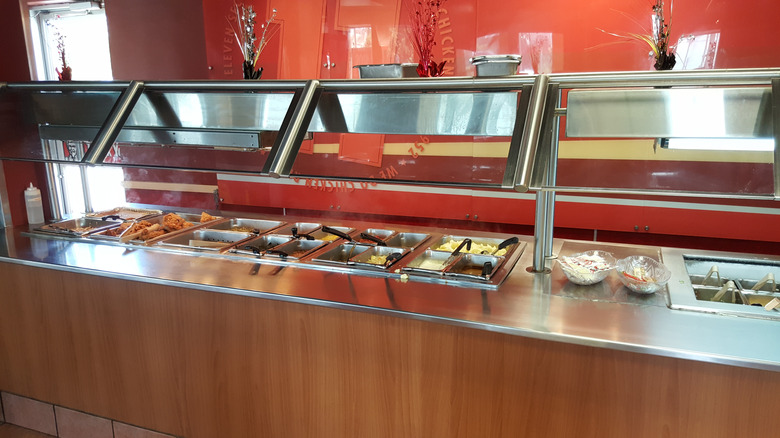
The very existence of Facebook groups like "KFC Buffet Aficionados" (14,000 members strong, and counting), tells you the Colonel's all-you-can-eat spread holds a special place in people's hearts. Unlike some of the other buffet dinosaurs on this list, this one is still in existence — and people are going well out of their way to find them.
KFC's buffet originated during the concept's heyday in the '80s and '90s. It quickly became the fast-food fashion to have an unlimited bar containing both chain favorites and things that seemed way out of place: KFC's version had rice, bread pudding, and fried steak, for example. However, as odd as these offerings were, they weren't as bizarre as some other, past KFC menu items.
As far as seeking one out today, it might take some country-combing. According to eyes on the ground there were just 22 left as of 2024, across just five mostly Southern states. Since KFC itself doesn't reveal or list these locations, good luck on your noble journey.
Pizza Hut
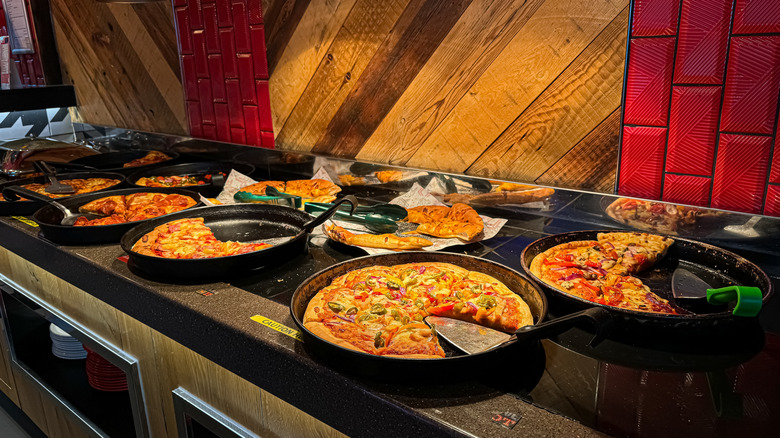
Pizza Hut's all-you-can-eat buffet was a smorgasbord that brings many a wistful tear to the eyes of nostalgiacs. The Hut has not ignored these folks pining for their pizza pasts, having opened several retro-style Pizza Hut locations around the country, replete with hanging Tiffany-style lamps, gingham tablecloths, and cushy red booths.
The best part for many, though? The buffet. In contrast to others featured on this list, Pizza Hut's bars are slightly more commonplace these days, though still scarce. Though the company officially owns up to having them, it still won't publicly list where they actually are. When you search for locations, they apparently redirect you to all Pizza Hut locations.
It's bizarre that this is the case with a few of these chains. The restaurants have or had buffets, and they are or were approved under a corporate watch (otherwise, they wouldn't have existed). So why the obfuscation, P.H.? Alas, for now, seeker of ye Hut buffet, one has to rely on Facebook and Reddit threads for clues to whereabouts.
Popeyes
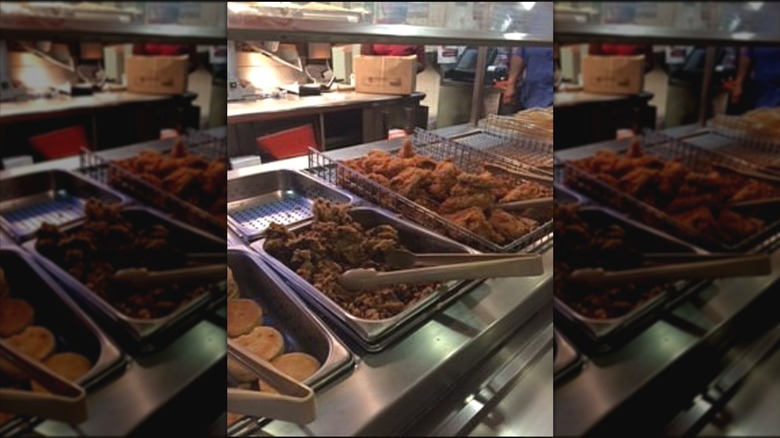
It's hard to get mad at Popeyes. The chicken from the Bayou-born chain is just so good, and the company is never afraid to kick things up a notch with its signature items. However, there was a beloved component of Popeyes that sadly no longer exists: its buffet.
The COVID-19 pandemic upended, or just plain ended, a huge number of businesses and entities. One of the brick-and-mortar victims was the very last Popeyes buffet in Lafayette, Louisiana. Aside from the obvious draw of a hypothetically endless supply of Popeye's fried chicken, the buffet supposedly featured tacos and pasta –- at least according to a local radio personality who remembered it fondly.
Unfortunately, in December of 2021, that ultimate Popeyes buffet met its ultimate demise. Facebook elegies were given. Thoughts were spared. Good times were remembered. Except for one commenter who posted about how stupid the buffet was, and how this one time the employees didn't fry his liver fresh and instead retrieved it from the buffet, and how that was not good. Otherwise, it will be missed.
McDonald's
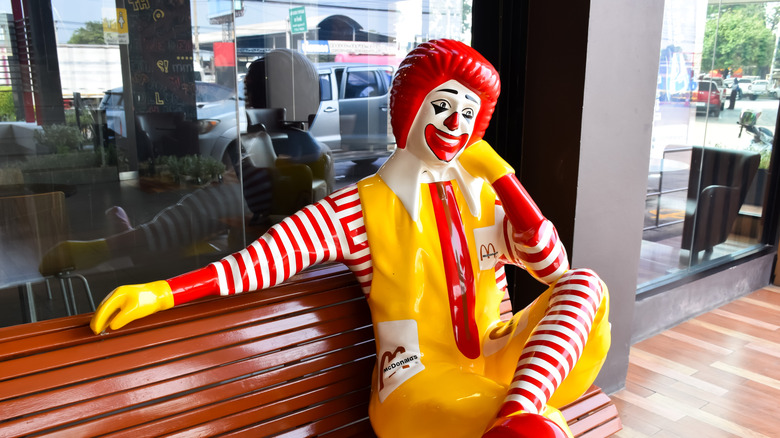
Now we arrive at the Mac, the myth, the legend. Like the Yeti, El Chupacabra, and Michael Jordan's hair, some claim to have seen the McDonald's breakfast buffet with their own eyes, even though no visual proof survives, and one of the claimants purported to "remember" it from college. Yeah, because those memories are never hazy.
In fact, there seems to be no evidence from McDonald's itself that this buffet ever existed. It's like some version of a "Men in Black" mindwipe. Yet, the rumors and the hearsay and the eyewitness testimonials persist. Like alien abductees, their stories are so convincing that one can't help but believe them to be true.
Supposedly, according to one person, the all-you-can-eat bar even provided to-go breakfast containers for those wanting to take buffet items home. There must be one of these containers, somewhere, tattered in a field, provable through carbon-dating that it indeed comes from The Buffet Age. The world needs answers, McDonald's — and stop trying to distract us with your new spicy version of McMuffins. Actually, you can distract us a little. Conspiracies aren't going anywhere.
Burger King
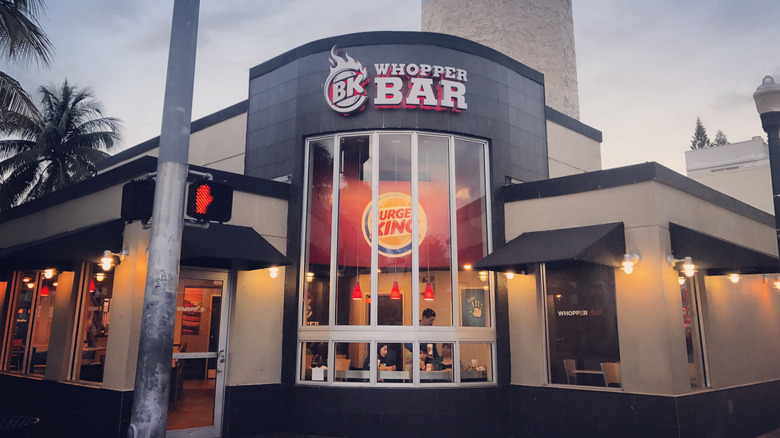
It seems even Burger King dipped its toes into the buffet game — or at least the all-you-can-eat game. Really, it's more like the "all-the-burger-toppings-you-can-grab" game. That's because in 2009, the fast-food giant opened the first Whopper Bar in Orlando, Florida. Here, you can customize your Whopper to your heart's delight.
There are almost two dozen fixings to choose from at one of these outposts, and the format was something the company bet high on. The returns never met the expectations, however. The location they attempted in Times Square wound up closing after multiple health code violations. The original at Universal CityWalk is still open however, as is one in Miami Beach.
There's no evidence that Burger King ever incorporated a full-on buffet bar of any kind, be it salad or something random like, you know, shakshuka. And since that period of fast-food culture seems to be long gone, it's hard to see it ever happening. Trends can be cyclical, though, so who knows?
Krystal
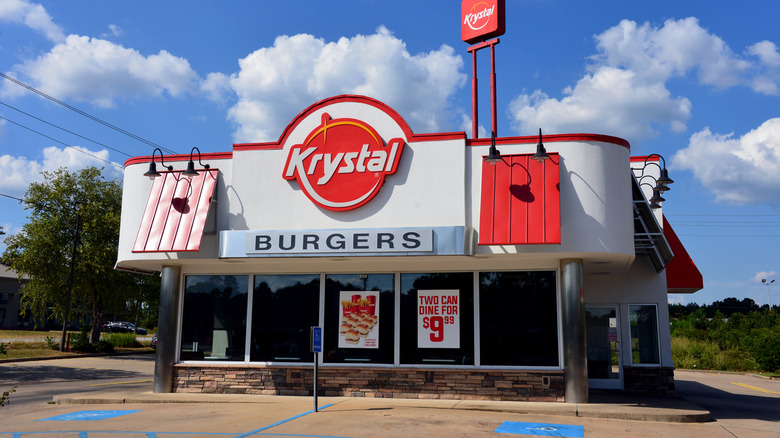
Famous for its small, White Castle-like burger patties, the southern fast-food chain Krystal decided to experiment with an all-you-can-eat deal in 2019. For only $5.99, dine-in customers could partake in as many Krystal burgers and fries as their digestive system could handle.
After testing it out in Montgomery, Alabama, the company decided to offer this bacchanalian option at all its locations –- even making it available from 6 in the morning. When the deal was announced, CEO Paul Macaluso cited Krystal's roots in the Great Depression as a reason for bringing an affordable meal option to the masses. A noble rationale and callback to history that customers certainly appreciated, no doubt.
It wasn't a buffet, per se, but Krystal's offering was unique in the world of chain fast-food. It inspired unofficial eating contests among friends, which suits a chain that's no stranger to official eating contests –- even Joey Chestnut has a Krystal burger eating record or two. Unfortunately, in accordance with its appearance on this list, Krystal's unlimited offer was only for a limited time. Hey, the endlessness was good while it lasted.
Rax Roast Beef
The first Rax Roast Beef opened in Ohio in the late 1960s. After a stop-and-go beginning, the chain became a success in the 1980s, thanks to innovations like a salad bar buffet. Eventually, it even added a dessert bar and a taco bar to go along with a surprisingly varied menu that included baked potatoes, seafood, barbecued beef, and pasta with Alfredo sauce (sure, why not?).
Eventually operating more than 500 outposts (including in Canada and Central America), Rax peaked midway through the '80s. However, the wheels fell off in short order, and the company took an irreversible downturn. In this case, a downturn means that fewer than ten are still in business today. This seemed to be mostly self-inflicted, as Rax lost the plot and tried to rebrand as a more refined fast-food experience — something literally nobody asked for.
The true nail in Rax's coffin was a bewildering, disastrous commercial campaign that aired in the early 1990s. The main character was a bookish, monotone, corporate archetype named Mr. Delicious (via YouTube). Over a half-sensical B-roll combination of Rax exteriors and random POV driving, the animated "Mr. D" goes on a kind of muttering rant about, it seems, his mid-life crisis. At the close of this how-did-it-end-up-on-air baffler comes the tagline of taglines: "You can eat here." So great that this exists.
Taco Bell
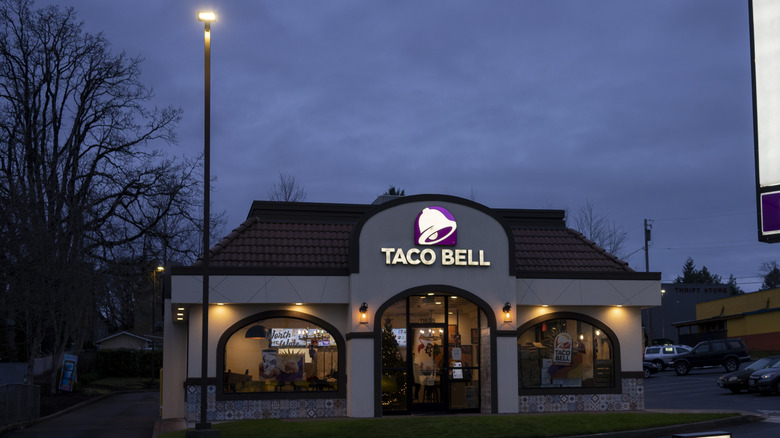
We may have found a creature of legend even more dubious than the McDonald's breakfast bar. Yes, some claim none other than Taco Bell had an in-store buffet during some lost pocket of time in the chain's history. Yet there are plenty more who doubt its very existence at all. Just as in the case of McDonald's, there is scant evidence of this being objectively true; only the decades-old recollections of a relative few.
Is this to be believed, then? Memory is a fickle, misleading butterfly to follow, even for the most lucid of us. Perhaps Taco Bell is leaning into this unsolved mystery. After all, the name of its newest menu item –- the Crispalupa –- sounds like a cryptozoological creature.
Is that a subliminal sign Taco Bell is aware of the conspiratorial nature of the buffet matter? Promoting it even? Okay, that's probably too paranoid a read. However, we may never find out the truth. Until then, people are just going to have to customize their own Taco Bell buffets at home if they want the experience. Don't be afraid to Venmo those guests, though. That's a lot of Bell to buy.
Roy Rogers
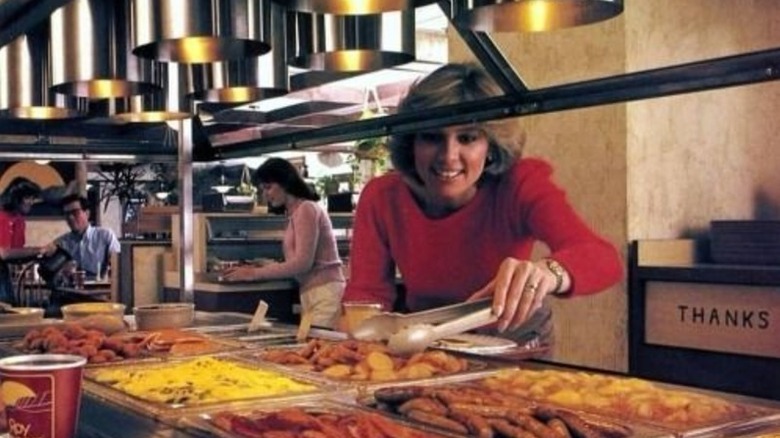
Like that famous home video of Bigfoot walking across an open patch of forest, there is an eerie piece of visual media that supposedly proves the existence of another entry on this list. Some question the photo's authenticity, but others swear the subject captured was absolutely real. What is this scene of mystery and incredulity?
It's the one-time breakfast buffet at Roy Rogers, of course, as seen in the above photo. Yes, the fried chicken chain –- named for the famous "King of the Cowboys," actor and singer Roy Rogers –- apparently kept a self-serving station of eggs, bacon, sausage, hash browns, and more. It would track with Roy Rogers' history. After first opening doors in 1968 in Falls Church, Virginia, the company soon invented its famous Fixin's Bar, which at the time was a novel idea for a fast-food restaurant.
As far as rock-solid, no-doubt-about-it confirmation of the breakfast bar, however, the jury is still out. Photo evidence is compelling, but more than one would be a lot more helpful in this endeavor. Really, just one more. Even that same one from a different angle. Something. From someone. Somewhere.
Carl's Jr.
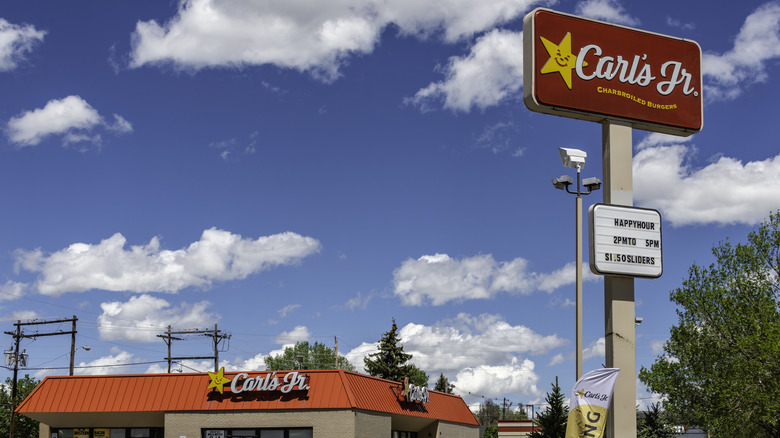
Originating in 1950s Anaheim, Carl's Jr. is a West Coast staple –- even though it has over 1,000 locations across the whole of the U.S., as well as almost 30 countries in total. A boost to this locale number came in 1997, when Carl's Jr. bought Hardee's.
The former hot-dog-stand-turned burger franchise was apparently the very first fast-food eatery to have a salad bar, starting in 1977. People remember it fondly, feeling like it gave the burger chain a refined edge over other quick-serve places at the time. Unfortunately, this admired aspect of the Carl's Jr. experience is long gone now — for at least a few decades, according to plaintive recollectors.
Carl's Jr. has continued its experimental spirit to this day. Supposedly, it was the first chain to offer a plant-based burger. The El Diablo burger brought real-deal heat to fast-food fare. The brand even introduced a CBD-infused burger to the menu. Seems you can take Carl's Jr. out of the West Coast, but you can't take the West Coast out of Carl's Jr.
Little Caesars
Et tu, Little Caesars? According to the fast-food-commentary-o-sphere, the Detroit-based pizza chain had both a salad bar and a pizza buffet –- although very few have seen this firsthand, it seems. The ones that say they have are convinced of its existence. They have even been spotted as recently as 2019 or 2020 (at least in the chain's home state of Michigan).
Others commenters, however, seem to be misremembering smaller chains that were closer to their hometowns, something locals are quick to correct. This kind of fast-food buffet mirage or false memory seems to be a consistent thread on this list. What's behind this sociological phantasm?
Maybe it has to do with the buffet as a symbol of desire, as it represents the things people yearn for: bounty and choice. So what, you may have never even sniffed a Little Caesars buffet, or a McDonald's buffet, or a Taco Bell bar — but it's the dream that matters. We so want it to be true, we make it true, and who's to really argue your truth? As Seinfeldian sage George Costanza once said: "It's not a lie ... if you believe it."