

Don't Ever Clean Your Stovetop With Glass Cleaner (Seriously)

Many home cooks would agree that having a clean kitchen is a euphoric experience, especially when you are about to prepare breakfast in the morning. That's why even the simple kitchen practice of cleaning the area before going to bed makes next-day cooking so much better. However, one part of the kitchen that needs more attention than others is the stovetop. While wiping it down with a cloth can remove loose and dry dirt, you'll need something else to address the grease and gunk buildup. This is where degreasers come in. But before you grab a glass cleaner like Windex to tidy up your stovetop, you might want to keep it away from your cooktop altogether if you don't want to damage it.
Modern stovetops are made of a combination of glass and ceramic, which resists heat better than regular glass, it's not as tough against harsh chemicals. And while the composition of glass cleaners may vary, the most common brands on the market, including Windex, contain ammonia, which is known to damage stovetops by leaving permanent streaks and stains on their surface. To prevent this from happening, manufacturers recommend that using specialty cleaning products, like CeramaBryte, with cleaning pads or paper towels is the proper way to clean a dirty stovetop. However, for those on a budget, there are also pantry items that work just as well for cleaning a glass-top stove, such as vinegar and baking soda.
Why a glass cleaner is not good for stovetops
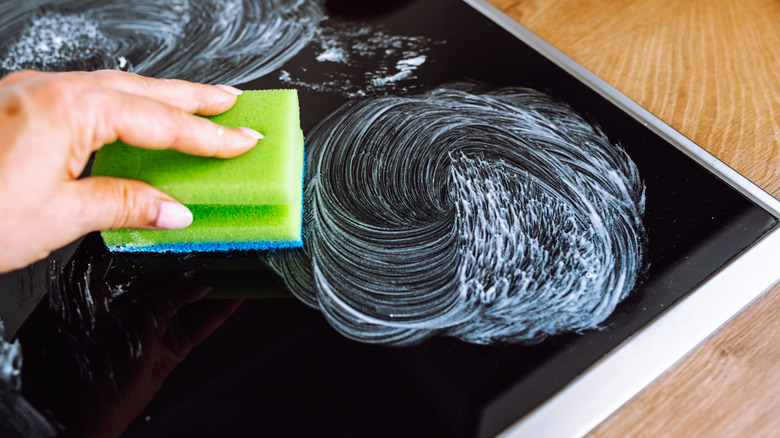
It's not entirely wrong to assume that glass cleaner would take care of grease or grime on a stovetop. As mentioned, it is, in part, made of glass, so a spritz of cleaner and a soft towel would seem to be an easy clean-up solution. But, as several Redditors discovered, glass cleaner is the entirely wrong choice for stovetops. "I moved into a new place with an induction stovetop and unknowingly used a glass cooktop cleaner on it. Is there any way to fix the damage?" wrote one alarmed Reddit contributor. And though others tried to inform them that the cloth or sponge caused the damage, most home and kitchen experts know that the ammonia content in glass cleaners was the real culprit.
So do appliance manufacturers. In fact, many specify in their warranties that any damage to their products caused by glass cleaners can nullify their guarantee contract and void the warranty. For example, this is what GE wrote as part of its electric cooktop warranty's dealbreakers: "Damage to the glass cooktop caused by use of cleaners other than the recommended cleaning creams and pads."