

The Natural Way To Dye Easter Eggs Without Artificial Food Colors
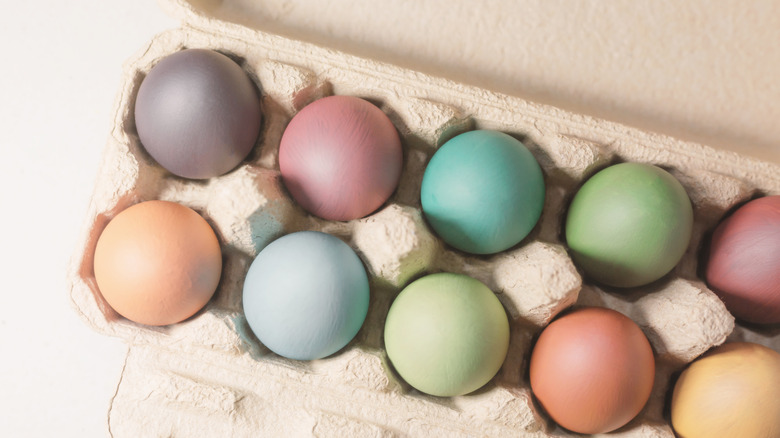
Artificial food coloring seems to be going out of style. Synthetically colored breakfast cereals will be banned at Target by May 2026, and the FDA's food dye ban is cracking down on additives like Red No. 40. This poses a problem for Easter egg dye kits, which often contain artificial colors. Natural dyes offer an alternative.
You already have natural dyes hiding in your cupboards and crisper drawers. Many common fruits, vegetables, and spices contain natural pigments — such as beets and turmeric. Some ingredients work better than others, but the process is generally the same. For most dyes, you'll want to boil 2 cups of fruits or chopped veggies in 2 cups of water.
Simmer the dye solution for up to 30 minutes. Once you've gotten a strong color, strain the dye. As with store-bought kits, add 1 tablespoon of vinegar per cup of water. Vinegar eats away the surface of the egg shell, making it easier for the dye to stick. Let the solution cool before plunking the pre-boiled eggs in.
Some dyes take in a matter of minutes, while others will need an overnight soak. You might be able to get a stronger color from letting the eggs dry in between soaks. Let them air dry rather than blotting. Once you're happy with the color, rub them with oil to make them shine. Do not leave the eggs at room temperature for over two hours, as bacteria can breed quickly – since you're using natural dye, these will be totally safe to eat if handled and stored properly.
What colors can you get from natural dyes?
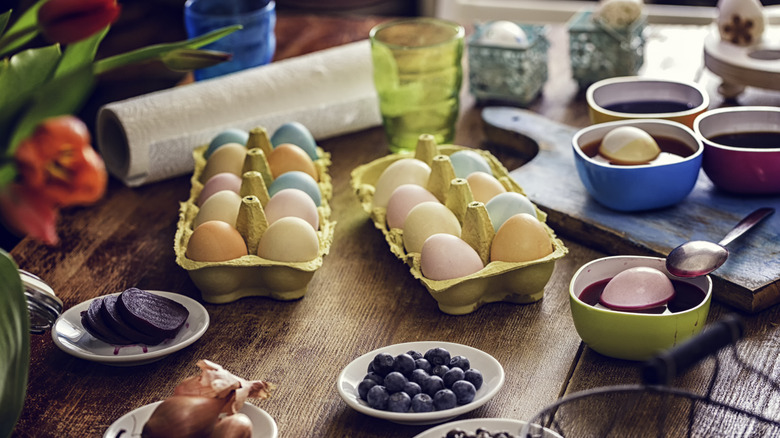
Natural dyes don't always work the way you'd expect, but some make a lot of sense. Turmeric turns eggs yellow. Blueberries turn eggs a deep purply blue. Beets turn eggs reddish-pink. Some natural dyes are wild cards, though. Humble red onion skins pack a brick red punch. A quick soak in a purple cabbage bath produces a bright sky blue; soak the eggs overnight, and you'll get a rich turquoise. Hibiscus dyes eggs a deep indigo or grape-like navy blue.
When creating natural food coloring to dye eggs, you can't necessarily rely on the same ingredients you'd use when making vivid frosting without food dye, for example. When you're coloring other foods, all you have to do is add pigment. When you're dyeing eggs, you have to get the pigment to stick — and that's trickier.
Spirulina, which can turn cakes and cookies a shocking sapphire blue, gives eggshells a barely noticeable tint. Similarly, the vibrant green from matcha powder just doesn't translate. Chlorophyll, the pigment that makes green leaves green, isn't a stable dye. Dunking eggs in a purple cabbage solution as well as a turmeric one may be your best bet if you're looking for a brighter spring green.