

How Local Coffee Shops Compete Against National Chains

Sure, Starbucks baristas write cute messages on your cup to make the transaction more personal — but it's obligatory. Executives require employees to go that extra mile so each customer interaction seems authentic. That's what makes patronizing a local coffee shop so special. The warm, inviting service provided to customers is genuine, but with Dunkin's Box O' Joe and Starbucks' pumpkin spice lattes around every corner, it's a wonder local coffee shops still exist.
According to Heather Perry, a two-time U.S. barista champion, former president of the Specialty Coffee Association (a trade organization representing the coffee industry), and current CEO of Klatch Coffee, a neighborhood cafe must take specific measures to stand out among the corporate chains dominating the industry. "A key tactic is better understanding the audience on a local, micro level," Perry told The Takeout. "What is the neighborhood like? What are their priorities?" Knowing whether your clientele is primarily folks itching to try the latest coffee trend or customers who prioritize sustainability above all else is crucial to providing them with products that will result in a return visit.
Focusing on the desires of the neighborhood population presents independent coffee shops with an opportunity to tailor their business to those customers, and they can do so much faster than corporate chains. "Whether it's menu design, ingredients sourcing, real-world education, and learning opportunities, national chains simply can't respond as quickly (or at all) in a single local market," she said, later adding, "Local shops can offer education and learning opportunities, sampling, and giveaways, each designed to foster the ongoing relationship between guests and baristas or cashiers."
The hidden advantages of being a local coffee shop
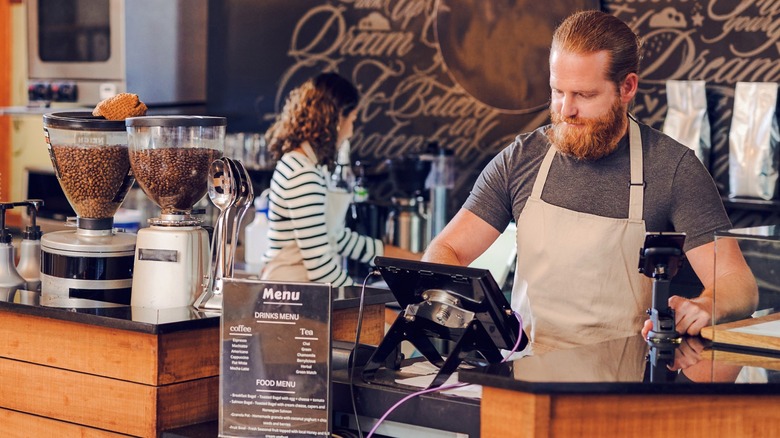
Coffee shops with a modest footprint have their work cut out for them, but Heather Perry revealed that local establishments have an edge on national chains. "Food and beverage menu design is a key area where local, smaller businesses like Klatch Coffee can respond to market trends in a way that larger national chains cannot," she said. "We can conceptualize, evaluate, and launch a new drink option significantly faster — even down to the level of offering a special drink at just a single one of our store locations for a limited time." A local cafe doesn't have to develop systems and offerings that work for thousands of patrons across a multitude of stores.
Not having to go through umpteen tiers of management is also a tremendous boon to independent coffee shops. "Vetting a particular opportunity that aligns with brand and strategy might take hours or days before deciding to move forward, instead of months or years," Perry explained. Teaming up with local businesses can foster community engagement, accelerating the expansion of each company's customer base simultaneously. Independent ownership allows those partnerships to form as soon as it's sensible.
Of course, the most important aspect of a coffee shop is selling a good cup of joe. Being a smaller company allows for more product oversight, resulting in a better beverage. "Because Klatch Coffee (20 locations) sources and roasts our own coffee before serving, we have very tight control, and yes, the quality is higher as a result," Perry said. Local coffee shops don't compete against the titans of the industry by emulating them; they succeed by offering personable service and higher-quality products.