

The Wasteful Baking Mistake That Throws Money In The Trash
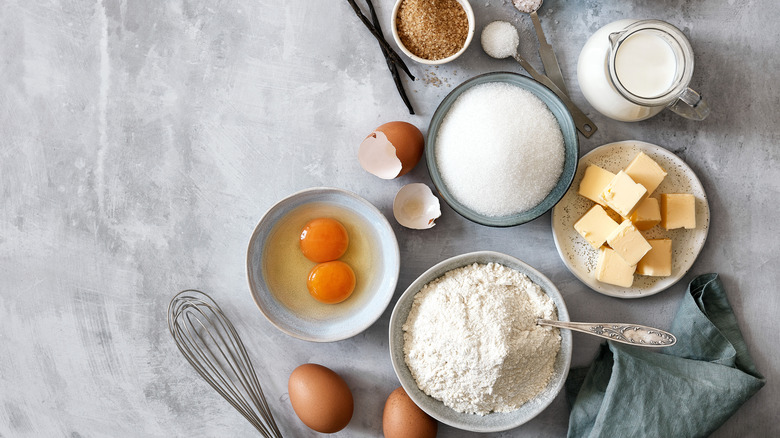
If you're anything like me, the urge to bake can come quite suddenly and trigger a "bake now, worry later" mood that ends with a lot of leftover ingredients, dough, and baked goods. I've been known to rush off to the shop without checking what I already have first, leading to unnecessary purchases. But even when I'm not being irresponsible, some things are just out of my control — like having to buy whole cartons of cream or buttermilk when I only need a little bit for my recipe.
If any of these things ever happen to you, there's something you need to know: Throwing away your unused baking goods is just throwing away your money. But it doesn't need to be that way, and forcing yourself to bake another batch of cookies or eat more cake isn't the only way to fix it. To avoid overspending when baking at home, all you need to do is freeze what you don't use or don't eat.
That might sound a bit obvious, but the real trick here is knowing just how many baking items are freezable. You can freeze a lot of unused ingredients as they are. You can also freeze doughs and bake them later, or freeze finished products and thaw them whenever you want a snack. The only caveat is that you need to know which method is best for what you're baking — but we've got your back.
Freezing ingredients and doughs
For perishable baking ingredients, ice cube trays are a powerful tool. Liquids like milk, cream, buttermilk, and even eggs can be separated into trays and frozen for easy future use. Cream lasts for around four months, while milk stays good for about six months. It's also possible to freeze fresh eggs – you can either separate the yolks and whites or beat them together, and they should keep for up to a year.
Powdered ingredients are freezer-friendly too, and it helps to maintain their quality for a lot longer than the pantry can. This includes flours, baking soda, and yeast — and they can all last multiple years in the freezer with no defrosting necessary. The pantry is also the last place you should store nuts – in the freezer, they'll keep for up to two years. Butter stays good for up to a year, and you can even freeze citrus zests.
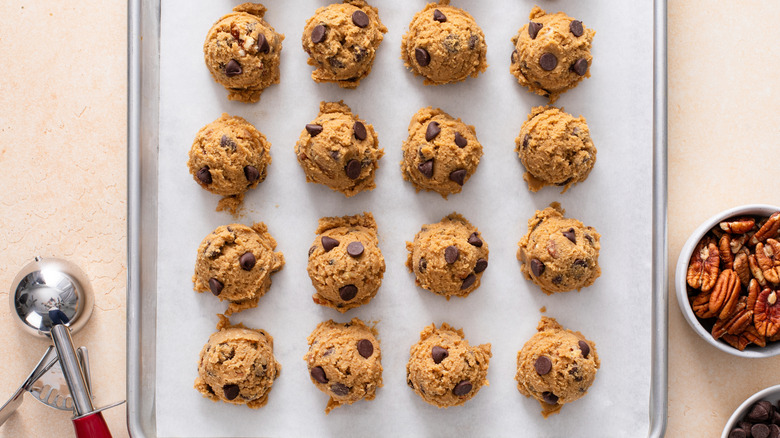
As for doughs, some freeze better than others. Cookie dough is well-known for being freezable, but most types can also be frozen except the most delicate (think macarons). Unbaked scones, pie dough, and puff pastries are all good options as well. When wrapping dough for the freezer, it's important to double wrap with plastic wrap and aluminum foil to keep the moisture in and prevent freezer burn. You can experiment to find out just how long different doughs can last in the freezer, but a good starting point for optimum texture is three months.
Freezing baked goods
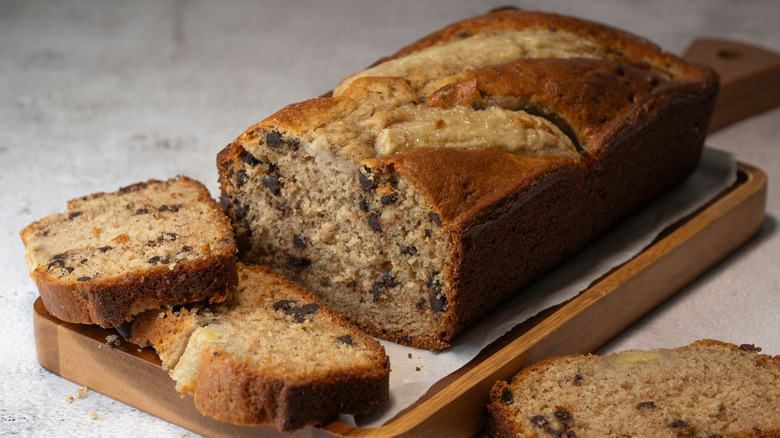
Many of the products you can freeze as doughs can also be frozen as finished products, such as cookies and scones. Freezing post-bake is most useful for items that are hard to bake in small portions. Instead of trying to bake a tiny amount of cake, brownie, muffin, or banana bread batter, you can bake the whole lot, let it cool, cut it up, and then freeze the servings individually. This is the best way to freeze baked goods that rely on leavening agents since they don't last very well when frozen, leading to compromised texture when you try to bake them later.
Similar to doughs, finished products should be double-wrapped and stored in freezer bags or containers to keep baked goods fresh longer. They should retain good taste and texture for three months. If your recipe includes icing, this unfortunately doesn't freeze well, so it's better to make it fresh and add it on the day of.
Frozen doughs can be baked for the same amount of time as normal, as long as you allow them 30 minutes to defrost a little first. Baking from frozen can be fine in some cases, but you'll need to experiment to find out what works best. As for thawing baked goods, the best practice is to let them defrost slowly in the fridge overnight while still wrapped up.