

Should Tips Be Banned? 2 In 5 Americans Think So
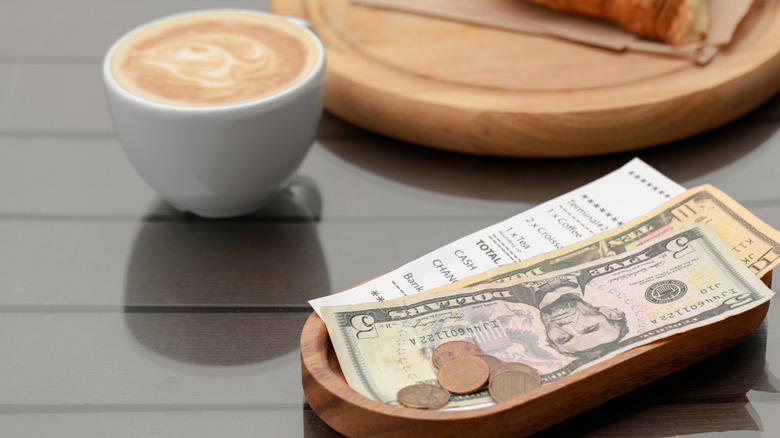
Around the world, tipping is used as a way to show appreciation for people providing services. It's a great system that allows workers to earn a little extra, and it's fairly uncontroversial almost everywhere — except in the United States. Here, tipping has gotten absolutely out of hand, and I say this as someone who's worked as a waitress at Chili's.
Whereas leaving a 10% tip at a restaurant is typical in many other countries, in the U.S., the minimum has consistently risen so that it now sits between about 20 and 25%. To make matters worse, businesses have begun asking for tips in instances where there is no service at all, like at self-serve checkouts. Consumers have had enough. Tensions have risen so much that two out of five Americans think tips should be completely banned, according to a March 2026 WalletHub study.
While this seems a bit extreme, it reflects just how frustrated people feel, especially since U.S. tipping culture is a result of special rules that benefit restaurants but hurt both employees and customers. If the country has more extreme tipping expectations than anywhere else, it's partly because the Fair Labor Standards Act of 1938 allowed restaurants to pay employees less than the minimum wage if they received tips. This certainly contributes to why 64% of people think businesses are using tips to replace salaries, as per WalletHub. In my case, Chili's paid me around $3.75 per hour (the federal minimum is $2.13). The rest of my earnings came out of customers' pockets.
Tipping culture in the United States
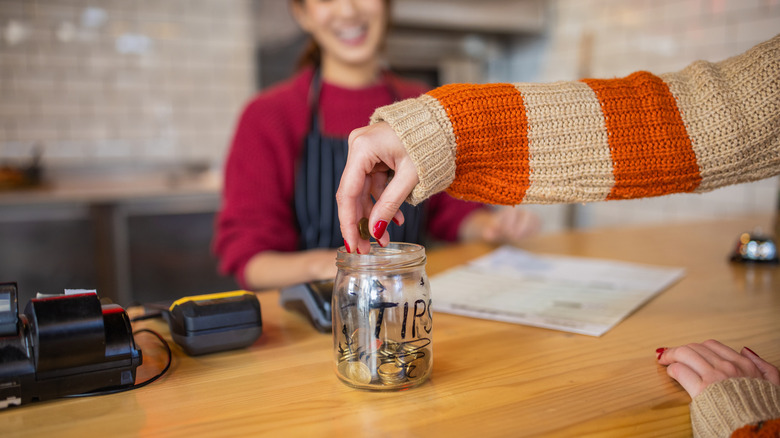
There is clearly something wrong with tipping culture in the United States. Yet, is the solution to ban tips altogether? I don't think so. I've lived in many countries with the 10% precedent, and almost no one has a problem with it. Workers appreciate that their livelihood isn't dependent on the mood of customers, and most diners don't mind leaving an extra $10 on a $100 bill.
The problem in the U.S. isn't tipping itself but an exploitative system that forces customers to subsidize wages so that restaurant owners can fatten up their pockets. Asking someone to pay an extra $25 for a meal that cost $100 is ridiculous. I've heard people say that you shouldn't eat out if you can't afford to tip. To that, I retort that a restaurant shouldn't operate if it can't afford to pay its employees a fair wage. Raising salaries and lowering tip percentage expectations is the first step to solving our broken tipping system.
After we've done that, we also need to set better expectations around tipping. It's not always clear if you should tip baristas at a cafe or workers at a buffet, for example, especially when restaurants put that mysterious service charge on the check. Coming to a social consensus about those circumstances would help avoid frustration and confusion.