

The Pepperoni Red Flags That Should Send You Running From Any Pizza Parlor
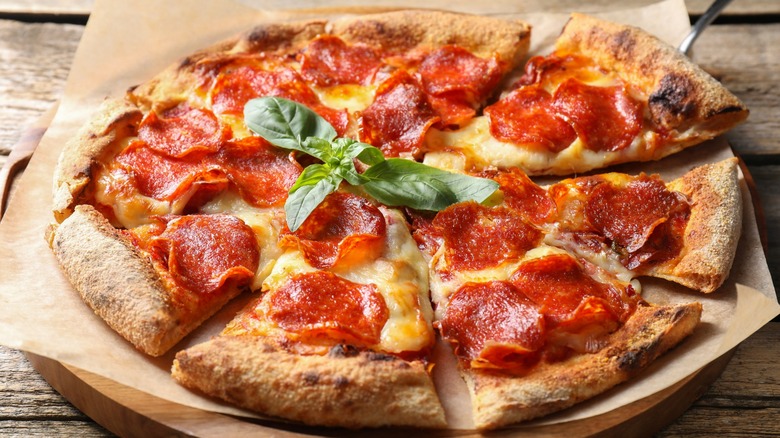
It should go without saying that pepperoni is one of America's favorite pizza toppings, but quality matters. It should be vibrant, flavorful, and greasy, but not too greasy, and that's what you can expect to get in any of the best pizza parlors in every state. One such gem, Craft 64 with two locations in Arizona, is owned by James Swann, an authority on what constitutes superior pizza. He recently schooled us here at The Takeout on what makes pepperoni exceptional and red flags to be on the lookout for.
"Low-quality pepperoni is generally 100% machine made, contains countless additives, artificial flavors, and generally no casing as it's formed in production," Swann said. "It will generally have a pale color due to its artificial characteristics and a lack of true spice, as well as lower-quality meats with an excessive amount of fat. Flavor will be dull and 'artificial' without depth or any lingering spice."
Swann said what you really want to see crowning your pizza is rich red and orange hues, which indicate the pepperoni is teeming with flavorful spices, as well as slightly crispy edges. The composition of the meat will dictate how it looks after it's baked. "High-quality pork and beef with the right blend of seasoning, fat content, and smoking time is key," he said. "If the meat is too lean, the pepperoni tends to overcook before the pizza is ready, too much fat, and you wind up with a greasy mess." When the pepperoni isn't on point, you can bet your bottom dollar that the other ingredients on the pizza aren't going to be all that impressive either.
Pepperoni is one facet of the whole pizza package
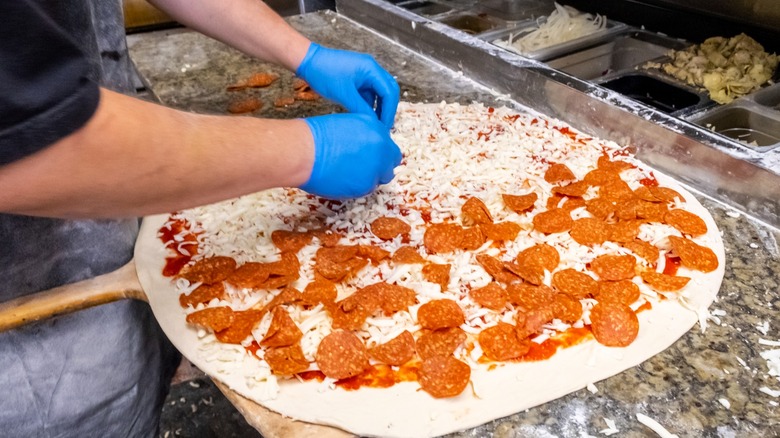
While you can tell a lot about a pizza joint by the type of pepperoni it uses, that's not the only determining factor that contributes to a first-class establishment. All the ingredients that grace the pie influence the overall quality. James Swann emphasized this using the Socratic method, highlighting questions any pizza place should ask itself if it aims to deliver excellence.
"Does your dough preparation/hydration work well with your oven temperatures to create a soft yet pliable and crispy pizza?" Swann asked. When a pie is baked in a wood-fired oven, as many outstanding restaurants like Craft 64 do, the dough needs to be able to fully cook in mere minutes without burning. That generally means using a dough recipe specifically geared toward cooking in a wood-fired oven, and getting too creative with add-ins like oil can turn a potentially tasty pie into a charred catastrophe.
The dough isn't the only thing that should be crafted with care. "Are you making your own mozzarella from scratch every day with curd from Wisconsin?" Swann inquired. Cheese from a bag should be reserved for Dominos. If a pizza parlor is motivated to impress, it won't take the easy route and bulk order cheese from a food distributor.
Extraordinary pizza, with or (gasp) without pepperoni, also needs a quality sauce. "Do you make them in-house? Do they work to balance the rest of your ingredients?" Swann asked. Not all pizza sauce has to be tomato-based, but if it's boasting rich flavors that keep you going in for another bite, it likely didn't come out of a jar.