

The Most Nutritious Bell Pepper Color You Can Buy
It's no secret that eating vegetables is healthy, but some veggies pack a far more powerful nutritional punch than others. For example, the overlooked watercress is the most nutritious vegetable in the world. And when it comes to bell peppers, the color of the brightly-toned capsicum determines how much bang you'll get for your buck, nutritionally speaking.
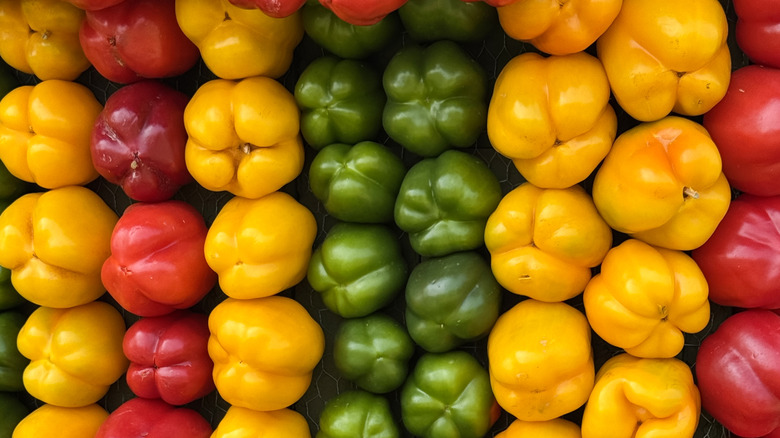
The bell peppers you'll find at the grocery store come in four primary colors: red, orange, yellow, and green. All of these brightly hued vegetables come from the same exact plant, a variety of Capsicum annuum, harvested at different levels of ripeness. The crunchy, mild-flavored peppers start out green and become redder and sweeter as they ripen. Green bell peppers are the least ripe and most bitter (making them the perfect pepper for elevating canned baked beans), while fully mature red bell peppers are the sweetest variety. However, the color of a bell pepper doesn't just influence flavor; it also impacts nutrition.
All bell peppers offer an impressive dose of vitamin C, fiber, and antioxidants, but red bell peppers are even more nutrient-rich than their cooler-toned counterparts. According to the United States Department of Agriculture (USDA), 100 grams of raw green bell pepper contains about 100 milligrams of vitamin C, while the same amount of raw red bell pepper packs in more than 140 milligrams. Red bell peppers also contain the highest dose of antioxidants, like beta-carotene, capsanthin, and luteolin, when compared to orange, yellow, and green varieties.
Why are red bell peppers the most nutritious color?
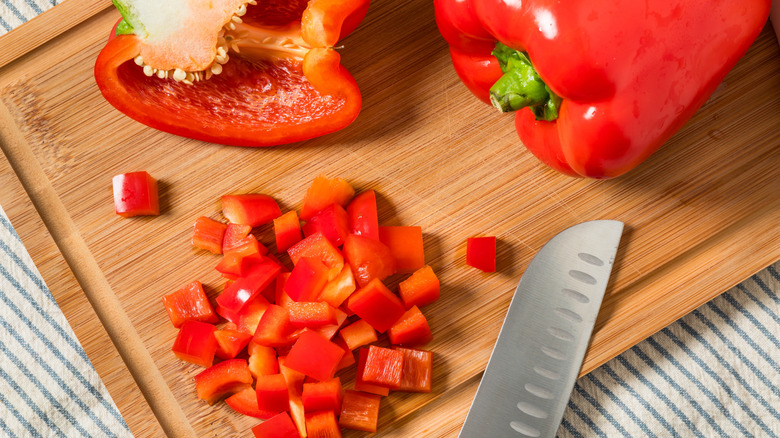
Red bell peppers are more nutrient-dense than the other colors because as the peppers grow sweeter and riper, their vitamin and antioxidant content also increases. One of the biggest reasons for this is that the chlorophyll in unripe green peppers breaks down and is replaced by carotenoids, powerful antioxidants that give the pepper its rosy hue and boost its nutritional profile. Naturally, this begs the question: Does all produce become more nutritious as it ripens? The answer, like so many nutrition-related matters, is far from clear-cut.
The nutritional composition of almost all fruits and veggies changes as the produce ripens, offering different benefits at different stages. For example, green bananas boast a hearty dose of fiber and lower sugar content, while brown bananas typically contain less fiber and more sugar and antioxidants, so the color of your bananas can determine the most nutritious bite.
In the case of capsicums, green bell peppers pack higher doses of lutein and zeaxanthin, which promote eye health, while red bell peppers contain more vitamins and antioxidants overall, including lycopene, which, in addition to a wide range of health benefits, may lower cancer risk. At the end of the day, if you enjoy a diverse diet and eat the rainbow of fruits and vegetables, the nutritional differences between bell pepper colors shouldn't make or break your health — the important thing is to eat veggies (you don't even have to taste them).