

The Best Time To Add Glaze To An Oven Baked Ham (It Makes A Big Difference)
We may receive a commission on purchases made from links.
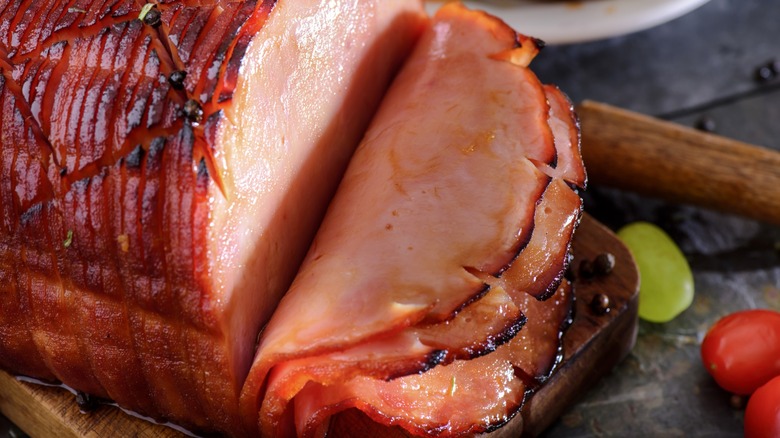
With Easter just around the corner, some culinary gurus are gearing up to prep a flavorful lamb roast as the centerpiece of the holiday dinner table. Yet, most Americans opt for a shimmering glazed ham during the paschal season, and with good reason. Not only is it a more forgiving protein for those unfamiliar with cooking it, but it also serves as a much cheaper way to feed a crowd. However, as straightforward as baking a ham is, achieving that sweet, glossy sheen on the meat relies on impeccable timing.
The ideal time to glaze a ham is between 30 and 60 minutes before it reaches the desired temperature. Store-bought ham is typically pre-cooked and only needs to be warmed up to reveal its best qualities. A modest 7-pound spiral ham in a 325-degree Fahrenheit oven can reach 140 degrees internally (the USDA's recommended benchmark) in just over an hour at 10 minutes per pound, meaning you won't have to wait long to glaze it. Alternatively, a whole, bone-in 14-pound feast-worthy unit needs 15 to 18 minutes per pound to reach that temperature, so you'll want to wait at least two and a half to three and a half hours before putting the finishing touch on it.
If you glaze one of these big boys at the onset of cooking, the ham is likely to dry out after baking it uncovered for hours. Even worse, the sugary components of the glaze will burn if left in the oven that long. Alternatively, applying the glaze right when it comes out of the oven doesn't give it enough time to caramelize and obtain that shiny, eye-catching gleam.
Make your own glaze and set the ham up for success
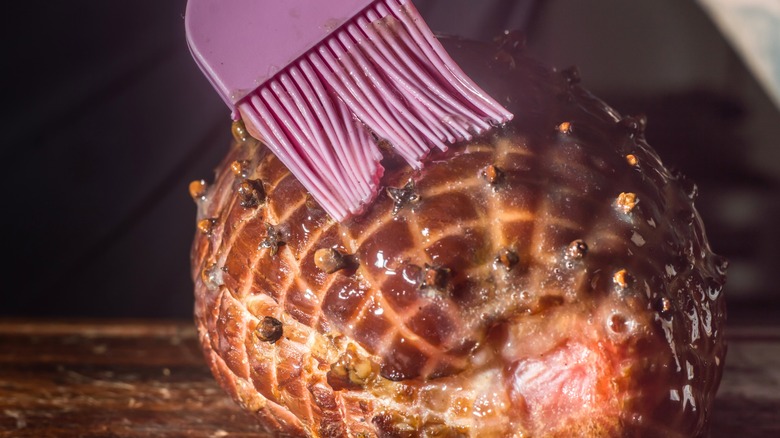
Many pre-cooked hams include a glazing packet with purchase, meaning you're all set to cover, bake, and glaze without any additional ingredients (skip the cloves for studding a ham unless you're showing off how bougie the protein can be). Still, those with higher flavor aspirations may be inclined to make a quick glaze from scratch. The key is to balance the savory, salty nature of ham with complementary ingredients, like a blend of tangy mustard and a sweet, fruity jam. Brown sugar is also commonly used as a sweet element, along with various herbs, and you can't go wrong with including oaky notes from some of your favorite spirits, such as bourbon.
Bear in mind that overutilizing liquid ingredients in your glaze will thin it out. There's nothing wrong with that; it just means you'll have to brush it on instead of slathering it all over the ham with a heat-resistant spatula, which can be faster. A silicone pastry brush works best as it can withstand the heat, and you won't have to worry about biting into an errant bristle that fell out.
When cooking a spiral ham, it's easy to get into all the nooks and crannies with the glaze, which is crucial for the best outcome. However, with an uncut variety, you'll want to score the meat, an overlooked but crucial step some people skip when baking a ham. The diamond marks certainly add to the visual appeal, but cutting into the protein also allows the glaze to permeate the meat. It also increases the surface area that's receiving glaze, creating more crispy outside bites for everyone to enjoy.