

Why Aldi's Produce Is Wrapped In So Much Plastic
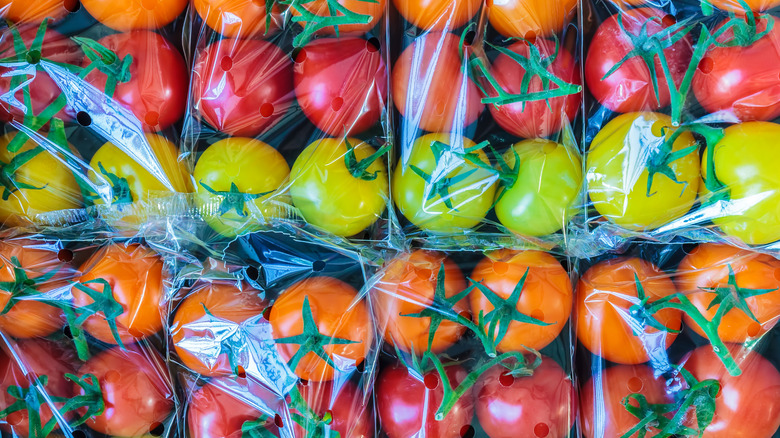
Let's be honest, human beings aren't perfect. We regularly get things wrong, and sometimes it takes a while to correct course. The ancient Romans used to distribute water through their cities using lead pipes, and it wasn't so long ago that we were insulating our homes with asbestos. Many of us look back on those mistakes with the benefit of hindsight and scoff, but we might be doing something just as dangerous when we wrap our food in plastic. Aldi may be a rising star in the grocery world, but its tendency to wrap its produce in plastic is beyond what most other grocers choose to do.
Unlike the pharmacist who put cocaine in his Coca-Cola invention, we aren't wrapping food in plastic because we like how it tastes or makes us feel. Aldi says it chooses to wrap its fruits and vegetables in plastic because it makes the logistics side of the business more efficient. This does have a certain logic to it since there's less risk of food flying about in the back of a truck if it's sealed away in a plastic container, but many consumers are wary of such widespread use of plastic.
Why is plastic around food such a cause for concern?
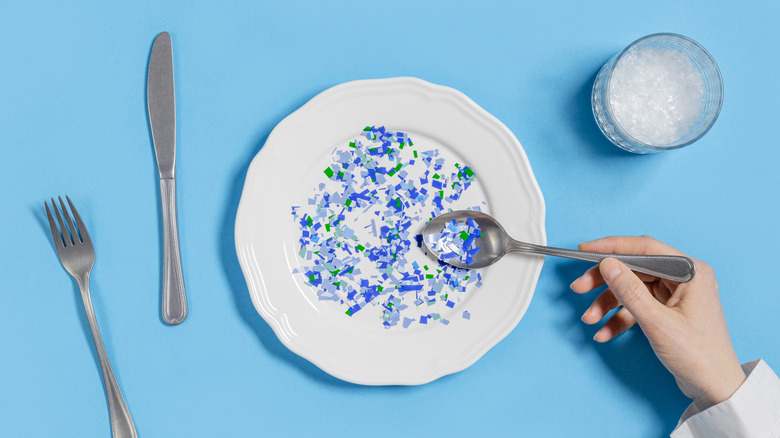
There are two main causes for concern when it comes to plastic and food. The first is the environmental impact plastic packaging has. We've all seen pictures of floating water bottles littering our oceans and plastic bags stuck to a tree in the middle of nowhere — the problem here sort of speaks for itself. Most of us understand that littering is bad, and the more plastics we produce, the higher the chances some of it will end up in nature and disrupt the planet's delicate ecosystems.
A more recent entry into the conversation, but one that has quickly gained momentum, is the conversation around microplastics and toxic chemicals entering our food through plastic packaging. Although plastic is durable, it's not invincible. As it gets shuffled around, small pieces of plastic will break off — and if they're wrapped around food, there's a good chance they'll stay there and later be eaten by us. At this point, it's virtually impossible to avoid eating or drinking microplastics, but by wrapping all of its produce in plastic, Aldi isn't helping much.
The soft, crinkly plastic, which is typically used to wrap produce in, is also high in phthalates, which are known endocrine disruptors. A 2023 study found that exposure to phthalates in the first year of life was associated with a higher risk for problems with the developing brain, including attention disorders and depression. Long story short, it's better to avoid plastic food packaging when possible, but you might also consider ditching that plastic cutting board.