

11 Store-Bought Cream Cheeses, Ranked Worst To Best
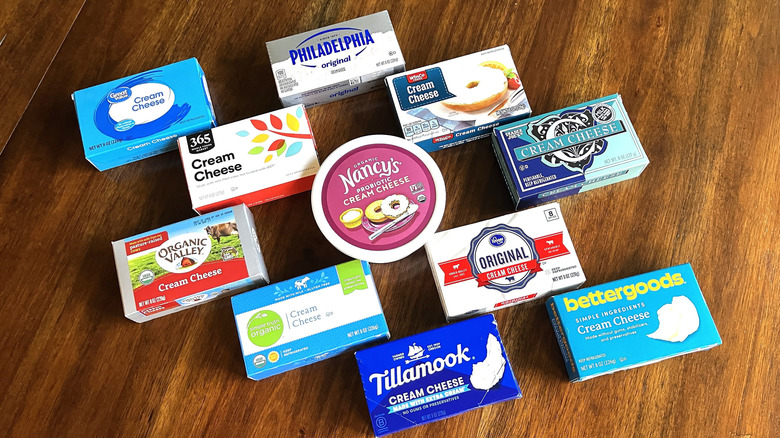
Who doesn't love a good bagel and cream cheese? It's an easy on-the-go breakfast, a universal choice at any meeting, a packed lunch option that won't become soggy before noon, and a rich component of a hassle-free girl dinner. While the quality of the bagel is an important part of the classic combo — with firmly held beliefs about the superiority of Montreal bagels by some and passionate diatribes that flood the internet if you suggest New York isn't the only place to find a great bagel — there is no such drama or feuding about which cream cheese is the best. That's either because cream cheese preferences are more subjective than bagel beliefs, or it's that all the brands are so similar there's nothing to fight about.
You know how you can take the same few ingredients — flour, sugar, milk, fat, and a leavening agent — and turn them into pancakes, waffles, biscuits, or muffins so that they all taste uniquely different? Well, cream cheese is not like that.
All cream cheeses contain milk, cream, cheese cultures, and salt. Some brands add thickeners and stabilizers, but overall, there's just not a lot of flavor range in plain options. I tasted 11 kinds of cream cheese, and honestly, there were some that tasted exactly the same. Others stood out — in both positive and negative ways — which helped develop this list of the best and worst store-bought cream cheeses.
Methodology
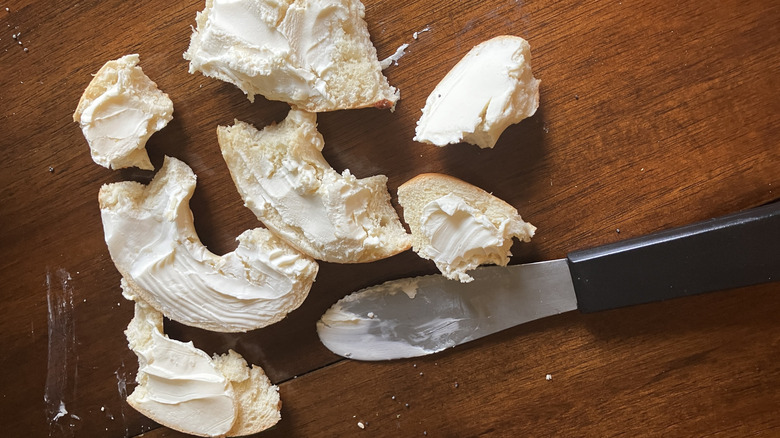
I tasted the plain, full-fat cream cheese of 11 brands available at the grocery stores in my area. The 8-ounce bricks of cream cheese ranged in price between $1.50 to just over $5, with the average price around $2. Each brand was rated on taste, texture, acidity, saltiness, spreadability, and overall impression.
Each cream cheese was sampled multiple times, by multiple tasters, on bagels, crackers, and on its own. It was a blind taste test, easy to execute since all but one brand is sold in the same box, same size, and same shape. Once out of the box, they had nearly identical silver foil wrappers. We taste-tested the cream cheese samples in a different order to avoid flavor carryover bias. Palate cleansers were used between samples to preserve flavor integrity. There were plenty of thoughtful re-tastes and attention given to subtle differences. I'll admit there was one brand that only got one taste. Its rankness made its ranking obvious, and I knew I didn't need to taste it (ever) again.
11. Nancy's Organic Probiotic Cream Cheese
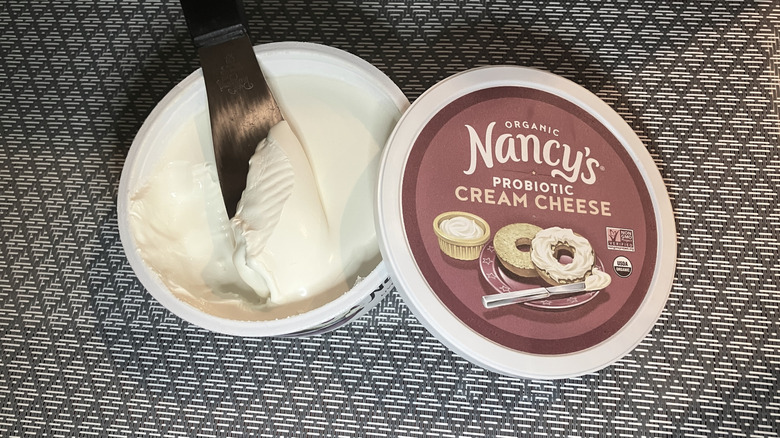
From the first dip into the tub, it was apparent that Nancy's Probiotic Cream Cheese is not your typical cream cheese. In all fairness, it is not, with "probiotic" featured obviously in its name. But it should come with a warning that this is for those who like the taste of probiotics, not for the merely probiotic-curious. Nancy's webpage proclaims its products have "as many live probiotics as we can fit in a cup," which, for this 8-ounce tub of cream cheese, turns out to be billions from four strains of lactic and live probiotic cultures.
Of course, cream cheese is supposed to have a pleasantly sour tang, courtesy of lactic acid. However, the taste of the probiotics, which is known to be sour, overpowers every other flavor. Was this cream cheese milky or salty? I'll never know. Was it bitterly sour? Yes. Yes, it was.
The texture of this brand was also not typical of cream cheese. I don't know if probiotics were to blame for the off-putting consistency, but it spread onto crackers like caulk. It was chalky, grainy, and plasticky, although it doesn't contain any added stabilizers. If you want to add more probiotics to your diet, eat some yogurt or sauerkraut. And if you want a rich and creamy schmear on your bagel, keep scrolling.
10. Bettergoods Cream Cheese
Bettergoods is the Walmart brand, which, unlike the Great Value budget brand, offers more innovative, elevated flavors. Its bright, jewel-toned turquoise box with bright contrasting orange lettering stood out among the neutral white and silver boxes of the other cream cheese brands. I noticed Bettergoods was twice as expensive as the Great Value brand, which I thought reflected premium ingredients or high quality. However, while there are plenty of Bettergoods items worth buying, this is not one of them.
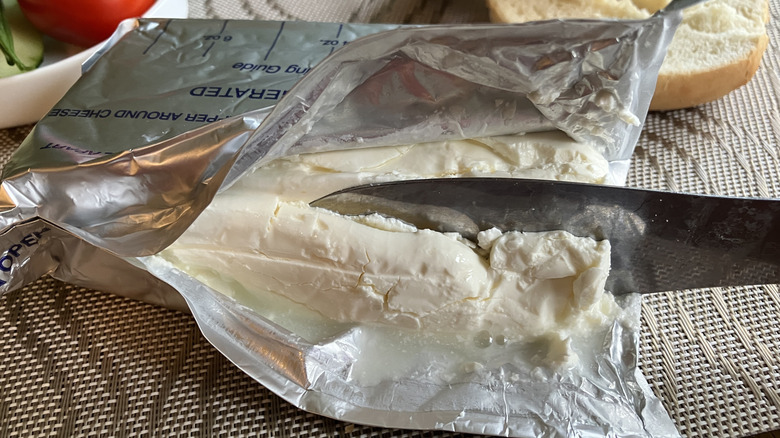
The brand claims its cream cheese contains simple ingredients and no gums, stabilizers, or preservatives. Maybe that's not something to brag about because that was probably the reason for the sour, bitter taste and disappointing texture. When I peeled the foil wrapper away, the brick appeared wet, and when I took a scoop of cream cheese, cloudy, yellow liquid oozed out. This is what is called "wheying off" by those who speak cheese-ese, but in plain terms, it means the cheese separated, and the liquid leaked out, leaving the cream cheese crumbly, dry, and grainy.
Could it have been a bad batch? A box that had been reshelved after being abandoned at checkout? I don't think so, because I always reach into the back of the grocery shelf for the freshest perishables, so I have to assume what I tasted is the standard product. But I won't be shelling out $3.86 for another box of this brand to see if I'm right.
9. Simple Truth Organic Cream Cheese
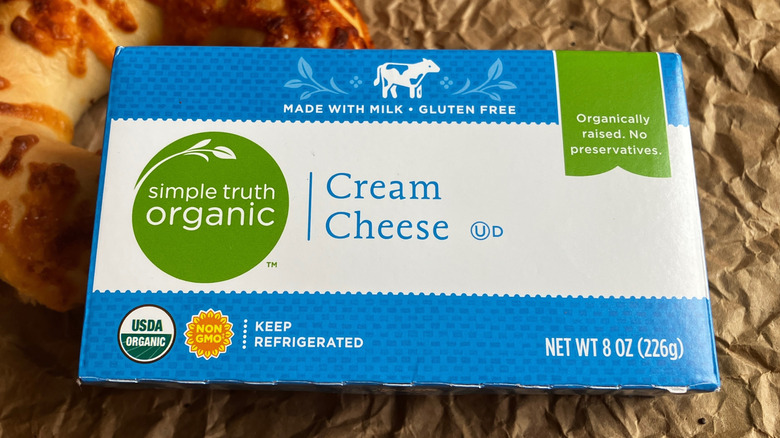
Here's where the list starts to leave the worst behind and enter the "mid" brands. Simple Truth Organic Cream Cheese has the tanginess you expect, though a bit more sour and acidic than necessary, making it difficult to catch the cream's sweet notes.
This is the first brand on the list to have an added stabilizer. In general, stabilizers are added to cream cheese to prevent the liquids and solids from separating (wheying off), to add thickness and firmness to preserve the soft cheese's shape as it cools, and to give it elasticity to improve its spreadability. Half of the brands on this list use a common trio of stabilizers: xanthan gum, locust bean gum, and guar gum. Simple Truth Organic — a Kroger brand that promises not to add extra, unwanted ingredients to its products — uses just one stabilizer in its cream cheese: carob bean gum (another name for locust bean gum). This natural, plant-based stabilizer is supposed to contribute to a rich taste and spreadable texture. However, compared to the other brands I tasted, Simple Truth Organic Cream Cheese is chalkier, grainier, and disappointing.
8. Organic Valley Cream Cheese
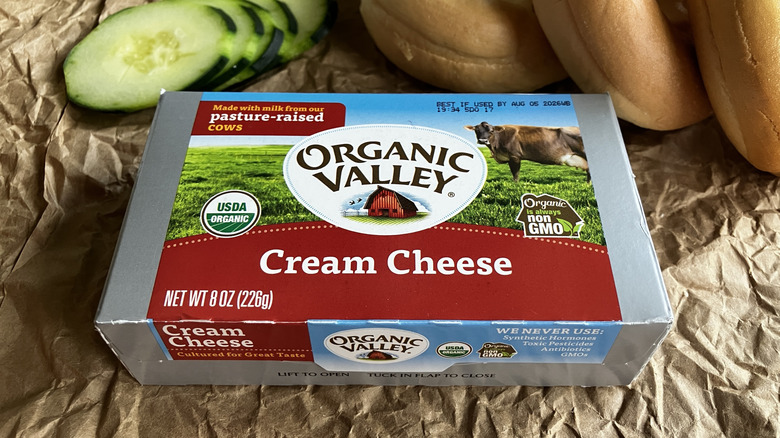
A description on the box of Organic Valley Cream Cheese paints a picture of an idyllic family farm where "simple and delicious" cream cheese is "crafted with care" with cultured milk and sweet cream from the happy pasture-raised cows. I just wish this cream cheese tasted as good as it sounds.
This was one of the mildest-tasting cream cheeses (a nice way of saying it was bland and lacked salt). However, it could be a good brand of cream cheese to toss on the smoker. It also probably would be better eaten on an everything bagel or with briny capers and lox, although wet toppings wouldn't do its texture any favors. It's no surprise that this cream cheese had a weird texture because Organic Valley ranked low on our list of best and worst cottage cheese brands, also due to its strange texture.
Even though this cream cheese uses the same stabilizer as the Simple Truth Organic brand, it results in a different — but not better — mouthfeel. The milk, cream, cheese culture, salt, and locust bean gum come together to form a sticky, white spread that melts into a slightly chalky paste, unpleasantly sticking inside the mouth. The extra time lingering on the taste buds turned out to be a good thing since that's when the sour tanginess finally came through.
7. Tillamook Cream Cheese
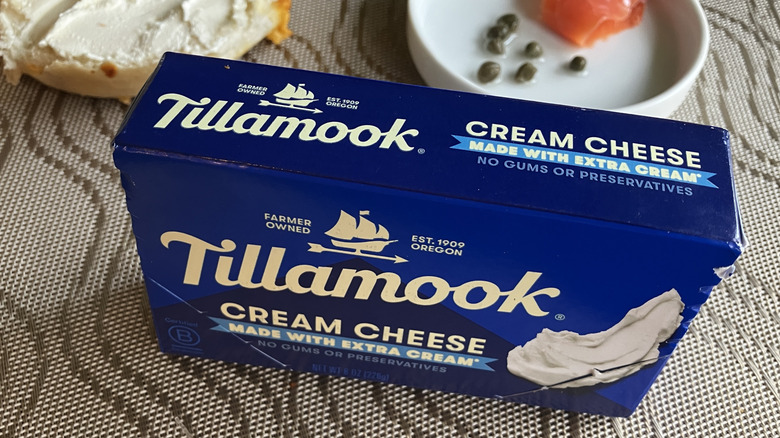
I have a sweet spot for Tillamook ever since I visited the brand's creamery in Tillamook, Oregon. The cheese-centered tourist destination lets you watch cheese being made, learn all about cows, and visit the ice cream counter stocked with unique flavors. Tillamook has been making cheese and winning awards for more than 100 years, and its Farm Style Cream Cheese won four gold medals at the 2025 International Cheese and Dairy Awards. Unfortunately, Tillamook's brick cream cheese did not win any contests with my tasters or me. Don't get me wrong — it was not awful, just not gold medal great.
Right on the box, Tillamook announces its cream cheese is made with extra cream, and I could taste it, a sweet milky flavor that was either from the cream or the addition of skim milk. However, it was just too mild, without enough of that acidity you want in cream cheese.
The consistency was also lackluster. There are no added stabilizers, which is apparent in the troublingly dry trail it leaves when spread on a cracker. Various tasters' descriptions ranged from chalky and pasty to "has a clay-like consistency." But there's no need to avoid this brand. Tillamook's mild cream cheese would incorporate well into a cream cheese frosting — one of the easiest frostings to make — and tastes great spread on cookies, cinnamon rolls, or carrot cakes.
6. Trader Joe's Cream Cheese
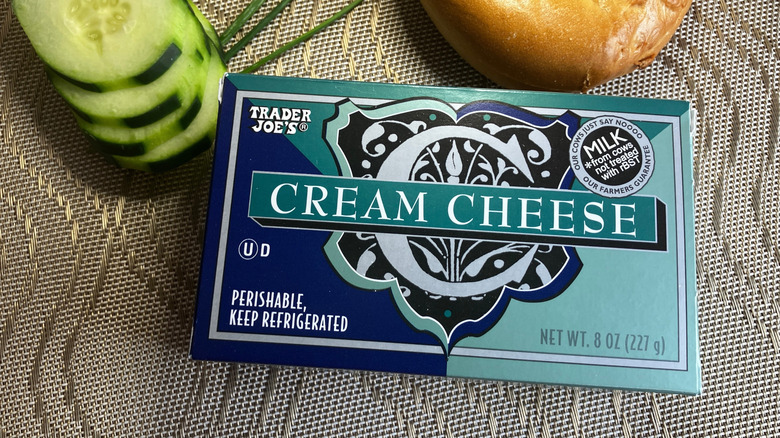
Trader Joe's is a toy store for foodies, featuring many specialty foods that have gained dedicated fan followings, as well as exciting new products introduced weekly. The chain's store-brand cream cheese is a pretty good mild spread if you don't want a strong sour taste. It might even be a bit light on the salt, but overall, it just lacks the tangy punch of cream cheese.
The texture is where we start to see the strengths of this brand. This is the first cream cheese on the list to employ multiple stabilizers. It uses the popular trio of guar gum, carob bean gum, and xanthan gum. These are all safe, plant-based stabilizers, which, by law, can't total more than 0.5% of the weight of the brick of cream cheese. When used together, these stabilizers form a strong gel that keeps the product elastic when heated and firm when cooled. In Trader Joe's cream cheese, these stabilizers are responsible for its buttery texture — a bit wet but smooth (some tasters call it rubbery) — which melts silkily in the mouth. Xanthan gum, in particular, excels at stabilizing frozen products. When making an ice cream with a cream cheese base, like this guava cream cheese sherbet recipe, the stabilizers keep the texture consistent during temperature changes so it melts and re-freezes beautifully.
5. Whole Foods 365 Cream Cheese
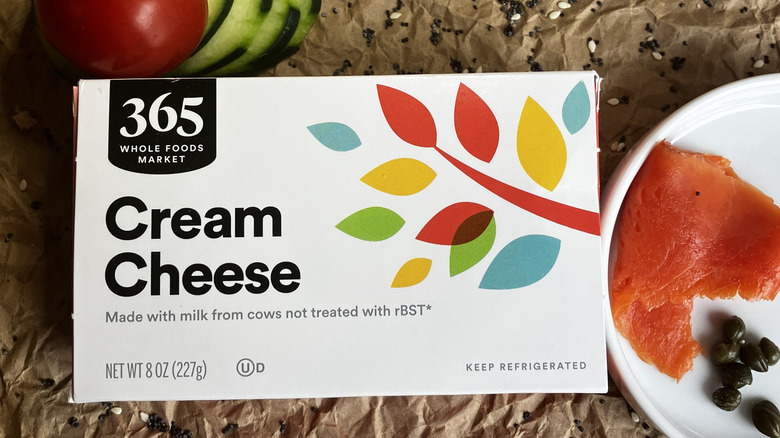
We're getting into some good store-brand cream cheeses with Whole Foods 365, which has a creamy, milky flavor that balances the sour acidity with a mild, well-seasoned tartness. The use of the common trio of stabilizers and thickeners creates an extra-thick spread that is pleasantly dense, chewy, and well up to the job of upgrading a hearty bagel with a generous slather.
If you're confused why Whole Foods Market — which claims to sell only high-quality, responsibly sourced products and has a list of over 300 banned ingredients — is using stabilizers and thickeners, you need some background information. We've all become suspicious of additives and unappetizing ingredients hidden in our food, but these stabilizers are, after all, natural. Carob and guar gums are ingredients sourced from plant and tree seeds, and xanthan gum is the product of bacteria fermenting plant sugars. All three are considered natural, safe, and beneficial.
4. Kroger Cream Cheese
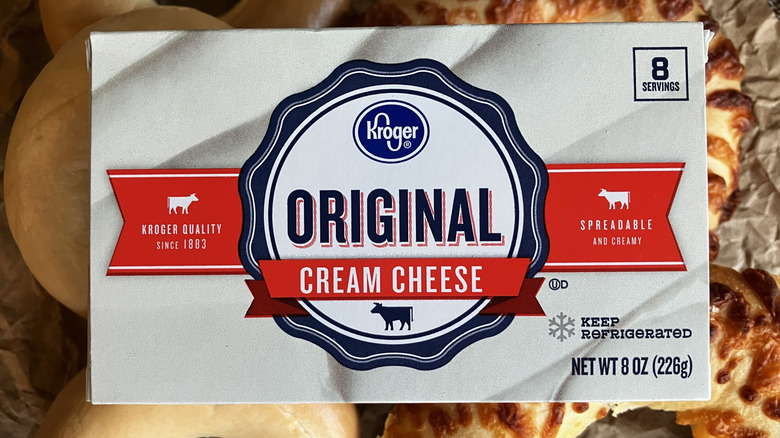
Kroger makes a smooth, milky cream cheese that boasts a signature tang. The distinctive tart or sour taste is lactic acid, which also flavors some of the world's most popular foods, such as yogurts, cheeses, and sourdough bread. In cream cheese, the flavor is developed during the cheese-making process, when cheese cultures containing certain bacteria are added to the milk and cream. The bacteria convert the dairy lactose into lactic acid, adding tang and helping to separate the solid curds from the liquid whey.
As a member of the fresh cheese family, cream cheese is not aged and does not contain rennet, so it must be refrigerated. It has a longer shelf life than other soft cheeses. When you buy a brick of cream cheese, for example, the best if used by date is often a few months out. However, once you've opened the foil packaging, it should be eaten within two weeks.
Kroger's Cream Cheese is the natural soulmate of bagels and would make a great appetizer in a cheeseball or spread on celery. Because it's basically a mild-tasting blank slate, it is endlessly versatile. There are so many beloved recipes that use cream cheese, from hot, savory dips and pasta sauces to sandwich spreads and sweet desserts.
3. Great Value Cream Cheese
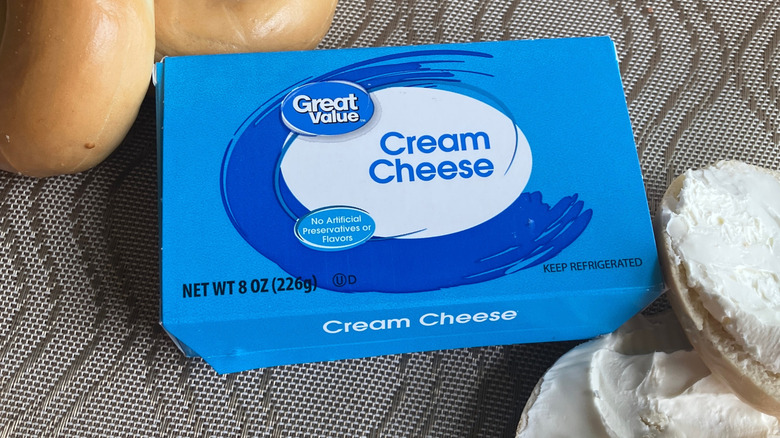
I am as surprised as you are to see Walmart's budget store brand, Great Value, rank in the "best" part of this list. If I hadn't used a blind taste test, Walmart's reputation as a cheap discount retailer might have skewed my opinion and kept my taste buds from recognizing this rich and tangy gem. (And just to be clear, a blind taste test wasn't as necessary for the other Walmart brand, Bettergoods. Even if I went in with high expectations, its subpar taste and texture were so obviously one of the worst cream cheese brands I sampled, I am confident it would still receive the same low ranking for its high rankness.)
Great Value cream cheese is dense and rich, and keeps its thick, creamy texture even when spread on a hot, toasted bagel. That's why I would recommend trying the brand as a schmear on a breakfast bagel cooked in the air fryer or melting it into a creamy hot dip. The flavor combinations are endless.
2. Philadelphia Cream Cheese
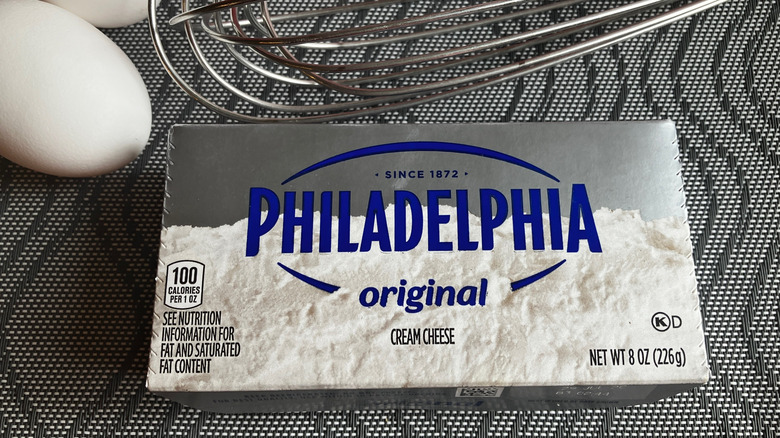
I know you've been waiting for this one. Philadelphia Cream Cheese and its signature silver box are iconic and, in fact, the original cream cheese. It was invented in 1872 by New York dairyman William Lawrence, who was attempting to make Neufchâtel, a soft French cheese, but added too much cream. Even though they are sold side by side in supermarkets today, cream cheese and Neufchâtel are different in their fat and moisture content and processing methods. The iconic name came along in 1880, when a distributor decided to market the soft cheese spread as Philadelphia Cream Cheese, named after the city famous for good cheese.
Nearly 150 years later, Philadelphia Cream Cheese, with its light and fluffy texture and characteristic tang, is still considered the quintessential cream cheese for desserts like no-bake cheesecake, tea-time cucumber sandwiches, and frosting for red velvet cake. It is soft (using just one stabilizer) and creamy, slightly sweet, with a round flavor — tangy, not sharp or sour. Now that I'm a cream cheese expert, I can confidently conclude that its milder tang is probably due to the fact that it is the only cream cheese I found that has cheese cultures listed as the last ingredient (and therefore the smallest amount).
1. WinCo Foods Cream Cheese
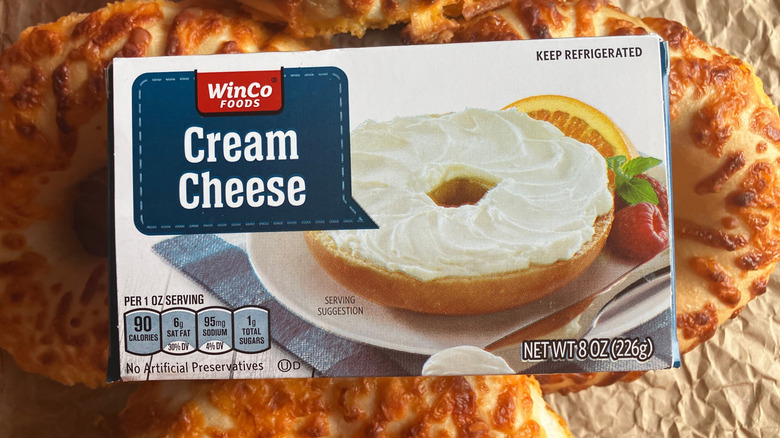
WinCo Foods Cream Cheese is my new go-to for a classic bagel and schmear breakfast or snack. I like to layer it thick, but I know the perfect amount of cream cheese is subjective, so follow your intuition. This cream cheese tastes good on its own, but it would be great with your go-to bagel order or when trying someone else's — I suggest Michael B. Jordan's favorite bagel toppings.
The creamy taste and thick, buttery texture of WinCo's cream cheese earned it the top spot of the brands I tasted. Like the majority of the high-ranking brands, it uses the common three stabilizers for a smooth, chewy texture. But it also has that zesty acidity I like.
Honestly, the top three cream cheeses were so close that the winner varied at different tastings. Detecting the subtle differences in such a mild-tasting food is subjective, and I know my fellow tasters and I have different cream cheese preferences and expectations. Price wasn't necessarily a factor in the results, but it's exciting that both Winco and Great Value are only $1.50 in my area, so it's not even a splurge to buy the best brands of cream cheese. Of course, Philadelphia Cream Cheese was twice the price, but that's because you're paying for brand-name recognition, and for the brand that started it all.