

Give Tuna Casserole An Umami Taste Using Just A Single Ingredient
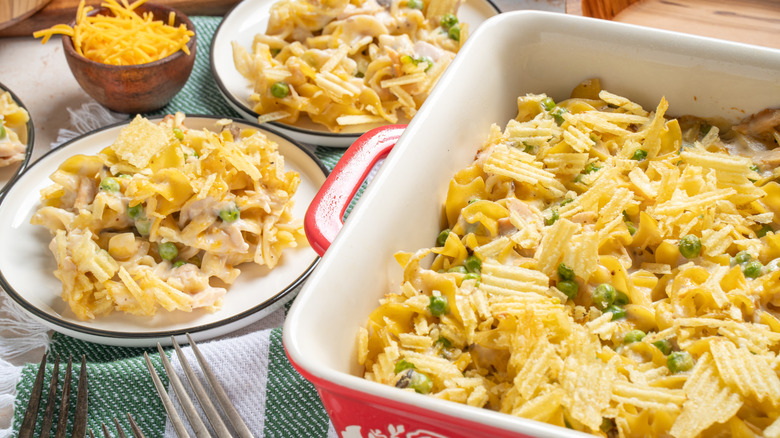
For some folks, tuna casserole is undeniably a classic family dinner that deserves a comeback. For others, it's a dish better left in the past, but that's probably because they were eating a version that was mushy and bland. Tuna casserole can be interesting and craveable when you incorporate this expert-approved ingredient: miso paste. "Its savory, umami-rich profile adds depth and complexity to the dish, balancing the creamy sauce and complementing the mild flavor of tuna," chef John Politte told The Takeout. He's the creator of It's Only Food and host of the YouTube series of the same name. According to Politte, miso paste works well in this old-school dish because, "Miso brings a unique richness and a hint of earthiness, making the overall casserole taste more robust and satisfying."
Miso lifts the pasta, tinned fish, vegetables, and cream sauce up without overwhelming them. The casserole still retains the qualities that make it comforting, but the fermented soybean paste adds that little something extra that keeps each bite interesting. In Politte's opinion, white (shiro) or yellow (shinshu) miso are the best options here — red (aka) miso has a bolder, funkier, meatier taste that is too strong for these mild ingredients.
How to add miso paste to tuna casserole
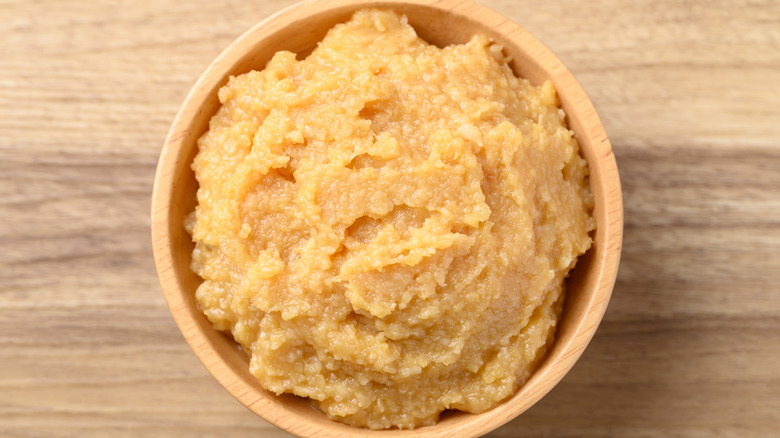
"To incorporate miso into a tuna casserole, the most effective method is to blend it directly into the creamy sauce base before combining it with the other ingredients," Politte advised. Before incorporating it into the sauce, he suggested warming a little bit of milk or water and dissolving the miso paste in it. Otherwise, it has a tendency to clump up.
Whether you're making homemade béchamel, using a creamy condensed soup, or going for a cheese sauce, simply stir the dissolved miso paste mixture right in. It's best to start with a spoonful and work your way up from there, tasting as you go. Since miso paste is quite salty, hold off on seasoning the sauce with salt until after you incorporate the miso. While you're at it, be mindful of other common sodium-rich additions to casseroles, such as cracker crumb and potato chip topping. If you want to use miso in your next batch, consider using salt-free or low-sodium seasoning blends, condensed soups, and canned tuna brands.
Ingredients that pair well with miso tuna casserole
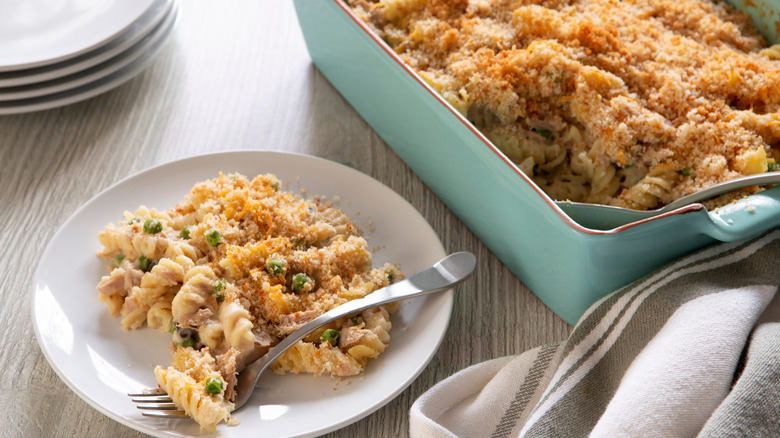
White and yellow miso pastes are mild enough to be incorporated into a classic tuna casserole recipe, enhancing the taste without taking the flavor in a new direction. Chef Politte shared, "Sauteed mushrooms bring earthy depth and meld beautifully with the savory notes of miso." This is an especially great addition if your go-to tuna noodle casserole includes canned cream of mushroom soup. "Thinly sliced scallions or leeks introduce a mild onion flavor that cuts through the richness without overpowering the casserole. For a touch of crunch and texture, water chestnuts or toasted breadcrumbs work well; they contrast nicely with the soft noodles and creamy sauce," he added. Fresh or frozen peas will also lend a touch of sweetness and a pleasing color.
If you want to take your tuna casserole in a different direction, Politte suggested incorporating a splash of soy sauce or sesame oil. "These Asian-inspired ingredients echo miso's savory qualities and add subtle aromatic notes," he explained. As for the finishing touches on your casserole, "A sprinkle of nori or bonito flakes as garnish can amplify the umami and give a hint of the sea, tying in with the tuna," he said. Nori, a type of dried seaweed, lends a sweet and savory note. Bonito flakes, also called katsuobushi, are thinly shaved pieces of smoked, fermented, and dried fish; they have a meaty, salty, and smoky flavor that brings an umami punch to tuna casserole.