

Is Out-Of-Season Fish On A Restaurant's Seafood Menu Really A Red Flag?
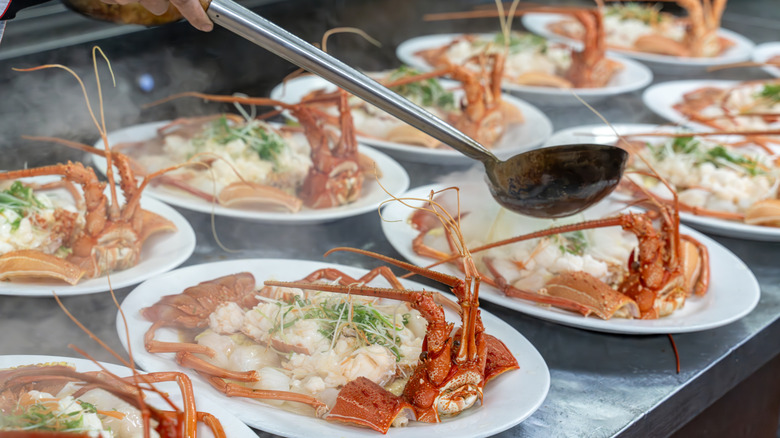
There are plenty of signs that you're in a bad seafood restaurant which you should watch out for, and common wisdom often suggests that off-season fish on the menu looks especially fishy. After all, if you see bluefin tuna during the winter (many months after their fishing seasons end and before the next one begins), the fish may have been frozen all that time and then thawed by the restaurant. But is this something that will ruin the fish? We spoke to Ed Scarpone, the culinary director at the Italian restaurant Giulietta in New York City, who explained that frozen seafood often isn't a major problem.
In fact, fresh fish isn't always better than frozen fish. According to Scarpone, "With modern sourcing and freezing technology, high-quality fish can be available year-round. What matters most is how it was handled and stored." Essentially, so long as the fish is frozen immediately after harvesting, it'll be higher quality than an unfrozen salmon which can very quickly turn for the worse after it was caught. Going back to that tuna example, Scarpone explains, "Tuna done in a deep freeze shortly after being cleaned is a good example of a fish that isn't affected by being frozen and can actually bring benefits to the final product."
Plus, even if that fish is out of season where you live, it might be in season elsewhere and ingredients travel fast nowadays. As Scarpone says, "We get fresh fish to the restaurant door step within a day, straight from the water."
Frozen fish can still taste fresh
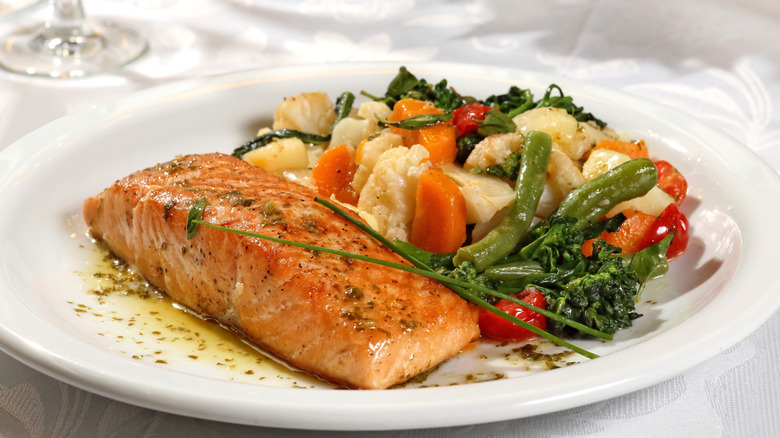
Ideally, the fish you're ordering will have been flash-frozen on the fishing boat just after it was caught, meaning the fish is immediately placed at extremely low temperatures to quickly freeze it; leaving no time for it to grow stale while preventing ice crystals from forming. When frozen this way, the fish should retain the fresh taste and nutrients it had just after leaving the ocean. After that, it can be kept frozen for a few months before its quality begins to decline.
If you spot ice crystals on seafood, that's a much bigger seafood red flag you shouldn't ignore, because it's a sign of freezer burn and it could mean the food thawed partially and then refroze before it reached your table. You don't want to see signs the restaurant didn't keep it fully frozen, because that can mean it had time to spoil.
How can you tell if a restaurant's seafood was properly frozen and stored? According to Scarpone, you should just ask: "Any restaurant worth their weight in shrimp will be able to tell you where the fish is from and if it's fresh." Asking whether it's frozen is perhaps a phrase you shouldn't use when ordering fish if you don't live directly by the coast. Ask about how it got to your plate instead.