

When You Should (And Shouldn't) Preheat A Baking Sheet
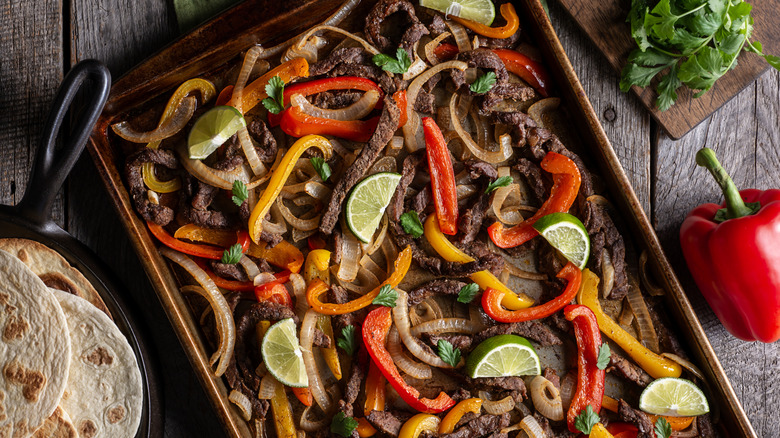
We pretty much always preheat skillets and ovens before we use them, but have you ever wondered if you should be doing the same with baking sheets? If we're going to the trouble of preparing a hot oven for the food to go in, it might seem like the tray the food sits on should also be hot. In fact, the more you think about it, the more you might wonder if you've been doing this wrong your whole life — don't worry, you haven't. While preheating a baking sheet can be useful in a few specific cases, it's unnecessary for most recipes.
First of all, it's a no-go for most baking recipes like cookies, biscuits, or cakes. It increases the likelihood the batter will stick to the pan, and it could lead to overcooked or burned bottoms on baked goods. With cookies, it will also almost certainly lead to overspreading and result in flat cookies. In fact, if you want to avoid flat cookies, you should go in the opposite direction and chill your cookie dough before baking. There are a few exceptions to the rule. For example, if you want to make the perfect popovers (Yorkshire puddings, if you're British). However, exceptions like this are fairly rare. If you're dealing with an outlier, your recipe will definitely let you know. One of the most common exceptions is for roasted vegetables — though not everyone agrees on it.
When preheating the baking sheet might be useful
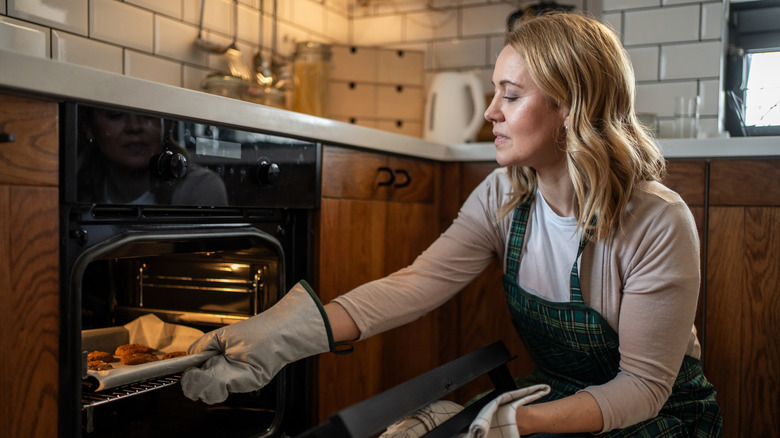
Some experts argue that a preheated sheet pan will only lead to sticking, burning vegetables, but others believe it helps speed up the cook time and encourages browning. In my experience, sticking definitely can happen, so I tend to only preheat the pan when a recipe says so. When I make roast potatoes for Christmas, for example, the recipe involves preheating goose fat in the tray before adding the potatoes. (The crunchy outer layer that this helps create is amazing, by the way.)
Preheated trays can also be useful for reheating certain foods. Martha Stewart recommends it to get a crispy crust on day-old pizza, for one. It's important to note that if you choose to preheat your tray while following a recipe that doesn't specifically recommend it, it will probably affect the cooking time. Having said that, cooking times are often only "rough guidelines" anyway since not all ovens cook at the same level.
The important thing to remember is that preheating is pretty much only necessary if the recipe specifies it. Otherwise, it's mostly down to experimentation and personal preference — if you try it and like it, then go ahead and keep doing it.
What baking sheets to use for preheating, and how to do it
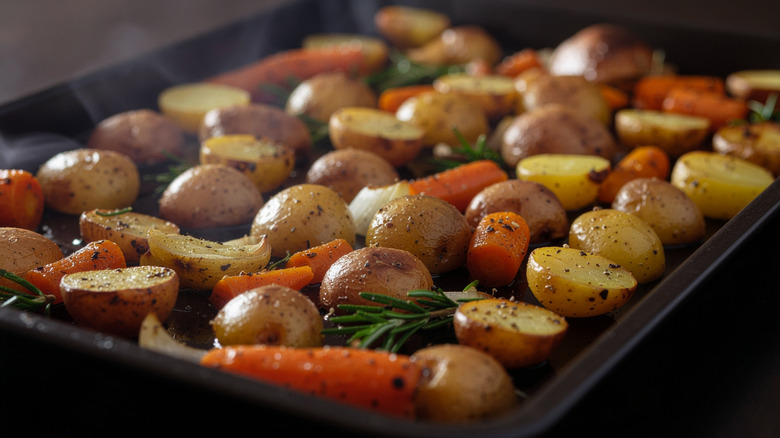
Preheating a baking sheet isn't quite as simple as shoving it in the oven. There are two main things you need to be careful of: the type of tray you use and how you handle it once it's hot.
Some baking trays are made of thin aluminum, and these are the worst type for preheating as they'll easily warp out of shape when heated while empty. They also don't retain heat very well, so your tray will cool down quickly as soon as you remove it from the oven. If you only have thin trays like this, you should probably put off your preheating experiments until you can get your hands on a more appropriate tray.
The best kind of trays to use are thick, high-quality sheet pans made of aluminized steel, carbon steel, or alloy steel. These won't warp, and they'll retain heat a lot more effectively so you can get the results you want. If the size works, you can also preheat a cast-iron skillet and use that for your oven-baked goods.
When you preheat a baking sheet, it will be hot when your food goes in (surprise, surprise). If you've also got fat in there, be careful not to touch it or let it splash as the food goes in. If there's no fat, some foods will stick to the tray, so watch out for that, too.