

When Storing Homemade Baby Food Always Reach For This Type Of Mason Jar
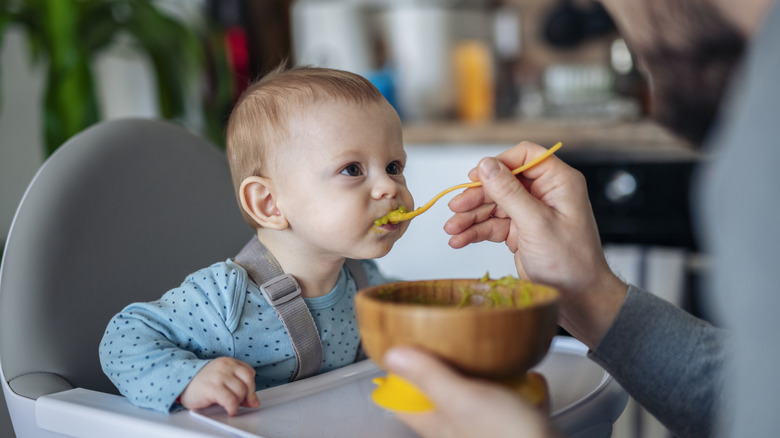
Making homemade baby food is a great way to take control of what exactly is in your child's diet, but portions are often small, which means there's likely going to be leftovers. That's why it's important to know how to store them properly. Mason jars are a popular choice for storing homemade baby food because you can portion things out beforehand. To find out what kind of mason jar is best for the job, we talked to Melissa Bykofsky, executive editor at What to Expect.
"Glass is the best option here, recommended by the American Academy of Pediatrics," said Bykofsky. "While plastic jars have their perks (lighter and less likely to shatter if dropped), glass mason jars are the best choice for baby food storage as they don't harbor harmful chemicals, clean up easily, and won't hold onto yesterday's sweet potato smell when you're filling them with peas tomorrow."
Although plastic is convenient, it isn't exactly as safe to consume as its manufacturers insist. While this is true for adults, it's especially true for children because they are still developing, for one, but also the same amount of a harmful chemical will have a greater concentration by weight in small children. "Some plastics contain chemicals like BPA that can leach into food over time," said Bykofksy. "Glass is naturally free of these chemicals, making it non-toxic, odor-resistant, and stain-resistant." If you do want to opt for plastic, whatever you do, definitely don't heat food up in plastic containers.
Small glass jars are the best option for baby food
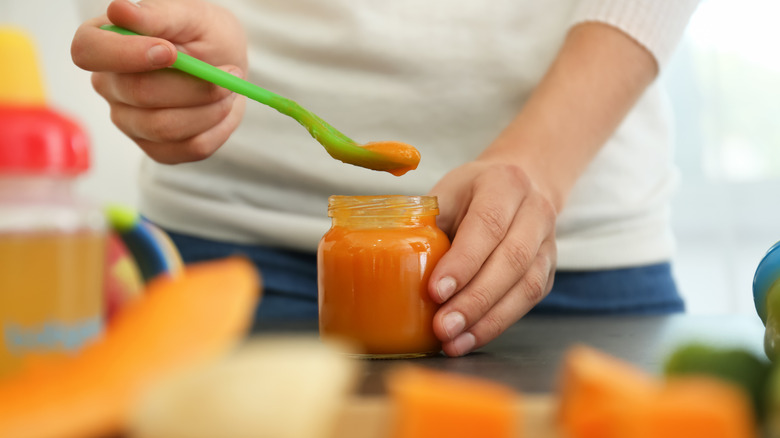
Alright, so we know we should avoid storing most food in plastic containers, but glass isn't exactly perfect either. "If the weight and breakability of glass feels like a dealbreaker for your on-the-go lifestyle, hybrid jars that are glass on the inside, plastic on the outside offer a nice middle ground," said Bykofsky.
Whichever type of jar you go with, regular maintenance is important. One way to stay on top of things is to keep an eye on the lid. "If your metal lids are feeling crusty and worn, it's definitely time for a swap," Bykofsky explained. "The key is making sure whatever lid you choose fits securely to keep food fresh and free from contamination." Depending on what brand and size you have, the mason jar lid may have two separate pieces or just a single twist-on cap. The same idea applies to both, but keep in mind that smaller jars are better for this. "Small, 4-ounce jars are your best friend. They're perfectly portioned for a single serving," she said. "They're also compact enough to tuck into the fridge, a diaper bag, or a cooler without taking up much space."
Baby food really only lasts a a day or two in the fridge, so long-term storage is another factor. Like most homemade food, the best way to do that is to simply stick the jars in the freezer. Double check that the jar you're using is freezer-safe and leave enough room for the food to expand. The last thing you need is for the glass to break and make a mess of your freezer.