

11 Condiments That Don't Belong In Your Fridge Once Opened

You may be among those automatically assuming the fridge is the best place to store everything once you've popped that top open. It's one of the first things parents teach, right? That keeping edible items cold helps them stay fresher, longer? Well, that's not necessarily always the case. While this rule of thumb does apply to many groceries, refrigeration's not always needed, or even the best route to take for every purchased product. This is especially the case when dealing with condiments. It may really surprise you just how many of your beloved, go-to sauces, spreads, and more actually do better when placed in the pantry versus the refrigerator.
So, which condiments should be refrigerated? Well, a lot of condiments are made specifically to be shelf-stable. For instance, ingredients such as salt, vinegar, and sugar are known to be natural preservatives (helping to prevent spoilage once a bottle or jar is popped open). As such, placing these products in the fridge won't make them unsafe, but it can really mess with their consistencies, textures, and even flavors (and not for the better).
For example, have you ever attempted to squirt, spoon, or spread cold honey (or even PB) straight from the fridge? Toast and bread take a beating with those two when taken from the cold caverns and brought straight to the toast. To help you avoid such pitfalls, these are 11 condiments that don't belong in your fridge once opened.
1. Honey

You may have heard about honey being the superhero among condiments that basically lasts forever. But, does honey actually last forever? Honey is one of the very few food items in this world that doesn't need to be refrigerated after opened. In fact, if placed in the fridge after that lid is popped, the cold can actually degrade honey in various ways.
This resilience can be explained by science. Since honey has a super high concentration of sugar (and not much moisture), this makes it very resistant to bacterial growth. This is a great thing when it comes to a stable shelf life for your honey (when stored properly in a sealed container, it can last for many years, decades even, without going bad).
Speaking of proper storage, it's said that the most ideal place to keep your honey is in a cool, dark cupboard or pantry (away from direct sunlight or heat). This room temp storage, not only aids in honey longevity, but it also is best to ensure an easy-pour consistency. In contrast, refrigerating honey can speed up crystallization (a natural process, but one that will still cause the honey to thicken and go grainy), which makes it nearly impossible to drizzle or use easily. While you can still eat crystallized honey, it is not optimum for taste, or convenience. Suffice to say, keep that bee nectar in a nook in the pantry.
2. Soy sauce

Soy sauce is a condiment that gets placed in the fridge automatically. However, it may surprise you to learn that soy sauce doesn't really need to be in your cold fridge space at all. This is thanks to two unique factors: Soy sauce's fermentation process and its super high salt content (both of which make it naturally resist bacterial growth, and hence, spoilage). This science points to soy sauce being plenty stable to store safely at room temperature (yes, even after that bottle is opened).
This explains why you can go into restaurants and often see soy sauce just chilling out on the tables between diners, right alongside the salt and pepper. You see, traditionally brewed soy sauce is produced with a fermentation process, where a salty environment is created, which prevents harmful bacteria from growing.
So, storing soy sauce in a pantry or cupboard is absolutely okay (just be sure your soy sauce bottle is tightly sealed and kept away from direct sunlight or heat). If stored away expertly, soy sauce can keep its quality intact for several months. It should be noted that some manufacturers suggest refrigerating soy sauce, but this recommendation is mostly a suggestion to help maintain peak flavor versus food safety. While chilling soy sauce can slow down gradual changes in taste and color, since changes happen so slowly, keeping this condiment in the pantry is usually the most practical and best option.
3. Hot Sauce
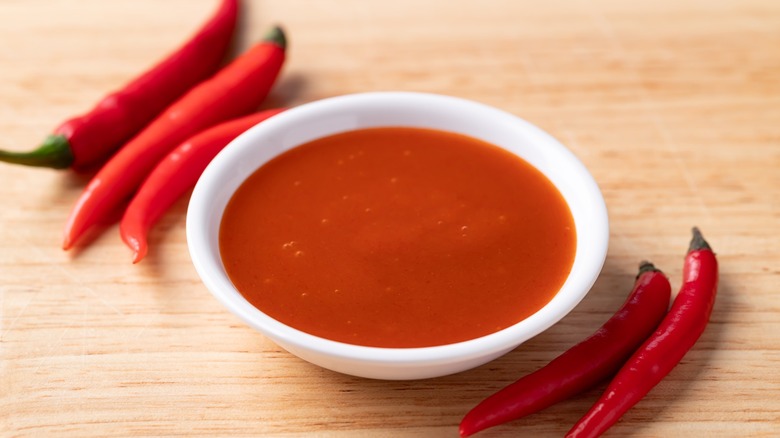
Punnily enough, one of those condiments that ignites some heated debates around refrigeration is hot sauce. While there is one camp that will die on the hill that every single bottle of hot sauce is meant for the fridge, others eschew that mindset entirely, content to keep their hot condiments right on the counter or in the cupboard. Neither route is necessarily right or wrong. The truth of the matter depends most on the actual type of hot sauce you're talking about.
Most traditional hot sauces (particularly vinegar-based versions), are naturally shelf-stable. This is because the main ingredients (vinegar, salt, chili peppers) actually come together to form an acidic mix that works to prevent harmful microbes from hitting the scene. Thanks to this, this specific type of sauce can remain safe at room temp for months, even after being opened.
So, keeping vinegar-rich hot sauces in the pantry is, in most cases, absolutely okay (as long as they are kept away from contact with direct sun or heat). In fact, setting that hot sauce in a cool, dark cupboard can actually help maintain the flavor and color, while also ensuring it is easily pourable (not gloopy). One note that is an important differentiation is the rare exception of hot sauces made with fresh ingredients or that have a lower acidity content. These may spoil more quickly, making them the anomalies that might benefit from a home in the fridge.
4. Mustard
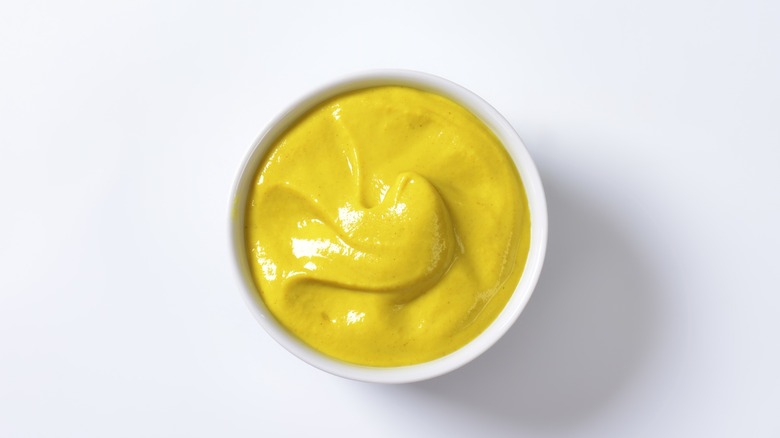
We have given you excellent recipes for homemade mustard iterations and surprisingly yummy advice on elevating taco meat with this unexpected ingredient We've also shared our favorite yellow mustard brand. But, what about what to do once you buy the mustard, and make a surprisingly cool recipe with it? Where do you store it?
Well, unsurprisingly, mustard is another condiment that often ends up in the "to be refrigerated or not" debate. While many may throw mustard directly in the fridge after opening it, some varieties don't need it. For instance, classic mustards (those made with mustard seeds, vinegar, salt, and spices) house a unique combination of ingredients that naturally help preserve it. Specifically, the acidity from the vinegar, paired with the antimicrobial compounds of mustard seeds, work together to form an anti-bacterial environment.
Thanks to this, mustard can be shelf-stable for long periods of time (usually safe to consume for months). That said, refrigeration does help mustard stay fresh longer (cold storage slows down oxidation). Still, refrigeration isn't strictly required for safety, with many traditional mustard varieties (think simple yellow or Dijon-style options). In contrast, the more delicate or specialty mustards (including sweet, creamy, or low-acid iterations) may benefit more from refrigeration. In most cases, classic mustard's ingredients are doing most of the preservation work, without the help of the refrigerator.
5. Vinegar
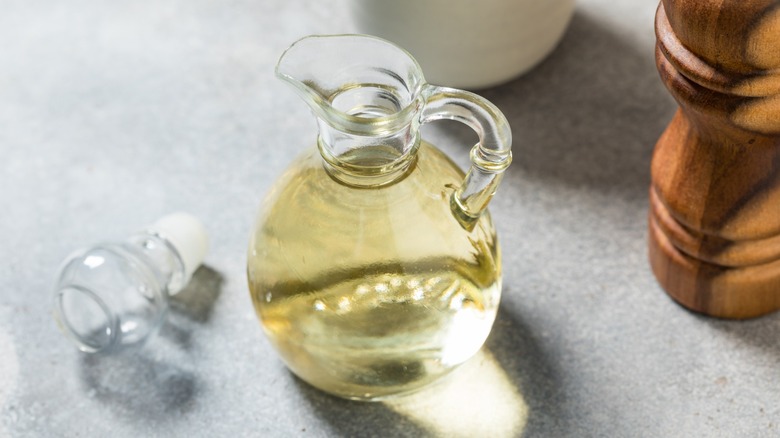
Vinegar is among the simplest condiments to store safely in the pantry, and the reason for this is its natural acidity. The acidity forms an environment that bacteria find very difficult to grow within. As such, vinegar is considered "self-preserving," which explains its nearly endless shelf life (when stored in the right conditions). This shelf-stable characteristic includes all types of vinegar (including white distilled, apple cider, balsamic, rice wine, and malt-based varieties).
The fermentation process by which these vinegars are created (which also produces acid) is what keeps it shelf-stable. This science explains exactly why vinegar itself is actually used as a preservative agent in many recipes (from pickling veggies to making marinades, and more). It makes complete sense, then, that a food article used to preserve other items is clearly more than ample to last on its own (no fridge needed). Specifically, the majority of vinegars are safe to sit in the pantry for years. White vinegar especially is known to show zero differences, while balsamic or apple cider vinegar may develop slight changes in color, sediment, or cloudiness over time, but these are just aesthetic happenings, leaving the condiment itself unbothered and perfectly fine to consume.
In order to keep vinegar in its ideal state on the shelf, store it in a cool, dark pantry space (away from direct sunlight or heat). Also, glass is the most ideal container for storage over the long haul, just make sure the bottle is tightly sealed.
6. Fish sauce
Fish sauce is one condiment that most people automatically assume is the type of ingredient that needs to be housed in the fridge. However, this is not the case. Since the classic versions of fish sauce are created by fermenting fish with large volumes of salt, the upped sodium concentration of the concoction becomes a super effective preservative (and bacteria blaster). Thanks to this, fish sauce can be stowed away in a pantry safely at room temp, even once opened.
This would explain why in many kitchens and restaurants, fish sauce can be seen propped in the pantry or out and about on the table or counter, always ready to be added to a dish. The main point is ensuring the lid is sealed tightly, and the sauce itself is in a cool, dry place out of direct sunlight. When stored as such, even an opened bottle can stay good for one or more years.
Refrigeration of this specific condiment could even cause some uh-ohs. This is because when fish sauce is stowed in the fridge, salt crystals can start to form. When these start to pop up, while they may not necessarily be harmful, they certainly aren't ideal, as they tend to mess with the consistency and aesthetic of the fish sauce (and not for the better). Still, some will remain committed to keeping fish sauce in the fridge (which is totes okay). It's just not necessary for safety, and far from ideal for the easiest pour.
7. Worcestershire sauce
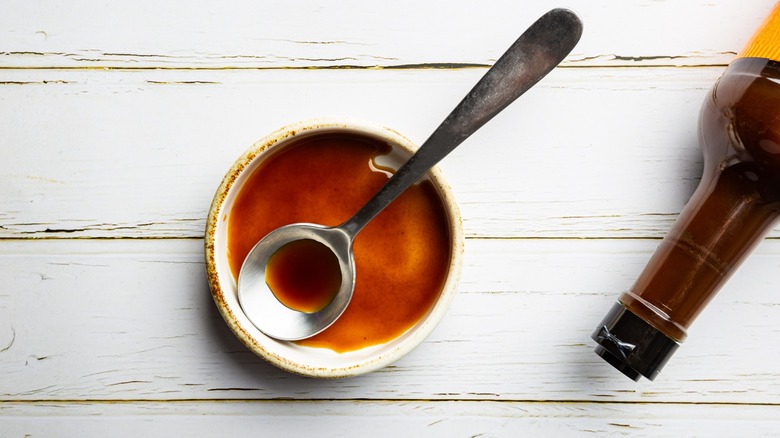
One more condiment that can safely be stored outside of the fridge is Worcestershire sauce. This condiment can say goodbye to the refrigerator due to its contents, which consist largely of ingredients that act as natural preservatives. Vinegar and salt are key players here, as they form an acidic, salt-forward environment that just says no to bacteria growth and ensures safe, stable, fridge-free storage for lengthy amounts of time, potentially up to two years.
This, of course, hinges on it being stowed away in your pantry properly. Specifically, keeping that Worcestershire sauce bottle tightly sealed and placing it in a cool, dark place will aid it in maintaining optimal flavor and quality. While many people automatically place Worcestershire sauce in the fridge because the label suggests doing so, it is notable that this recommendation is mostly intended to maintain peak flavor rather than to maintain food safety.
While refrigeration can slow gradual changes (such as muted flavor or color), these shifts happen slowly, and they usually don't make the sauce unsafe at all. So, for daily use, Worcestershire sauce is absolutely, and perfectly, poised being propped in the pantry. And, that means there will be one less bottle grappling for coveted space on your refrigerator shelf or door.
8. Peanut butter
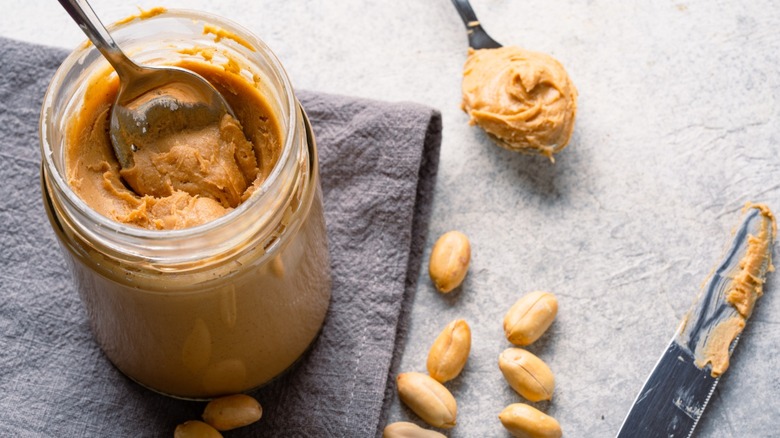
Not only is peanut butter a popular choice to pair with its iconic sidekick jelly, but this beloved condiment is also one many automatically throw in the fridge, even though it doesn't need to be there. Most classic peanut butter brands are specifically designed to remain fresh — fridge-free. This is achieved by the addition of stabilizers to them. These key ingredients prevent oils in the PB from going rancid. When stored in a cool, dry place, upside down, in a tightly sealed jar, peanut butter can last in the pantry without separating for up to two to three months.
This is great news for those out there who love their PB slathered on toast and bread, as there is nothing desirable about attempting to scrape cold peanut butter over the surface of dough. Not only can you absolute decimate the bread that way, but the scoop of PB you're trying to slather won't want to cooperate. Keeping PB at room temp keeps these pitfalls at bay.
One important distinction is with natural peanut butters (the types made with just peanuts and perhaps a bit of salt). Due to the fact these don't contain stabilizers, the oils can separate, so the product may spoil more quickly. In these cases, refrigeration is often recommended after opening.
9. Olive oil

While placing olive oil in the fridge may seem like the best way to keep it fresh, this is a misconception many falsely believe. The fact of the matter is that cold temps can do the opposite, creating some real pains for chefs when they reach for the bottle. Because olive oil reacts to cold by becoming cloudy (even eventually solidifying), this can pose a real obstacle for proper, easy pouring.
Luckily, when the oil is returned to room temp, it will be easily pourable once more, but that still makes having to wait more than annoying. And, while this change in consistency due to cold temps won't necessarily make the oil unsafe, going from room temp to cold over and over can eventually create issues affecting the quality of the olive oil over the long haul.
As such, the most ideal place to keep olive oil at the ready is inside a cool, dark pantry or cupboard (light, heat, and air are all pretty menacing when mixed with it, since these elements contribute to more rapid oxidation, which detracts from the flavor and scent). When the olive oil bottle is kept tightly closed, away from direct sunlight or heat, this placement is more positive than any fridge shelf could be. In this way, your oil will remain smooth, and flow freely, whenever you are wanting to use it on everything from pastas to salad dressings, and beyond.
10. Coconut Oil
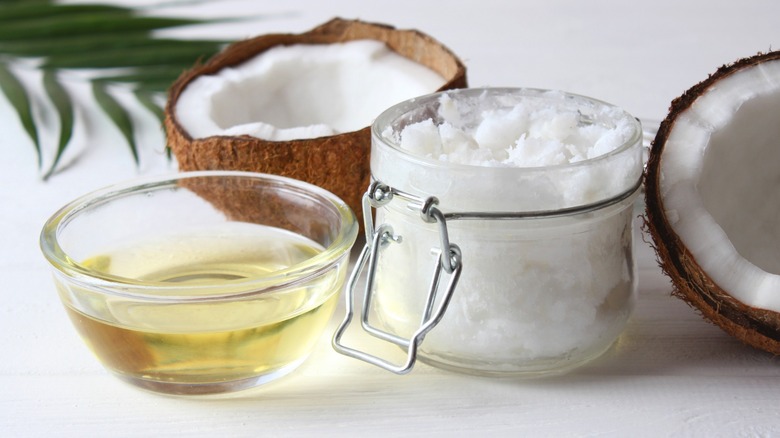
The next condiment on the list is coconut oil. Since it is naturally a stable ingredient, it makes sense that being placed in the fridge is far from necessary. In fact, tossing that jar of coconut oil in the refrigerator can make it pretty cantankerous to use. This is because when it reaches cooler temps, coconut oil will start to solidify and harden. What started out as freely flowing, smooth oil will soon turn into a firm, practically solid entity altogether, rendering scooping and measuring messy at best, and nearly impossible at worst.
By contrast, when kept at room temp in the pantry, coconut oil maintains that softer, more malleable consistency. This makes it not only easier to cook or bake with, but also allows it to be evenly incorporated into your skincare routine. If you were to keep that coconut oil in the fridge, you might have to wait until the oil warms to room temp before you can properly put it to use.
Scientifically, its low moisture content explains why it is not inviting to bacteria (bacteria needs water to thrive). Thanks to this, coconut oil enjoys a long shelf life. When stored correctly (tightly sealed and placed in a cool, dark pantry away from direct sunlight or heat), coconut oil can last at least a year. While some may refrigerate it out of preference or to extend its shelf life, as far as safety goes, this is not needed at all.
11. Molasses
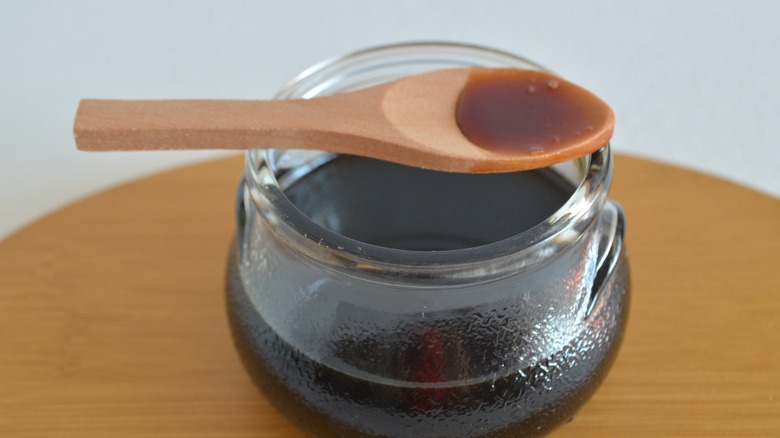
Did you know that molasses is among the most excellent substitutes for brown sugar? It also doesn't need refrigeration. This thick, dark, syrupy condiment has a high sugar content, which makes it a natural preservative, preventing bacterial formation. Thanks to this built-in stability, molasses is safe to keep at room temp, with zero worries of it spoiling.
In fact, the most ideal place to store molasses would be the pantry, as it is a cool, dry spot. Darkness is also a plus in this case, since both heat and humidity can be real doozies for molasses. These two factors can run amok, particularly by allowing mold to grow if it somehow gets inside the molasses jar. In order to avoid this yucky pitfall, simply ensure your molasses jar remains tightly sealed when not in use (even be careful to wipe the rim of the jar to be sure none of this condiment is left exposed).
If you follow these easy steps, by storing the molasses correctly in the cupboard or pantry you can rest assured that jar will last you upwards of six months to a year (maybe even longer). While some folks may still choose to chock that molasses jar in the fridge, this may lead to a texture and consistency that is near impossible to easily pour. To each their own, but just know that refrigeration is not needed.