

Never Overcook Salmon Again With This Restaurant Trick
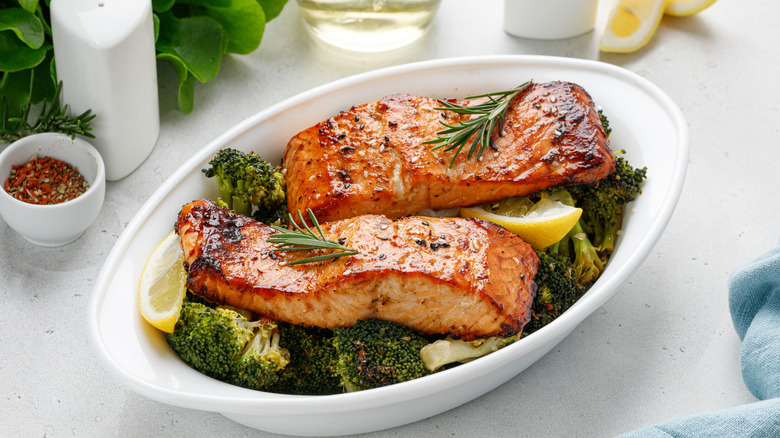
Salmon is easy to overcook, especially if you're working with a large filet that tapers into a thinner section at the end. Even if you've perfected other techniques, like using a brine for crispy salmon, the tail part tends to dry out before the chunkier bit cooks, and that's a disappointment – especially after you've put all that hard work into a roasted salmon for breakfast or that 1-pan baked salmon dinner meant to impress a few guests. We'd love to banish dry, dull salmon from our dinner tables, so we turned to an expert to learn how to fix the uneven cooking issue.
Ed Scarpone is the culinary director at the Italian restaurant Giulietta near Grand Central Station. In an interview with The Takeout, he shared a restaurant-level trick that fixes uneven cooking: fold the thin tail part under the rest of the fillet so the whole salmon cooks at the same pace. "That helps prevent the tail from overcooking and drying out," Scarpone said.
Make the salmon easier to fold by cutting a line across the grain of the filet right where it starts to thin out (don't cut through the skin, though). This technique helps keep the meat moist and can be used in any situation where a piece of meat is tapered and at risk of cooking unevenly. "It's most common with whole fish because of the taper, but the principle is to use this method any time there's uneven thickness," Scarpone said.
How the experts cook and serve different parts of a whole salmon
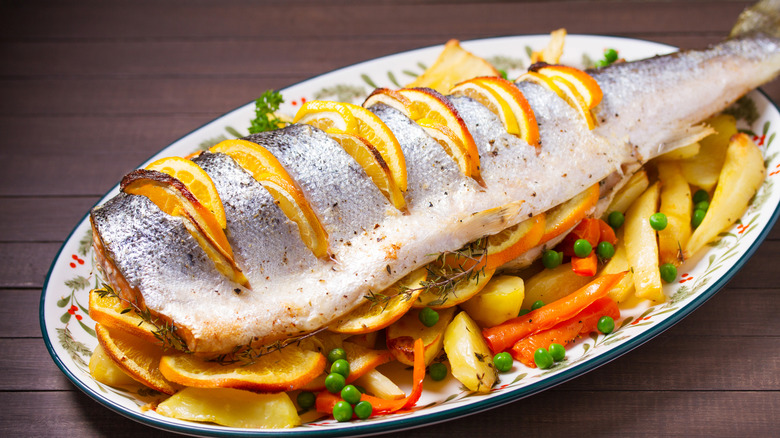
The folded salmon cooking method does more than even out the thickness of a fillet. "It's also a method we use in [the] restaurant to get another portion from a piece of fish," Scarpone said. "When done right, it works out well and some people prefer this section, like the end of a prime rib, because it has more surface area and color."
Scarpone likened a whole salmon to beef, pointing out that both are sectioned off into different cuts and types of meat. "All of the parts taste different and react differently," he said. "The loin and the belly are different, just like the tail. None necessarily better than the others, just different."
That doesn't mean you have to overly-tailor cooking methods to each part of the fish. Scarpone relies on low, slow cooking methods (oven roasted and poached, for example) and he times the removal of the salmon from the heat so it's served at the perfect level of doneness. "Baste with butter and a small amount of thyme and garlic while cooking; finishing with butter and fresh lemon juice helps regulate heat and also gives it extra flavor," he said. "Pull slightly under and let carryover cooking finish the job. Rest briefly before serving to ensure an even cook." When plating a whole salmon, Scarpone includes a bit of belly and loin "so you get the best of both worlds."