

The Reusable Bag Faux Pas That Makes Trader Joe's Cashiers Cringe
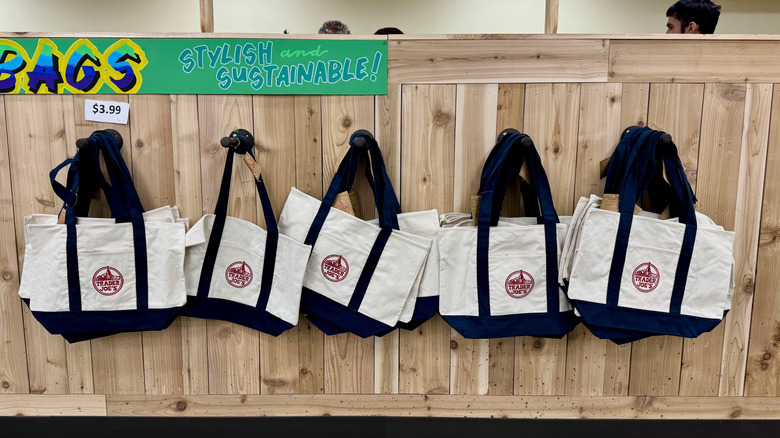
As one of the grocery stores that originated the reusable bag, Trader Joe's sees quite a few of them come through the checkout lanes. There's something undeniably satisfying about showcasing a bit of your personality while your groceries are being bagged. But whether your totes are from Trader Joe's or purchased from a random Halloween store several years ago, if they're gross, that's all that's going to stand out. Sorry, but according to some self-identified Trader Joe's employees on Reddit (and probably a lot of other grocery store employees as well), one of the biggest customer actions that gives them the ick is dirty or smelly reusable grocery bags.
A Reddit user shared this horror story: "One time I was bagging a man's groceries with his reusable bags and a cockroach crawled out." Another employee had a similar tale to tell about a bag a customer brought in. "As I opened it up to use, a pile of DEAD BEDBUGS spilled out of their bag and all over the register. Never have felt more disgusted in my life," they said. Others have encountered foul odors, trash, and mold. If you've been ignoring your reusable grocery bags until it's time to go to the store, at the very least, it's time to inspect them — just in case.
Your reusable grocery bags might be full of bacteria
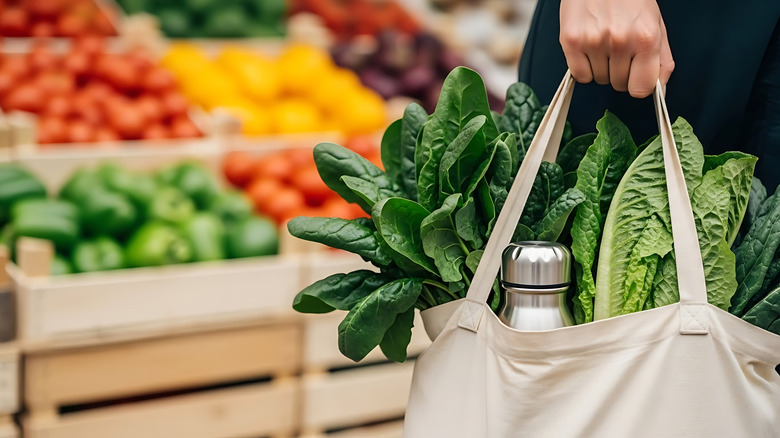
For many of us, just remembering our reusable grocery bags makes us feel like we deserve a pat on the back. TJ's even celebrates the practice by offering a plethora of uniquely designed bags for sale, which may also be a clever way Trader Joe's encourages customers to spend more money. Though, before you bring your old bags in or toss a new bag into the mix, it's worth remembering that reusable grocery bags are far from innocent in the world of bacteria and the potential spread of illness.
A study commissioned by the Canadian Environment and Plastics Industry found that many reusable grocery bags that haven't been cleaned are home to bacteria, mold, and yeast (via Ottawa Citizen). A 2011 study published in the Food Protection Trends journal found a high level of bacteria in almost every reusable bag tested. Of those tested, coliform bacteria (an indicator of fecal contamination) were found in half and E. coli in 12%. Consuming food infected with E. coli can cause illness that's especially dangerous for the elderly, young children, and those with a weakened immune system. Even if your bags don't have more severe types of pathogens, it's best to routinely clean your ever-expanding collection.
Proper reusable grocery bag use and care
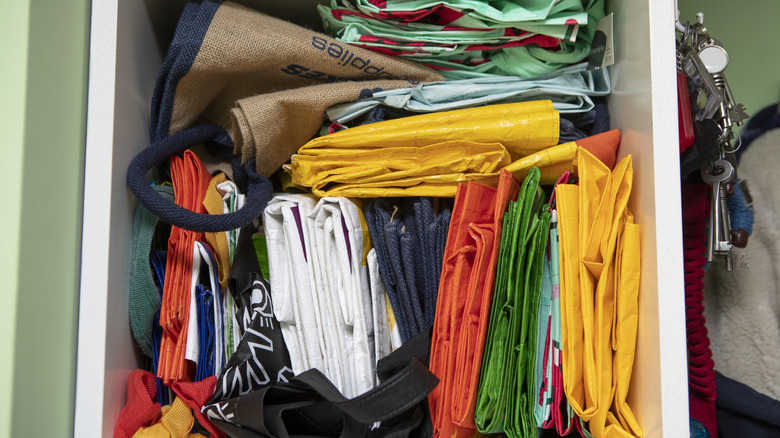
Reusable grocery bags should ideally be cleaned after each use, especially if there have been any spills or if they were used to carry meat products. Not all bags are created equal when it comes to cleaning, though. Cotton bags can be put in the washing machine and dryer like normal, while polypropylene, bamboo, or hemp bags can go in the washer but should be run on a gentle cycle and air-dried. Nylon, polyester, and insulated bags should be cleaned by soaking them in soap and warm water and giving them a good wipe down before allowing them to air dry. To prevent bacteria and mold growth, be sure all corners and seams are moisture-free before placing the bags back in storage.
Another tip for preventing bacteria is to designate a purpose for each grocery bag. Keep produce bags as produce bags, and poultry bags as poultry bags. Try to maintain this practice for each type of product to prevent cross-contamination. Another way to stop your bags from getting dirty (and smelly) is to store them inside your home. As appealing as it is to keep them in your car, the intense temperature fluctuations and potential for humidity make this spot a big no-no for storage. Last but not least, check the bags for anything that shouldn't be inside before handing them over to the cashier. They'll be grateful, and it'll save you any embarrassment.