

Why You Should Always Leave Artificially Flavored Cheese On The Shelf
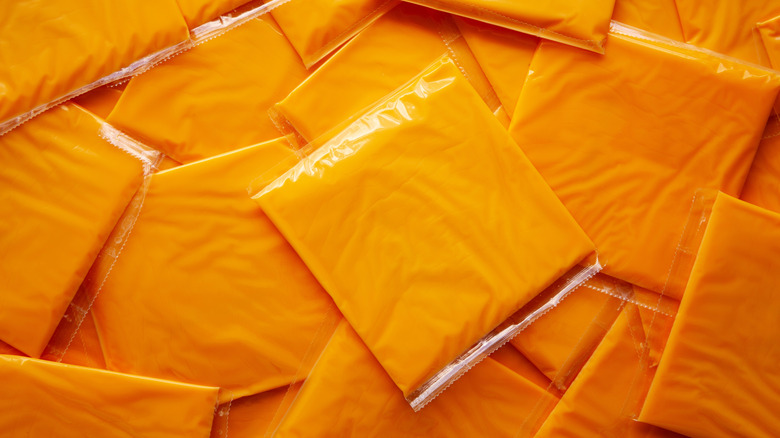
We're all familiar with the convenience of individually wrapped cheese slices, shelf-stable cheese snacks, cheese dips, and the powdered packets that instantly turn pasta into macaroni and cheese. While nostalgic, many of these are artificially flavored cheese products that can never compare to the taste, texture, or cooking performance of real, natural cheese.
According to Tonjon Engan, baking expert and culinary specialist of the Land O'Lakes Culinary Center, artificially flavored cheese products contain preservatives, stabilizers, additives, flavorings, and emulsifiers. While many of these ingredients create convenient shelf stability, they also produce a flavor that can taste flat and overly salty with a texture that's sometimes rubbery. Not to mention, their consistency doesn't integrate well into sauces or baked dishes. Natural cheese, on the other hand, is made with a short, recognizable ingredient list — milk, cultures, enzymes, and salt. "Real, natural cheese delivers nuance, richness, and a craveable melt you just cannot fake," says Engan.
Artificially flavored cheese products are also limited in how they can be used, with most designed for a single purpose. There's a reason why you don't often see or hear of someone using American cheese slices for anything other than between bread — it's because they're the best cheese for melting. Natural cheeses, however, offer more versatility in a range of forms and flavors that make cooking and snacking convenient. "For instance, cubes and cracker cuts make for easy snacks. Meanwhile, chunks give flexibility — whether sliced, shredded, or enjoyed straight from the package as a snack," Engan explains.
Natural cheese is better for you and better for farmers
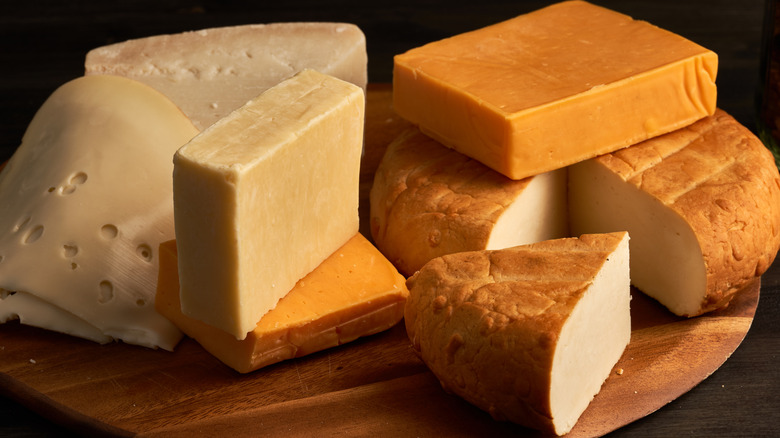
Another reason you'll want to trade artificially flavored cheese products for natural ones is because they're also more nutritious. Since natural cheeses aren't diluted with artificial flavoring and other ultra-processed ingredients, they retain more of the protein, beneficial fats, and vitamins and minerals like calcium. In fact, Italy's finest cheese contains more protein and calcium than eggs.
The story behind how natural cheese makes its way onto the dairy shelf is different from that of the artificially flavored products a few rows down. Unlike artificially flavored cheeses, these products undergo long fermentation processes which are required for traditional cheesemaking, and there's typically greater attention paid to the quality of the milk being used. Engan explains that many natural cheese brands are farmer-owned cooperatives, meaning that purchasing their cheeses helps support the dairy farmers who produce the milk. "That connection adds another layer to why natural cheeses can be a better choice," says Engan.
Engan does admit that for its nostalgia and ultra-smooth consistency, artificially flavored cheese still has its place its on a classic cheeseburger or queso (although the creamiest queso is made with cheese straight from Mexico). Anything artificial cheese can do, natural cheese can do better, so there's little reason to bother — especially considering that natural cheese brands are widely available in grocery stores and affordably priced for their quality.