

13 Japanese 7-Eleven Snacks We Need In The US
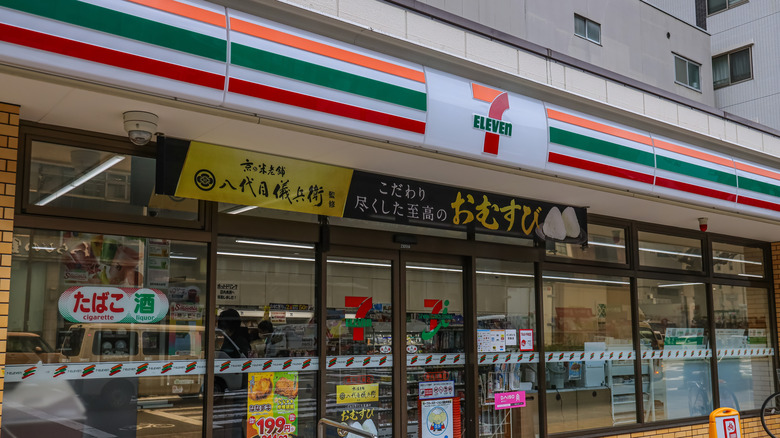
If Japanese convenience stores are a vibe, then 7-Eleven in Japan is an entire energy field. With well over 20,000 locations across the country, it is the dominant minimart in The Land of the Rising Sun. And the store does often witness the sun rise, as most locations are open 24 hours a day. This isn't just a luxury, but a necessity. The Japanese approach to convenience stores (known as konbini) is on another level from what folks in the U.S. are generally used to: spotless, meticulous, offering a diverse, delicious, and distinguished inventory of food, beverages, and goods.
Not only that, Japan's 7-Eleven stores serve as communal hubs where people can pay bills, withdraw money, pick up necessities, and even take refuge from dangerous weather events. Funny to think that it all began with a lone Dallas ice retailer in 1927 who decided to sell some eats along with his frozen water blocks. After The Great Depression, the expanded company emerged with a greater focus on selling food and drinks. In 1946 the stores adopted the 7-Eleven name, and in 1964 the company began franchising.
Ten years later, the first 7-Eleven opened in Tokyo. In recent years, visitors to Japan have discovered what the Japanese have been accustomed to for a long time, and they are broadcasting it to the world through the likes of TikTok and other social media. One of the particular subjects of interest at the stores: The incredible array of snacks. Everything from freshly prepared items to packaged treats of shocking delectability is available to shoppers. Here are 13 of those delights that would be most welcome in the States.
Sumire Instant Miso Ramen
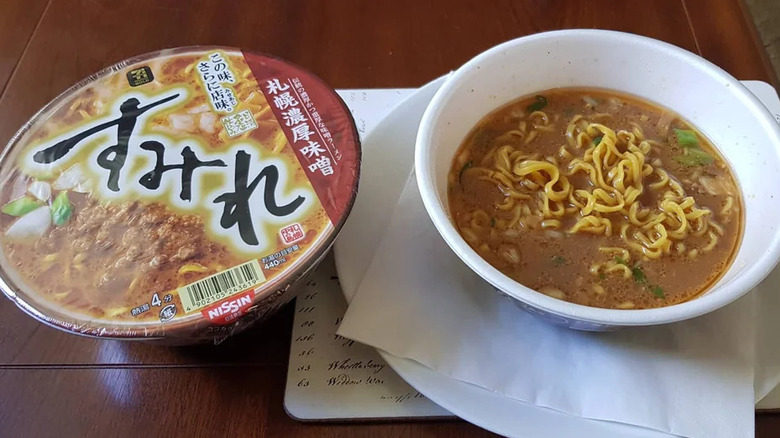
In the homeland of ramen, 7-Eleven more than holds its own. The selection is always incredible, and you can probably feed yourself for an entire trip just on the store's instant noodle bowls. Especially if you're on a budget, because they hardly retail for anything over the equivalent of $5 each.
At the apex of this inventory is the Sumire Instant Miso Ramen. Made in conjunction with one of the top ramen shops in one of the top miso ramen centers of Japan, the microwaveable version from Sumire in Sapporo City is an insanely satiating bowl of happiness at an affordable convenience store rate. With miso, veggies, and meat fried in lard, all paired with thick and curly Sapporo noodles, the depth of flavor and texture achieved is absurd.
It's hard to imagine an expeditious meal of this quality at a stateside 7-Eleven, since it's something so interwoven with the konbini culture of Japan. Can you really picture it sitting alongside a bag of 7-Select beef jerky? That's like selling a diamond necklace next to a used 1984 Motley Crüe tour t-shirt. Nonetheless, American ramen lovers can always dream. Just make sure you don't eat your pillow in the process.
Pancakes with maple syrup and margarine
Take a moment to recalibrate your image of pancakes. As an American, you probably think of a giant edifice of flapjacks drowning in syrup and whitewashed in butter from places like IHOP, Denny's, or the local diner (bless them all). And, yes, this is a glorious platter of goodness — even though it can be one of the more overpriced items on a given menu, when the actual ingredients are considered.
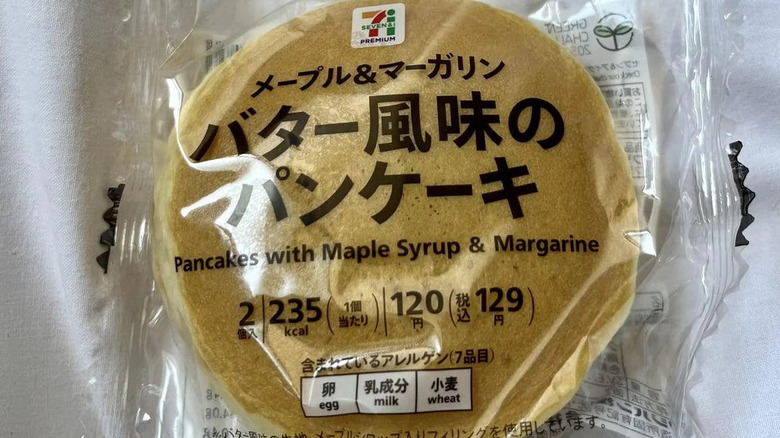
But there is a different path out there. And it is sublime. Leave it to Japanese 7-Eleven to not only provide an amazing snack but repurpose the whole notion of a delicious pancake. The convenience chain's packaged pancakes with maple syrup and margarine are not only a staple for local 7-Eleven shoppers, but they've also become perhaps the most popular item there for American tourists.
Firstly, they retail for less than $1 a pop. Second, they are completely mess-free and portable. The syrup and margarine are imbued into the pancake already, making them ready to enjoy no matter where you are. Americans have even come up with their own hack for the cakey coupling: Sticking a fried chicken cutlet in between the two to make a heaven-like sandwich.
Nana Chiki
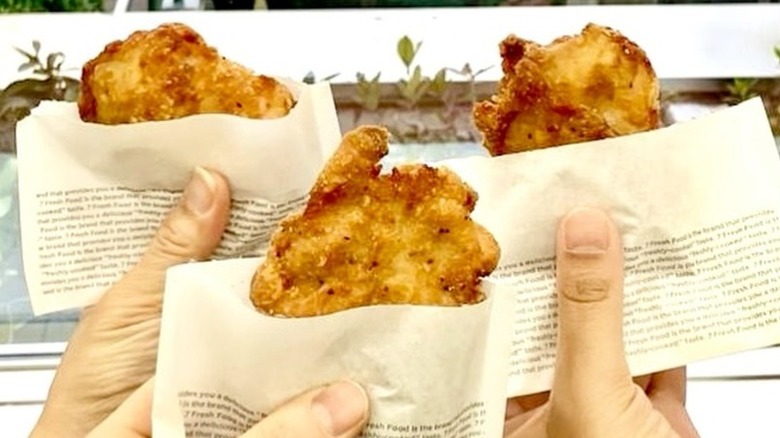
Speaking of fried chicken, the konbini iterations have garnered a substantial culinary reputation. The top three convenience store chains in Japan – 7-Eleven, FamilyMart, and Lawson – often battle in the TikTok arena for supremacy. But 7-Eleven's version, aka Nana Chiki, seems to win over hearts and minds again and again.
A handheld go-to with a crispy exterior and juicy interior, it should be illegal for something to be this efficiently satiating. And in America, it sometimes feels like it is. The meat of Nana Chiki is made from the tender lower-thigh part of the chicken, and it's infused with 11 different spices for a flabbergasting amount of flavor.
How much does this counter-adjacent comestible sell for? Generally, less than two U.S. dollars. That's cheaper than a Kit-Kat at most American convenience stores, 7-Eleven included. (Pause for rueful, world-questioning outcries.) It's been established how amazing the Japanese are at frying chicken, so the quality of this hot snack should come as no surprise. Still, the thought of a piece of 7-Eleven chicken in the States even sniffing this level of excellence is laughable. Joke's on us.
Tuna mayonnaise onigiri
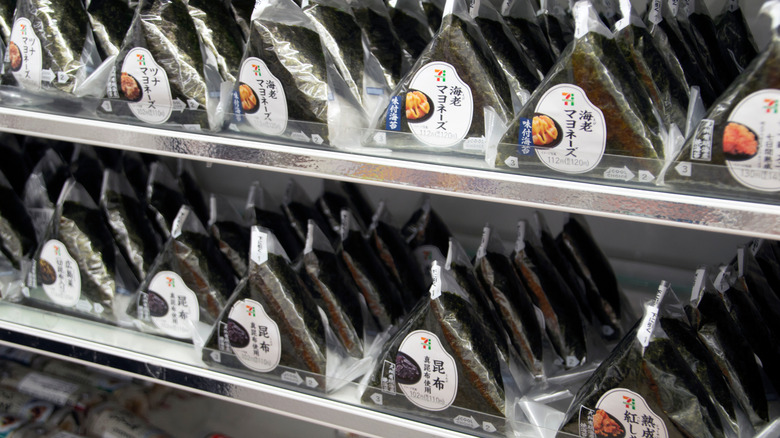
Onigiri is a Japanese dish consisting of steamed white rice that's molded into triangles and blanketed in nori seaweed. In this case, tuna salad is the filling in the middle — which 7-Eleven does not skimp on. The snack has become one of the convenience store's must-tries for visitors. It hardly disappoints. The tuna and the seaweed give you a solid protein hit while the fluffy rice is a pillow of non-excessive carbs to round it all out.
The micro-meal also sticks with a running theme regarding Japanese 7-Eleven, and konbini in general: Insane affordability. This costs around $1. Half the price of a pack of Dentyne Ice gum in the U.S. Because of that, visitors and transplants have cited this onigiri as a lifesaver when it comes to budgeting and accessibility. It's a quick little lunch if you're on the go, a mid-meal holdover when doing the tourist runaround, and even an equilibrium-maintaining breakfast when you're hungover.
Another clutch attribute is the easy-open instructions, numbered on the cellophane. Anyone that's ever tried to clumsily open a wrapped onigiri knows how easily the integrity of the snack can be sabotaged, leaving you with a loose pile of rice and shredded nori.
Strawberries and cream sandwich
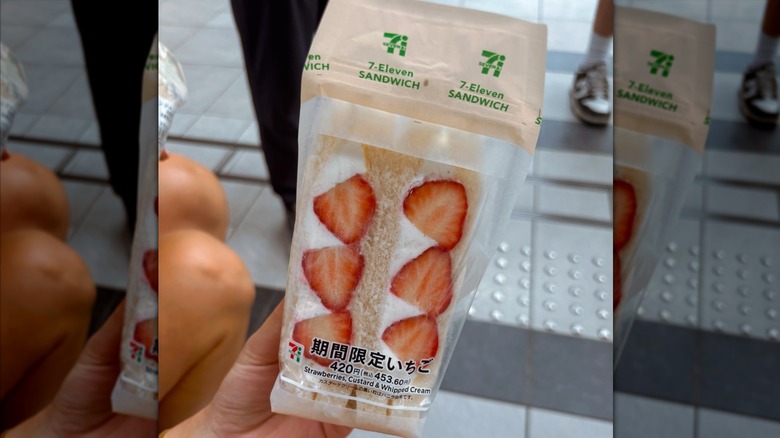
Here's a sandwich that seems directly out of a fairy godmother's picnic basket. Like nearly every other major 7-Eleven snack from Japan, this too has gone viral. And ecstatically so. Yes, putting fruit on a sandwich might seem like a bizarre thing to American palates — aside from the few people stateside who still eat one of the once popular sandwiches that combines bananas and mayonnaise.
But fruit in Japan is different. The Japanese take the freshness of fruit, which is a regular part of eating in many institutions and establishments, from schools to ryokan (inns), very seriously. This includes strawberries. In the U.S., picking up a generic container of strawberries at your local market is always risky. You might find a few ripe ones with the sweetness you desire. But you're also going to get pallid, flavorless ones in the mix that are like biting into wet polystyrene.
The strawberries in the 7-Eleven sandwich have been called the sweetest ever eaten, by at least one amazed TikToker. While others corroborate these plaudits by simply declaring this sando (the word for simple Japanese sandwiches) an absolute favorite. Seeing these on the shelves of 7-Elevens in the U.S. might just turn fruit sandwiches into a cultural thing.
Fresh fruit smoothies
Yes, the United States has no shortage of smoothie options. You go into nearly any decent-sized city, and you'll find plenty of spots either focused solely on smoothies or at least making them in some capacity. Even most corner delis in New York City (as well as street carts) sell smoothies – though some are certainly better than others.
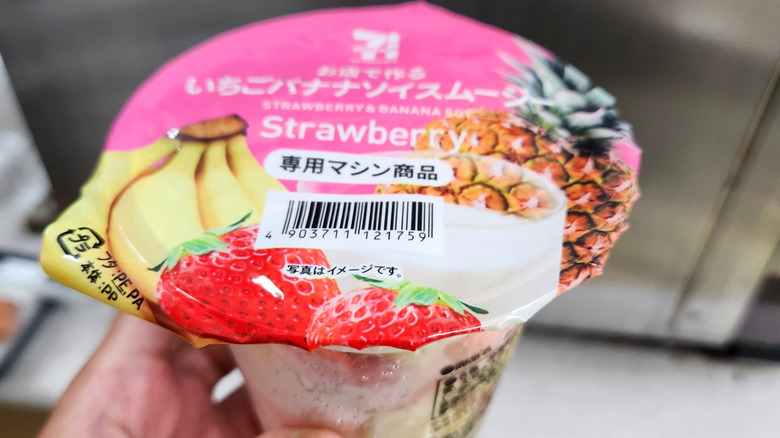
This brings us to smoothies that, to many who have tried them, are just on another level. Japanese 7-Eleven's off-the-shelf smoothie offerings are virally lip-smacking and incredibly affordable. Not only that, the store has a self-serve process that is ingenious — and the understandable envy of American 7-Eleven goers. You purchase the container with the fresh fruit mix of your choice, then bring it over to the user-friendly smoothie machine, pop inside, and moments later you have a brand new smoothie to enjoy. It's difficult to anticipate much pushback to the following statement: This needs to happen in the U.S. like yesterday.
Calbee Jagabee
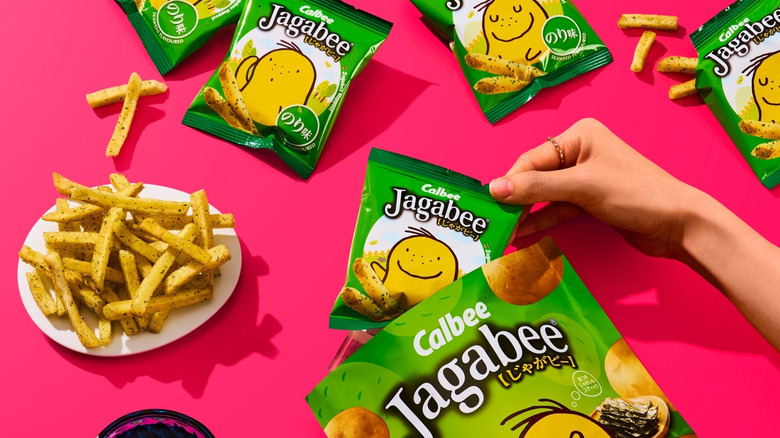
Okay, enough with the healthy, nutritious fruit options. Let's get to the junk food already. And junk food with a happy, adorable, ambiguous little character on the packaging. Ah, Calbee Jagabee potato sticks will do just nicely. Calbee is a Japanese company that has been creating yummy snacks since 1949, and their Jagabee line is a popular get in Japanese 7-Elevens.
There are a range of flavor options. You can go basic with the lightly salted or plain, unsalted offerings. You can go mid-basic with Butter Soy Sauce, or you can go all-in on palate bombs like Wagyu Beef Stew, Tokyo Curry, Wasabi Soy, Chicken Wing, or Takoyaki. No matter which you choose, you're getting robust, naturally cut potato sticks — a far-cry from some of the thin, potato-stick snack options in the U.S.
Calbee already has quite the snack reputation in the States, especially with their innovative Harvest Snaps – which began life in North America as crispy pea snacks all the way back in 1970. So why not bring the Japanese 7-Eleven selection to American 7-Elevens? Which company bigwigs have to reach out to each other to make this happen? Can somebody set up a golf game?
Aisu no Mi grape-flavored balls
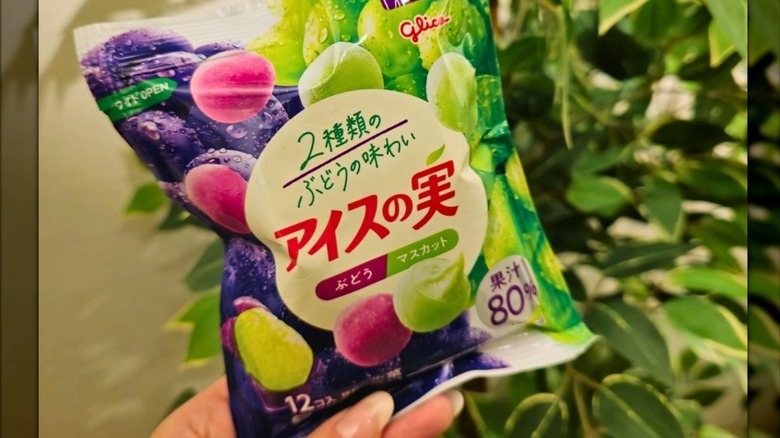
Here's a refreshing, flavorful snack innovation that feels more Japanese than a kaiju playing for the Yomiuri Giants. This is exactly the kind of fare that makes Americans salivate from thousands of miles away and has people scouring search engines for the best flight deals to Tokyo. We're talking about grape-flavored ice balls. These have gone viral for their invigorating, melt-in-your-mouth eating experience. It's had people declaring these little orbs of delight are the best thing they've ever had in their life. By most accounts, they seem to be better than, well, actual grapes.
The snack is not only delicious, but it's also a source of inspiration. There are few different hacks out there, including dropping them in an icy glass of lemon-lime soda and then straight-up dropping a vanilla ice cream cone in that same concoction, because ... well, because. This isn't your cute little homemade sorbet experience, as good as that may be. This is a globular flavor adventure.
Chocolate-covered banana chips
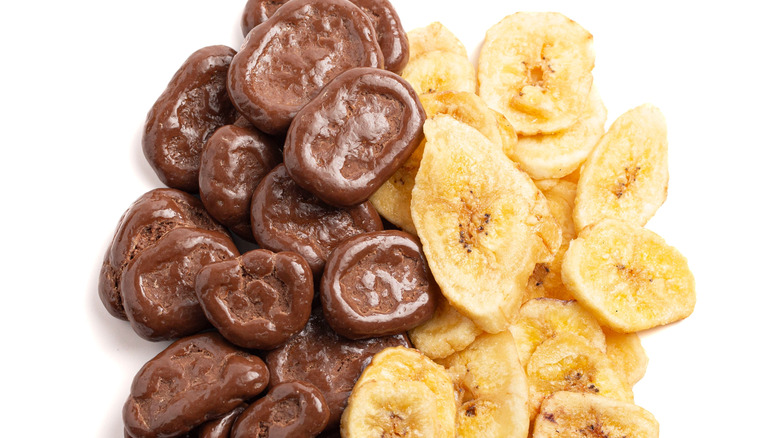
Some things make so much sense when you encounter them you wonder how your mind didn't get there first. And then you're angry at your mind for not getting there first, thinking that you'd have more money if you got there first. Then you bite into a chocolate-covered banana chip (the source of that mental self-punishment) and forget all other troubles in your life. This might be the best thing to happen to bananas since the Savannah Bananas.
Yes, you heard right: Banana chips coated in chocolate. You can get this perfect little snack concoction in Japan for less than $2. Sure, you can order them online in America for double the price (still cheap for the satisfying return). But having them in your local 7-Eleven instead, pluckable right off the shelves, would just make life better. By a show of hands, who wants to make their life better?
Choco Monaka Jumbo ice cream bar
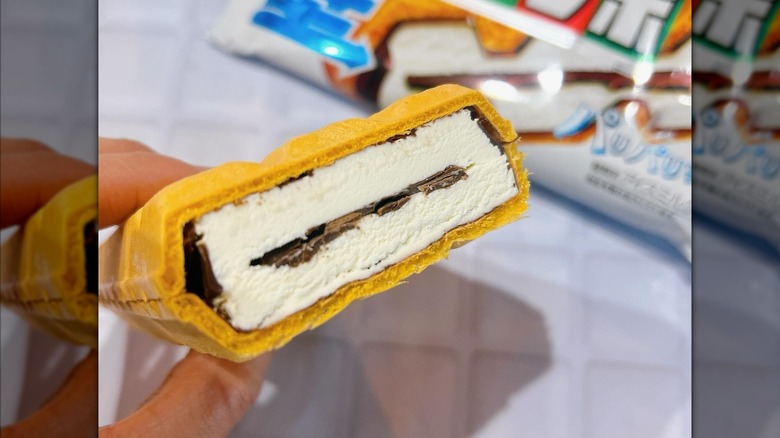
Wagashi is an aesthetically and naturally driven form of confection that's unique to Japan. It focuses just as much on beauty and design as it does taste, creating an enjoyable and aesthetical snacking experience. Within this category there is monaka — essentially, this is a cookie sandwich, but in the same way that the Sistine Chapel is a ceiling.
So, leave it to 7-Eleven in Japan to funnel this creative treat into an outrageously awesome ice cream bar called the Choco Monaka Jumbo. Like the classic, tea-accompanying fare, the bar features a rice cake wafer. Unlike the original, it eschews the conventional red bean paste filling for vanilla ice cream and a hard slice of chocolate in the center. And the jumbo description is legit, as it's about the size of your hand.
This frozen treat can only be found in Japan (doh!). If you're lucky enough to find yourself in the country (or, you know, anywhere on the Eurasian continental plate) try your darnedest to get over to a Japanese 7-Eleven. Then sit on a bench, unwrap the treat, and find nirvana, at least the Shinto version of nirvana.
Dorayaki
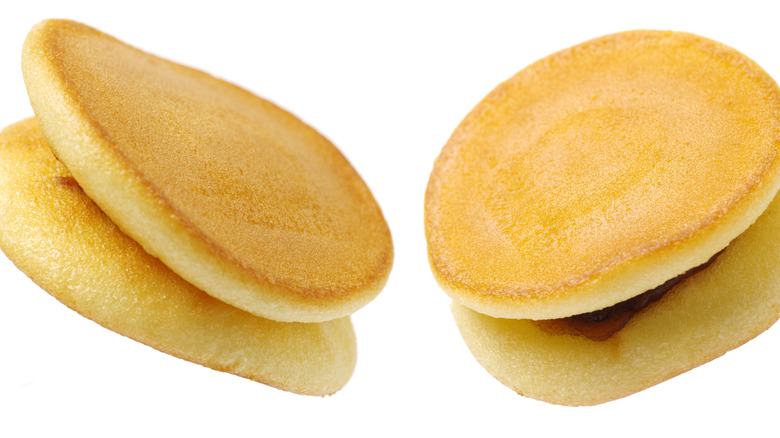
Red bean paste is a staple ingredient in many Asian desserts, including traditional Japanese sweets. You can find it as a filling in all kinds of comestibles. Japanese 7-Eleven has a particular one the people seem to love, and social media creators are itching to try. It's called dorayaki, and it's essentially two pancakes sandwiching something sweet in the middle. The red bean paste and cream iteration is the most sought-after version.
You can find it as a larger, standalone treat, or in a miniature version as part of the chain's sweets sampler. It's so tasty that it's prompted people to try and recreate their own versions. But for less than $2, why even try to do it yourself (if you're already on Japanese shores of course).
Recently, 7-Eleven Japan has even done a texture upgrade of this dorayaki, using puffed-up, airy pancakes as the bookends of the sandwich, as opposed to the flat ones. It's thicker and softer while delivering all the flavors the item is known for. Sounds like the chain didn't want to settle on only one version.
Warabi mochi
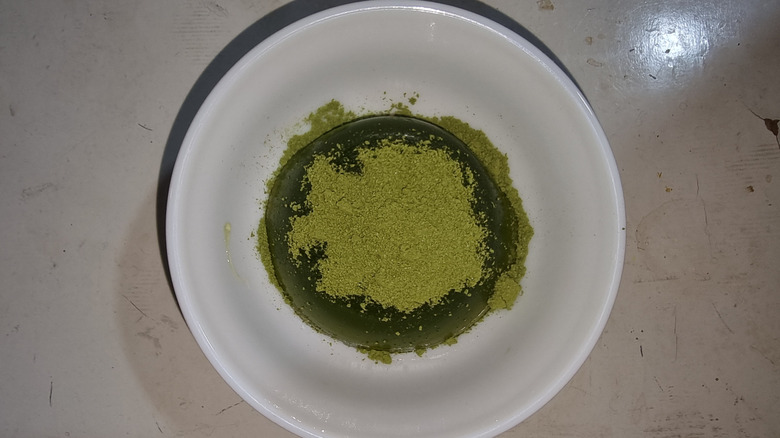
If you're not into uber-gelatinous texture experiences, this may not be the item for you. If you are, you may have just found your perfect snack. 7-Eleven's warabi mochi treat has made Instagram food influencers and konbini food bloggers bang the drum about this Japanese dessert.
Made with bracken starch, sugar, and water, it's usually topped with roasted soybean powder to round out the taste. Though there are various mochi varieties, but the warabi one seems to be one of the most popular versions at 7-Eleven — especially for folks that may have rice allergies. The matcha version is delightful, and 7-Eleven likes to promote them during the springtime, as part of a general, seasonal celebration of matcha.
You might recognize mochi from the compact, bead-like Asian-inspired doughnuts you're starting to see everywhere. Original mochi are buoyant rice cakes that are creamy, chewy, and utterly bingeable. This 7-Eleven snack-ified version takes all those attributes and condenses it into a packaged treat that would be most welcome in this hemisphere.
Roast beef and rice bowl
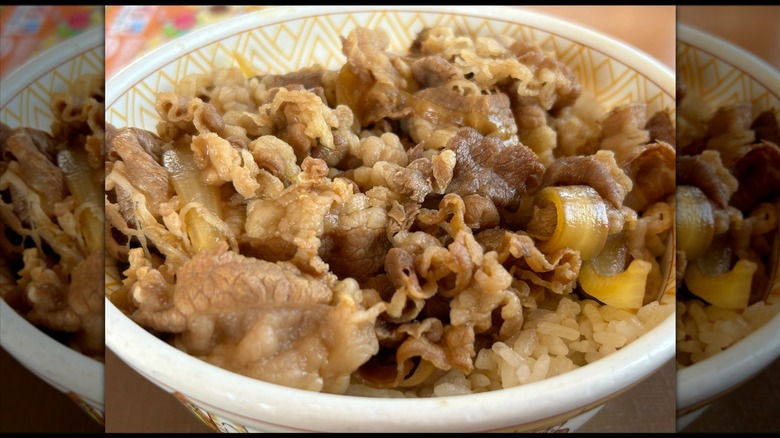
We're back to savory, and we're back to bowls. Essentially, we're again focusing on full-on meals condensed into convenient, affordable packages. When you're tight on cash, as many travelers often are (and many locals as well), this beef, onion, and rice bowl from 7-Eleven in Japan is an absolute diamond of a budget eat.
In Japan it's called gyumeshi (or gyudon), which is essentially beef on rice, and it's a comfort food of the highest order. The konbini version at 7-Eleven costs around $5 and would be considered a relative splurge. If you were to go to any downtown Japanese restaurant in the States, this same type of meal could easily run you about $20. And there is a good chance the quality would be alarmingly comparable.
And this seems to encapsulate the magic of 7-Eleven Japan, which has been having an extended global moment. Any American seeing what the overseas version of the convenience store chain offers would be bewildered, jealous, and wondering how to upturn U.S. culture as whole. Or at least its 7-Eleven stores.