

Are You Eating Your Meals Too Fast? Here's How Long It Should Take You To Finish Your Plate
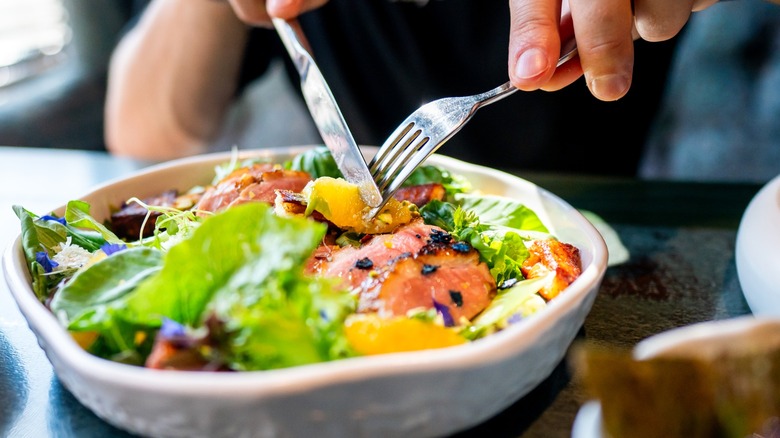
When dining out at a restaurant, we tend to eat with our eyes first when appreciating each component of a meal and recognizing how they achieve a harmonious balance. But eating at home? That's chow time. Unfortunately, scarfing down food isn't a habit we should be engaging in, according to science. Polishing off a meal in less than 30 minutes doesn't give people enough time to realize they're full, which can lead to health concerns most would rather avoid.
The brain doesn't respond to the various chemicals telling it the body is satiated until at least 20 minutes into a meal. 30 minutes is the sweet spot where you can be confident the brain has received the message you've been fed. While we often hear about eating more salad (with or without beer) and other nutritious foods as being the solution to our dietary woes, simply eating too fast can itself cause a host of problems.
Scientific studies demonstrate that inhaling a meal can lead to overeating, often resulting in unwanted weight gain. One study revealed that people who eat quickly are twice as likely to become obese compared to folks who eat slowly. Food consumed quickly also tends to go down in larger pieces which are difficult for the stomach to digest. Sending big chunks of food to the stomach might mean you aren't getting all the beneficial nutrients your meal provides while also causing the stomach to produce more acid, leading to heartburn.
What's worse, studies show that eating too fast can induce metabolic syndrome, increasing one's risk of type-2 diabetes and heart disease. Thankfully, all we need to do is slow down.
Simple ways to slow down your eating
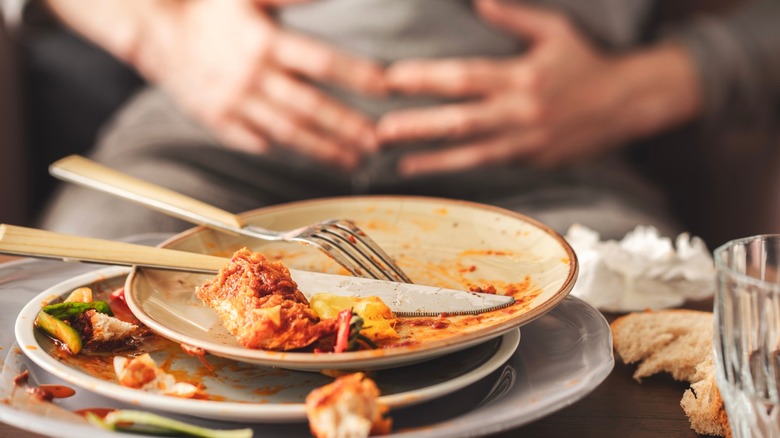
Although many of us fast eaters have been downing meals like it's a contest for years, it's never too late to change. One simple step people can take to slow down is to give themselves more time to eat. Yes, that means even though you've figured out the perfect hack to make eating in the car better, you should wait until you get home to enjoy your takeout order.
Carving out enough time in one's schedule to eat slowly allows folks to be mindful about eating their food, just like when you're at a restaurant. And just as many restaurants don't have TVs blaring as you dine, neither should you. People tend to eat faster while watching television or digging into the latest internet trends on their phone, so screens in general should be avoided. According to Stanford, too much screen time isn't good for people either, so waiting to watch that next Netflix special until you're finished eating could be doubly beneficial.
Of course, the one technique that nearly guarantees you won't inhale a meal comes from the childhood advice bestowed upon most folks by their parents — chew your food. Some studies have indicated that chewing food more thoroughly can be an effective way to prevent obesity. While softer processed foods might only take about 15 chews, more substantial proteins and veggies should take around 30 to be appropriately broken down — 40 chews may be even more beneficial. Counting each bite will help you slow down while eating and, as a bonus, force you to focus on all the enjoyable sensations in your meal.