

Why Egg Whites Whip Better In A Copper Bowl, According To Science
We may receive a commission on purchases made from links.
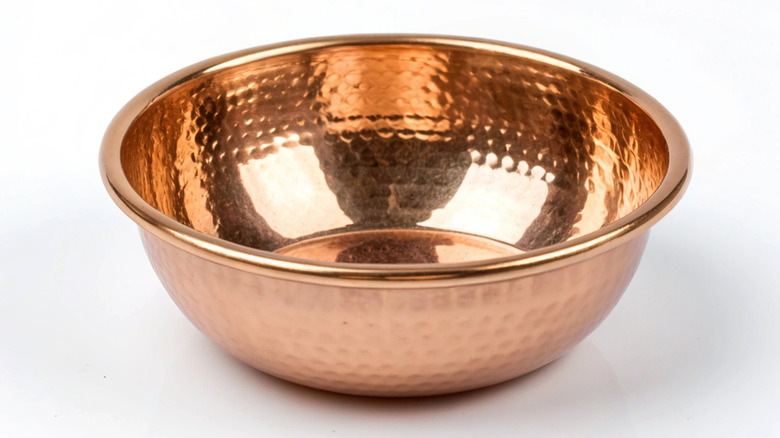
Whipped egg whites are the irreplaceable base for everything from dacquoise and pavlova meringues to chiles rellenos, but there's a thin line between fluffy, glossy peaks and a gritty, wet mess. Overwhipping can cause the latter disaster to occur, but using a different bowl could change your luck. A copper bowl can indeed make it easier to achieve a stable, airy meringue.
Cooking is chemistry, even if you're not using Bunsen burners and beakers. When you beat egg whites, you are causing the proteins to denature. As the clumps of proteins unwind, they then bond together to create a new web. In this process, these newly bonded protein threads secure the air bubbles that you are whipping into the egg whites, which is what creates the volume you're looking for. However, whisking can also cause sulfur from the proteins to form too many disulfide bonds. These extra-strong connections start forcing water out of the egg whites, which is what causes a grainy, gritty, and weepy meringue.
You need enough bonds for the whipped egg whites to hold onto air, but not so many that they push moisture out. This is where copper comes in. Just like how using cast iron cookware actually adds iron to the food you prepared in it, whisking egg whites in a copper bowl causes teeny-tiny pieces of the metal to get into the meringue — this is a good thing! Copper ions bond with some of the sulfur atoms, effectively reducing how many disulfide bonds can be formed by sulfur atoms bonding to each other. Fewer sulfur bonds mean overwhipping is less likely.
Use a copper bowl (and these tips) to avoid grainy whipped egg whites
Copper bowls can be a bit pricey. This 99.9% pure copper mixing bowl on Amazon will run you about $55, for example, but you'll find that cheaper options are just stainless steel with a copper-colored finish. For your whipped egg whites to reap the benefits, it's important that they're made with real copper — and they can be worth the investment if you're an avid baker and cook.
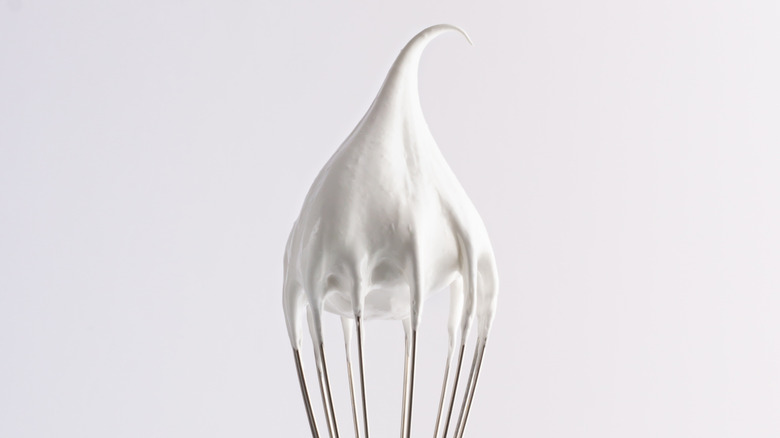
As for the whipping tool, a balloon whisk is ideal. The bulbous top and flexible, well-spaced wires incorporate air more easily than a straighter, stiffer whisk. It's important that the bowl and whisk are perfectly clean and dry, as any lingering grease or oil will affect how successfully you'll be able to whip the whites — this includes fat from the yolks, so make sure that you separate the cracked eggs very carefully.
When it comes to whipping egg whites by hand, rotating your wrist so the whisk moves in a looping motion is the best strategy. Keep in mind that using a copper bowl will cause the meringue to gain volume more slowly, precisely because the copper is inhibiting some disulfide bonds from forming. The copper creates a buffer against accidentally overwhipping the egg whites, allowing you to achieve stress-free stiff peaks for all your delicate macarons, heavenly angel food cakes, and squishy marshmallows.