

This Is Hands-Down The Best Steak Cut For Beginners Who Want Foolproof Results
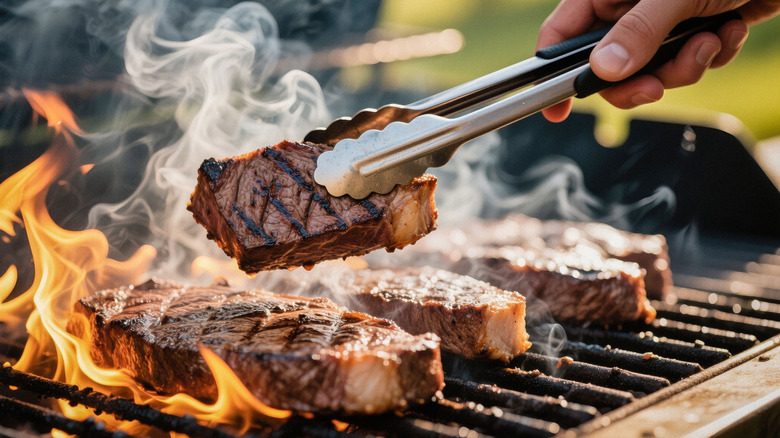
Learning how to cook a delicious steak is often one of the first things novice chefs want to do, but choosing the easiest cut of meat for the job is absolutely pivotal to ensuring your meal is a success. Unfortunately, some of these ideal cuts are also among the most expensive, with the ribeye being the prime example. It's undoubtedly the best choice for a beginner, as it allows for cooking errors while also delivering some naturally tasty results. We discussed the ribeye's capabilities as a beginner cut of steak with Scott Thomas, the owner of The Grillin' Fools and The Cookin' Fools.
Thomas was quick to praise the expensive cut, saying, "It has the best marbling of any of the cuts and thus is the most forgiving. If it is overcooked, it still won't dry out." While the ribeye isn't the only easy cut of steak to cook at home, those new to the art of cooking steak may get the best results with it because of its fat content, which allows it to remain juicy and flavorful even when cooked for a long time. This is a big reason why it's such a viable catch-all cut for new cooks.
Other forgiving steak cuts for beginners
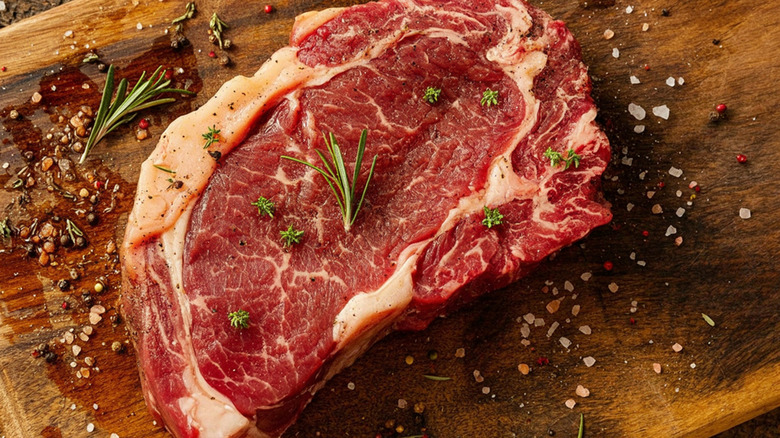
Now, while ribeye is ideal for those looking to make a fatty steak dinner and are willing to pay the high price, there are other cost-effective alternatives. For a steak that's a bit leaner and cheaper — while also as forgiving as ribeye – a thick top sirloin is a phenomenal choice. Plus, if you want to give the steak a bit more flavor, following Jamie Oliver's advice of cooking the sirloin within its own trimmed off fat is a great way to harness its meaty flavor and make the dish even better. Beyond those two options, thicker steaks are generally easier to work with, so cuts like the filet mignon can be a sound decision for those new to cooking steaks.
However, simply opting for thick cuts is not the only way to make your life easier as a beginner. An easy, three-ingredient steak marinade to make your beef tender and delicious is a smart idea, but using the reverse sear method can also offer many benefits. This simple yet effective technique brings either an oven or a smoker into the equation before searing the meat, giving you more control over its doneness and enhancing its flavor in the process. "[Reverse searing] requires slow cooking the steak to just short of the desired doneness and then searing it off to form that flavor crust on the outside and bring it up to the perfect temp," Scott Thomas explained. "Bringing the steak's internal temperature up slowly means it won't develop that dry, gray outer band from searing a cold steak in a hot pan (or on a hot grill)."