

The Step You Should Never Skip Before Freezing Meat
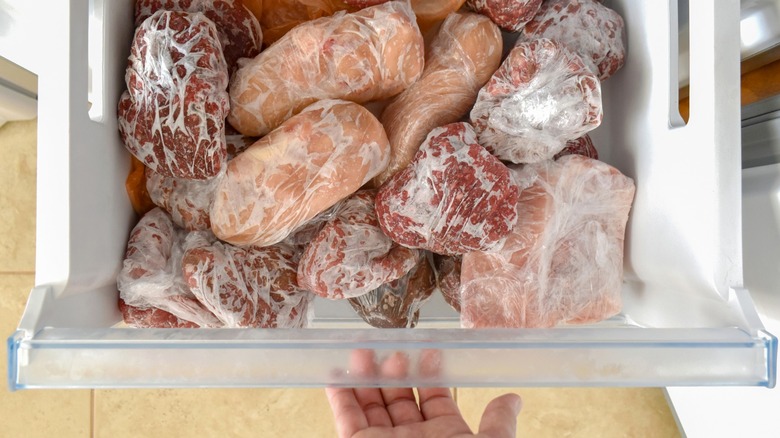
These days, when you see a deep discount on meat in a grocery store, you buy in bulk. After all, that's what we have freezers for. Storing all that cheap meat from Aldi in the icebox before it approaches its best-by date allows us to take advantage of exceptional bargains. But don't go grabbing that bounty of steaks or chicken thighs right out of the shopping bag and tossing them in the freezer. You'll want to take some precautions first so that they're still in peak condition when they thaw.
Frozen meat won't go bad in a foodborne illness sense, but it can experience quality degradation under certain circumstances, such as freezer burn caused by air exposure. While freezer-burnt meat is safe to consume, it will be less juicy once cooked. Unfortunately, supermarkets don't always wrap the meat tightly, so to prevent your protein from being exposed to air in the freezer, you'll have to do it yourself (unless it's in vacuum-sealed packaging, which is already airtight).
Once the original packaging is removed, portion the meat so you'll only have to defrost what you need for each meal. Wrap the portions in freezer paper or plastic wrap as a primary layer of protection. Then you can place them in a freezer bag, making sure to push out any excess air before checking for a tight seal. Alternatively, skip the bag and cover the protein snugly in aluminum foil once it has a layer of plastic film or paper. The dual layers of protection, when wrapped tightly, should restrict any air from coming into contact with the meat during storage.
More tips for freezing and defrosting your meat
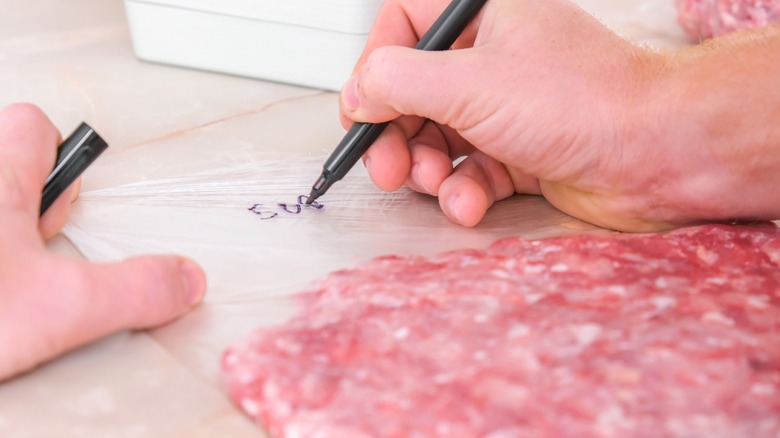
Repackaging meat will help prevent freezer burn, but if you've decided that deal you found while grocery shopping is destined for the icebox, don't dawdle. The longer it remains unfrozen, the more the quality will decline. Freezing proteins (ideally at 0 degrees Fahrenheit) while they're at their finest means they emerge from the freezer in the best condition possible.
It's also not a bad idea to label and date what you put in the freezer. We've all reached back into the recesses of the icebox and found that mystery lump of frozen ... something, only to throw it away because we can't remember what it is or how long it's been in the freezer. Labeling it with a name and the date you bought it gives you a better chance of using it before it becomes just a faded memory.
Of course, you don't want to go to all the trouble of promptly rewrapping and labeling only to make mistakes when defrosting meat. Ideally, you plan ahead so the protein can defrost slowly in the refrigerator, which can take up to two days or more, depending on the size. Thawing it in a cold water bath will do the job faster, but bear in mind you'll want to change the water every half an hour to ensure it stays cold. If time is of the essence, thawing meat in the microwave is the fastest method — just be aware it requires a watchful eye as opposed to letting it thaw slowly in the fridge.