

Why The Original Filet-O-Fish 'Far Outshines' The Version Served Now
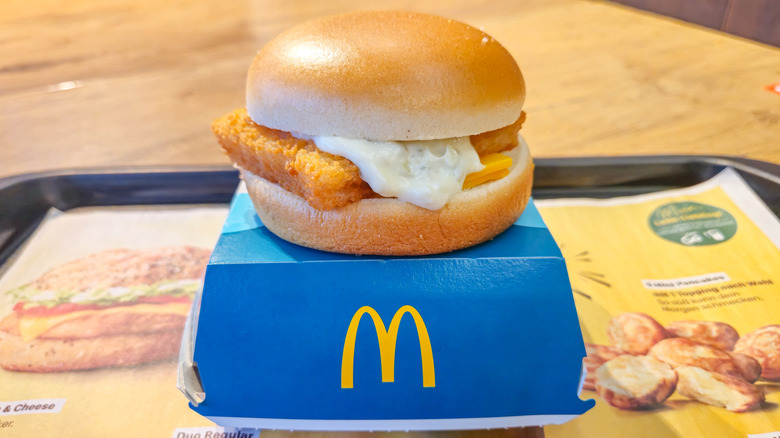
Few fast food menu items have quite as iconic an origin story as McDonald's Filet-O-Fish. Created by McDonald's first Cincinnati franchisee, Lou Groen, in 1962, the sandwich was made to satiate the hunger of local Catholics, many of whom didn't eat meat on Fridays year-round, looking for a quick, protein-packed meal to enjoy. However, times have changed massively since the sandwich's introduction.
Not only are meatless Fridays mostly only observed during Lent these days (and the fast food items that cater to Lent observers have become more varied), but the Filet-O-Fish itself is a far cry from the item's original form. The biggest reason for this is that, while Groen originally made the iconic fish sandwich using fried halibut, McDonald's pushed him to switch to Atlantic cod to make the sandwich more cost-efficient at the detriment of its overall quality.
Groen explained to The Cincinnati Enquirer in 2016 that the price of each sandwich was simply too much for McDonald's leadership to get behind. "I was paying $2 a pound for halibut," Groen recalled. "That sandwich cost me 30 cents apiece to make. They told me it had to sell for 25 cents. I had to fall back on Atlantic cod ... and I added a slice of cheese. But my halibut sandwich far outshines that one."
McDonald's Filet-O-Fish has evolved several times over the years
Cod is generally considered a stronger candidate for frying than halibut, but the original protein choice for the Filet-O-Fish clearly had a lasting impact on the item's inventor. This was likely because halibut provides a richer taste and a firmer, thicker texture than cod does. Nevertheless, due to its higher price, the only notable fast food chain that still uses halibut over other types of fish is Apollo Burger, a Utah-based chain that began in 1984.
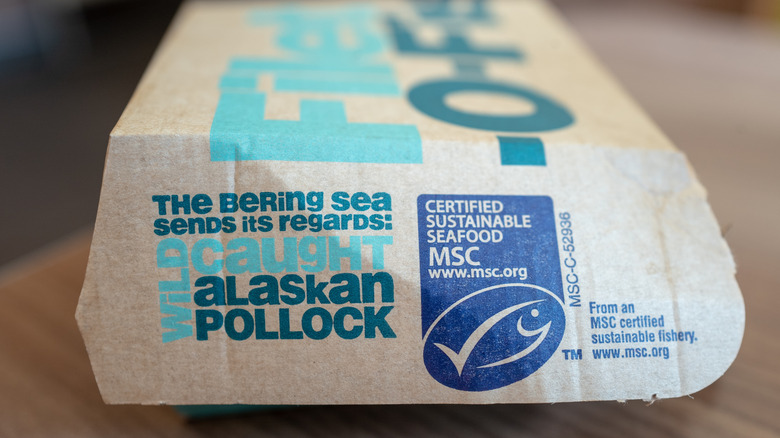
That isn't to say that McDonald's hasn't continued to evolve its Filet-O-Fish, however. The chain made the smart choice of avoiding Atlantic Cod due to it being overfished beginning in the late 1980s, moving on to different whitefish for the decades to follow. The McDonald's item evolved even further from there, with the chain announcing in 2013 that it would once again change the type of fish used, vowing to exclusively utilize wild-caught Alaska Pollock from that point forward. This pledge was made to adhere to the Marine Stewardship Council's sustainability standards, with McDonald's being the first national restaurant chain to plaster the organization's sustainability label on its packaging.
As for how the item has changed in the eyes of consumers, the Filet-O-Fish obviously tastes different from what it did before 2013, but it also looks different. Pollock is smaller, which may be the reason for the Filet-O-Fish seemingly shrinking in recent decades.