

Most Grocery Store Beer Is Owned By Just 8 Massive Companies
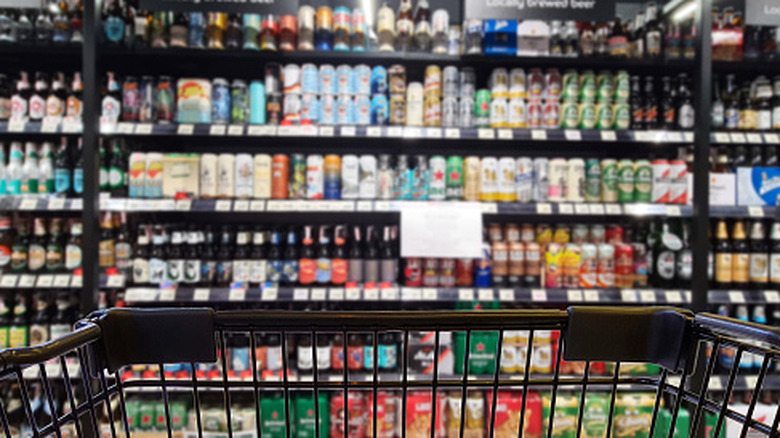
In 1978 there were fewer than a hundred breweries in the U.S. In 1979, President Jimmy Carter and Congress passed laws lifting restrictions and taxation on homebrewing. Out of that, the Brewers Association and the Home Brewers Association were created, and a new age of beermaking was ushered in. As the '90s came around, the craft beer boom had begun. Soon, the public began to prefer independent microbrews and artisanal beers over the mainstream pilsners and lagers that drove the fortunes of the old guard: Budweiser, Coors, Miller, and the rest.
By 2020, there were 8,000 American breweries of all shapes and sizes. But giant corporations eventually caught on to the trends and started swallowing up independent and craft brewers. They were folded into portfolios that already included major brands and iconic names. Soon, a lot of your favorite indie, alternative, and homegrown brewers became mere legs of an omniscient beverage conglomerate. But hey, at least it meant they weren't going anywhere and would be available in more stores. But, of course, you can always brew your own, non-syndicate beer at home.
Now that craft beer has seemingly peaked, and is possibly even on a downturn, the ones left standing as the dust settles are the huge, often multinational enterprises that have bought up everything. Meaning, when you walk into your supermarket's beer aisle, you might see a motley array of brews to choose from. Just know they are basically all owned by these eight companies.
1. AB InBev
The AB stands for Anheuser-Busch. By the way, do you ever try to switch a famous name-coupling around? It feels weird. Garfunkel and Simon. Oates and Hall. Kumar and Harold. Busch and Anheuser. You can't imagine it. And indeed, it was Anheuser who came before Busch, the former being the father-in-law of the latter –- and the company itself originating in antebellum America: 1852.
History is a big part of AB InBev's identity. So much so that the timeline on its Our Heritage website page goes all the way back to the year 1240. No, that's not a misprint. It can do that because the company simply bought the rights to ancient European beer brands like Leffe, Stella Artois, Spaten, and Hoegaarden. See, money can buy you history. Although that history really began in 1876, when Adolphus Busch brewed the first Budweiser in ol' Saint Louie, Missouri. Things took off.
The other part of the equation, InBev, came out of a 2004 merger between Belgium's Interbrew beer conglomerate and Brazilian counterpart Ambev. Four years later, InBev and Anheuser-Busch combined, birthing AB InBev. Today, along with the aforementioned overseas brands under its dominion, AB InBev owns Bud, Busch, Corona, Michelob, Goose Island, Land Shark, Rolling Rock, Beck's, Natural Ice, Kona, Elysian, and O'Doul's, among others. That's a sizable chunk of the supermarket beer fridge.
2. Molson Coors Beverage Company
The Molson Coors Beverage Company has a similar makeup as AB InBev. Both are flagshipped by iconic names in beer, both have swallowed up Old World classics into their brand lineup, and both absolutely rule the average grocery store suds stock. Molson Coors is also a combination of –- despite its two-pronged name — three of the most recognizable North American brewers in history. First up, there's Canadian cultural staple Molson, founded by English immigrant John Molson. The beer is almost as old as the United States itself, with the first brewery opening beside the St. Lawrence River way back in 1786.
Adolph Coors, meanwhile, moved to Colorado from Germany in the late 1860s. His first brewery was opened in 1873, near the foot of the Rocky Mountains, begetting the Coors beer brand — which would eventually produce one of the bestselling beers in American history: Coors Light. The third surname gone unmentioned in the corporation's moniker is Miller. As in Frederick J. After brewmaster-ing for German royalty, he settled in Milwaukee and, in 1855, opened his first brewery. Miller Lite would become an omnipresent six-pack in many an American fridge and Miller High Life would become known as "the champagne of beers" – while Miller itself remained a still-standing remnant of Wisconsin's once-mighty brewing industry.
In 2016, with Coors having already bought Miller and merged with Molson, the separate Coors-anchored enterprises officially came together, and Molson Coors Beverage Company was born. Through all of that marriage and takeover, the company would find itself with a beast of a beverage portfolio. Some of the many international labels it owns along with the founding flagships, are Blue Moon, Carling, Foster's, Killian's Irish Red, Keystone Light, Milwaukee's Best, Peroni, Grolsch, Sol, Pilsner Urquell, Olde English, and Hamm's.
3. Diageo
The name Diageo is a fairly new one on the beer mega-corporation scene, being founded in 1997. (Although, as is characteristic of these companies, a number of the brands under its stewardship are much older). It didn't take long for Diageo to become a beverage behemoth. By the year 2020, the London-based multinational boasted the largest market share in the U.S. Diageo's portfolio goes well beyond beer as well, sporting a plethora of some of the globe's most recognizable spirits – including liquors you had no idea it owned.
Diageo was born out of the merger between one of the globe's most famous beer brands, Guinness, and hospitality giant Grand Metropolitan. The union meant Diageo actually owned Burger King for a while, until selling its food assets (which included Pillsbury) in 2000. The company has also seen its share of controversy recently, surrounding its brand Crown Royal. A Canadian original, Diageo is controversially looking to move the whiskey's manufacturing out of Canada and into Alabama. A settlement has insured that the famous purple bag will remain on liquor store shelves in Ontario, after threats of a boycott from the province's premier, Doug Ford.
None of this has diminished Diageo's reach in the grocery store beer section, which is pretty much encompassed by its foundational brand Guinness (along with all of its variations) and the labels under the famous Irish stout's umbrella: Harp Lager, Smithwick's Irish Ale, and Kilkenny Cream Ale, to be exact. So, next time you "split the G" just know that Diageo is likely cheering you on.
4. Constellation Brands
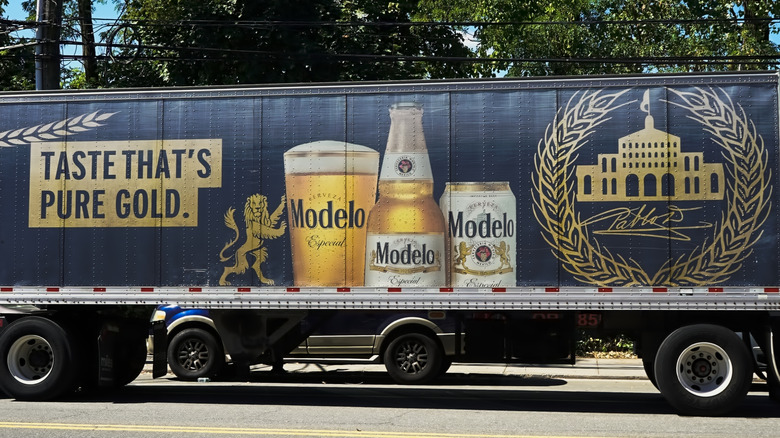
What started in the 1940s as a small, floundering bulk wine company about two hours from Niagara Falls, in Canandaigua, New York, would go on to become a $20 billion beverage titan. As Canandaigua Industries, the company went public in 1972 and what followed would be expansion and acquisitions beyond wine, into beer and spirits. (At one time it was the only U.S. company to dabble in all three categories). Eventually Canandaigua would become the much-easier-to-pronounce Constellation Brands.
Constellation would eventually house over 200 brands of alcohol under its proprietary roof and become one of world's largest beer importers. As of 2026, the giant has come under new leadership, however, amid a slight decline in beer sales. This comes as beer –- and alcohol in general –- is seeing drops in revenue across the board. Gallup reported in 2025 that only a little more than half of Americans say they drink alcohol, with health-mindful Gen Z leading the way in this collective moderation and abstention of booze.
Still, it's not like Constellation or its corporate companions in the industry are busking for spare change on the street. The Rochester-based business is still doing quite alright — and it shows by the number of its brands taking up grocery store shelves. Or rather, the reach of its relatively small core of beer labels: Corona and all its versions (Corona Light, Corona Premier, Corona Familiar, etc.); one-time industry-topper Modelo and its family (Especial, Negra, Oro, Chelada); Pacifico (Chela and Ballena); and Mexico's oldest beer brand Victoria.
5. Heineken
Vincent Van Gogh was born in Zundert in the Netherlands 11 years before Cornelis Heineken used his late father's inheritance to buy the Haystack Brewery in Amsterdam. Although one is an artist and the other is a beer, it would be difficult to find two Dutch names more famous across the world. In 1889, Van Gogh finished "The Starry Night." That same year Heineken won the Grand Prix at the Paris Expo, which gave it the opportunity to become the beer supplier for the Eiffel Tower's restaurant. The little pilsner from the Netherlands had arrived. (Van Gogh had a tougher go of things, but eventually he'd get his due).
After Prohibition ended in the U.S. in 1933, Heineken became the first beer imported into the country again. It has been a constant on the American beer landscape ever since, with its famous green bottle instantly recognizable stateside — as it is nearly everywhere. It was even President John F. Kennedy's favorite beer. And Paul Newman would coolly sip on a Heineken anytime he could. All this to say that Heineken would parlay this brand dominance and become a global leviathan of beer. In 1968 it merged with Dutch beer-twin Amstel and from there it soared.
Fast forward to now and Heineken is still ever-present. Not only the flagship beer itself but the company's numerous acquired labels. As mentioned, there's Amstel. There's also American craft beer titan Lagunitas. Oh, and let's not leave out Tiger, Red Stripe, Edelweiss, and Birra Moretti.
6. Pabst
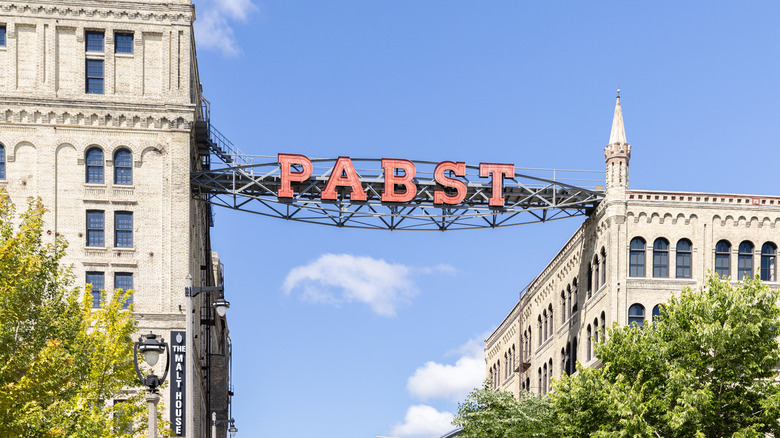
Talk about an American original. Pabst has a foot in two significant cultural markers: vanguard Midwest brewer and vanguard hipster beer. The history of Pabst begins in the 1840s. The name Pabst comes from the son-in law of founding family member Phillip Best: Frederick Pabst aka "Captain." Captain Pabst took his shipping investments and transferred them into the Milwaukee brewery in 1863. At the time, it was still called the-objectively-more sensible Best Brewing, and it went on to win blue ribbons over the next few decades (adding a forever-image to its identity). In 1889 it was finally changed to Pabst Brewing Company.
During the 1940s, Pabst began purchasing other brewers and beverage companies, setting the institution on its course to eventual conglomerate status. In 1999, Pabst acquired neighbors Schlitz, Old Milwaukee, Schaefer, and Colt 45, among other regional beer labels. In 2014, Engene Kashper bought Pabst from the governing Metropoulos family, continuing the brewery's many interests, including its major music festival Project Pabst. This stewardship also saw Pabst expand its own namesake beer line, and even dip into the realm of hard coffee.
These days, Pabst still owns a chunk of the beer aisle. Aside from its familiar, never-going-anywhere flagship brand, plus the ones mentioned above, it also produces Lone Star, Rainier, and Stag, among others. It's no surprise that Pabst is still surviving and thriving, even after having a one-time, tumultuous relationship with another company on this list: Molson Coors. Up until 2024, Molson Coors was actually brewing PBR, but now Anheuser-Busch does the honors.
7. Boston Beer Company
It might be interesting to know that the story of this brand originates, not in Boston, but Cincinnati. That's where founder Jim Koch's family lived and set roots. And that's where he found his ancestor's recipe for lager. After some experimentation in his home near Boston, Samuel Adams Boston Lager debuted in April 1985. Less than two months later it was voted the best beer in America — something of which the label itself has no problem reminding you of. Understandably so.
A craft brewer before craft brewing was a thing, Samuel Adams had a visitor center and brewery tour as early as 1989. Going NYSE-public in '95 launched the iconic New England brewer into a period of growth as it acquired and diversified. The 2000s saw BBC (as Boston Beer Company likes to call itself) go vacuum up one of the premier craft brewers in the country.
The Boston Brewing Company is just one of the several giant mainstream beer corps now. What does it own exactly, aside from Samuel Adams and its various offspring? Dogfish Head, Angry Orchard, Angel City, and Coney Island — not to mention Twisted Tea, Truly, and the thing you probably didn't know you asked for: Hard Mountain Dew. Would the actual American Founding Father and anti-imperialist Samuel Adams approve of this subjugation? Or hard seltzer? We'll never truly know.
8. FIFCO USA
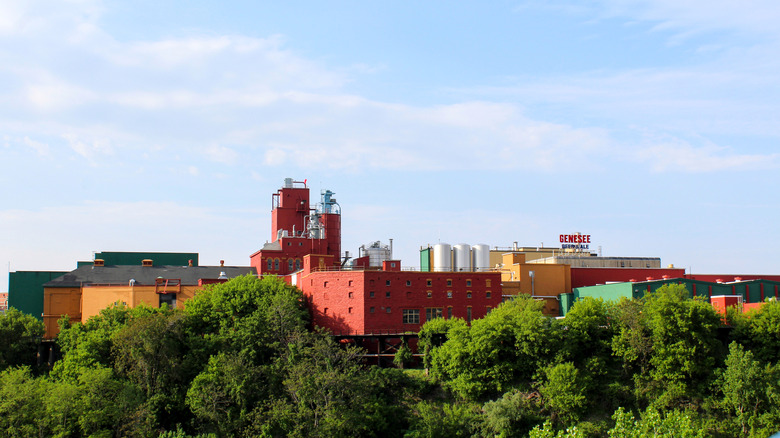
No, this isn't the international soccer federation. This is FIFCO. It's short for the Florida Ice and Farm Company, which is what it was called back when it was formed in 1908. If you're thinking it's another Sunshine State special, you'd be wrong. The business was actually started in La Florida de Siquirres, a district of Limón, Costa Rica. Four brothers decided to manufacture ice. A century on, the company has well over a thousand products in its line.
What are some of those products? Well, beer of course. The suds sector of the company started in 1912, after the brothers bought a company called Cervecería y Refresquería Traube. In 1986, no less than Heineken became a partner, buying a quarter of the now-formidable beverage makers' shares. Throughout the 2000s, FIFCO USA got its hands into wine and spirits, alcoholic soft drinks, condiments, and retail bakery. But it never got away from its brewing roots.
You'll probably find several of FIFCO USA's beer brands in the supermarket if you go shopping tomorrow. There's Imperial, Magic Hat, Genesee, and –- probably the most recognizable –- Labatt. This history of Labatt itself is a rich one. Started back in 1847 by Irish transplant John Kinder Labatt, its most famous beer, Labatt Blue, is as of 2025 the biggest selling Canadian beer in the world. But the label's backstory includes everything from surviving Prohibition, to the kidnapping of its own president, to helping launch Pamela Anderson's career. FIFCO USA bought Labatt from AB InBev in 2009.