

The Right Time To Add Canned Beans To Your Soup For The Best Flavor
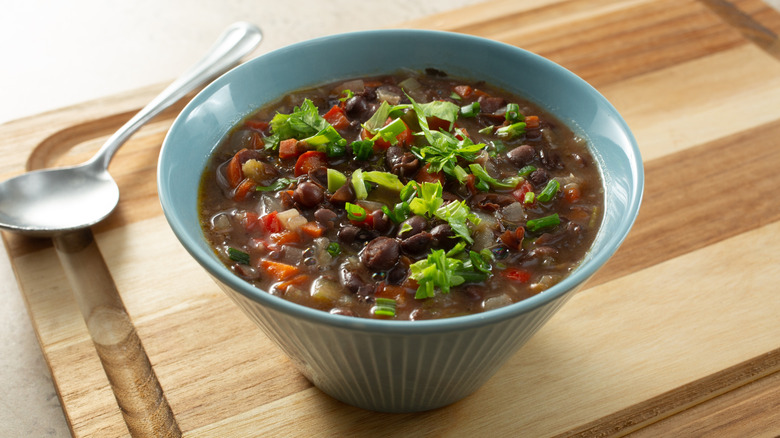
Some of the simplest soups revolve around beans, including Marcella Hazan's five-ingredient cannellini bean soup or our three-ingredient black bean and white bean kale soups. Beans add flavor and protein, and, if pureed, can even lend some dairy-free creaminess to a soup. A common question when cooking with canned beans is when to add them to a recipe. Christine Pittman, who blogs about food on her websites Cook the Story and The Cookful and has a podcast called Recipe of the Day, advises against tossing them in the soup pot too soon.
The best time to add the beans is right at the end — allowing them to simmer for about 15 to 20 minutes — after the other soup ingredients are cooked and the broth has had time to develop its flavor. "Canned beans are already cooked, so they just need time to warm through and absorb flavor," Pittman said. "Adding them late keeps them from turning mushy." As food texture is inextricably linked to how we perceive flavor, preserving it helps enhance taste as well.
To rinse or not to rinse
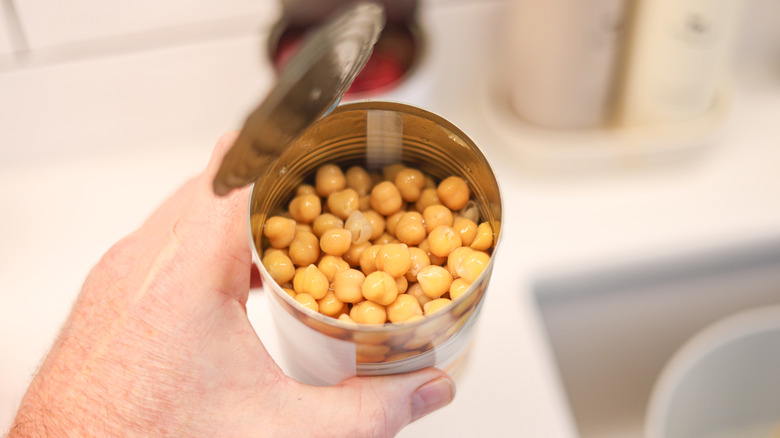
Before adding canned beans to your soup or chili, a common question is whether you should rinse or drain the beans. Christine Pittman says draining and rinsing beans provides a cleaner-tasting broth, along with less salt added. However, if you're using a can of low-sodium beans or you didn't add salt as one of your ingredients, you can simply drain the beans and dump them into your soup. (If you do, though, be sure to save your bean water to make aquafaba.)
Of course, as soup is already liquidy, it should be able to absorb a few ounces more without impacting the final product. This means that you probably don't need to drain the beans at all if you'd prefer to skip a step. By adding the beans along with their liquid, you'll also retain the nutrients like protein and fiber that might otherwise be washed down the drain. Pouring the entire can of beans in your soup also adds body and richness, Pittman says.