

Whatever Happened To Misfit Foods From Shark Tank?
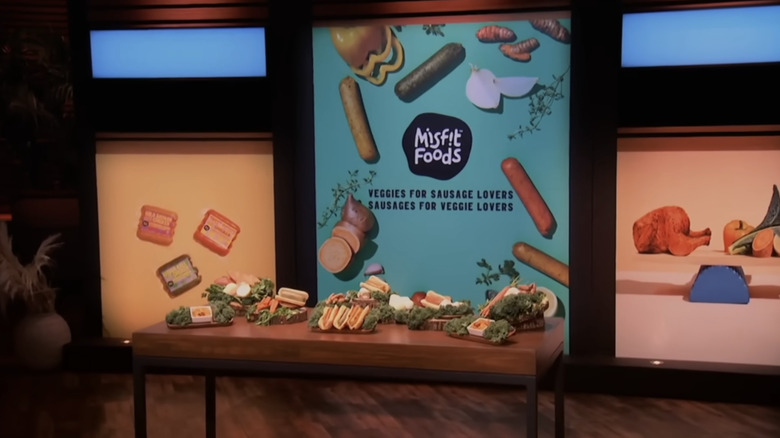
There's no denying that food products that get screen time on "Shark Tank" typically promise healthy alternatives to what's being mass-produced out there, but Season 12 featured several food concepts that still caused a stir among the panel of investors. There was former WNBA player Fran Harris' wellness drink, Electra Beverages, which was supposedly formulated to hydrate and fuel the body without unhealthy sweeteners and additives. There's also the ingenious dehydrated sauces brand, Slice of Sauce, which was designed to make carrying around condiments a breeze. Interestingly, one startup that got the Sharks really excited that season was the sausage company Misfit Foods. Unlike typical all-meat sausages, Misfit was producing part-meat, part-vegetable alternatives. The firm took pride in how the meat it used in its products was grass-fed beef or humanely raised chicken.
According to Misfit Foods founder Phil Wong, the company planned to position itself as a sustainable brand from the get-go. The brand initially focused on making juices, but Phil and his business partner, Ann Yang, quickly realized that the meat industry was a much bigger problem they wanted to tackle. They knew how hard it was to get people to eat vegetables, so they came up with a way to combine veggies and meat into one package. The idea was to slowly assimilate the more sustainable plant-based diet into meat-loving people's eating habits. On paper, the idea sounded promising, but was it enough to convince the Sharks to invest?
What happened to Misfit Foods on Shark Tank?
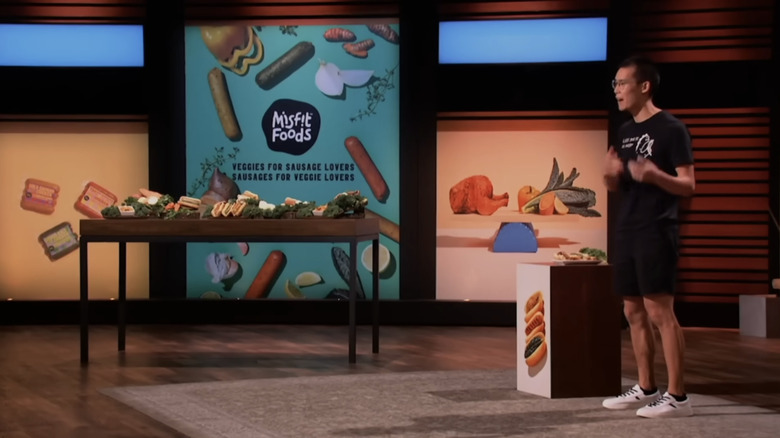
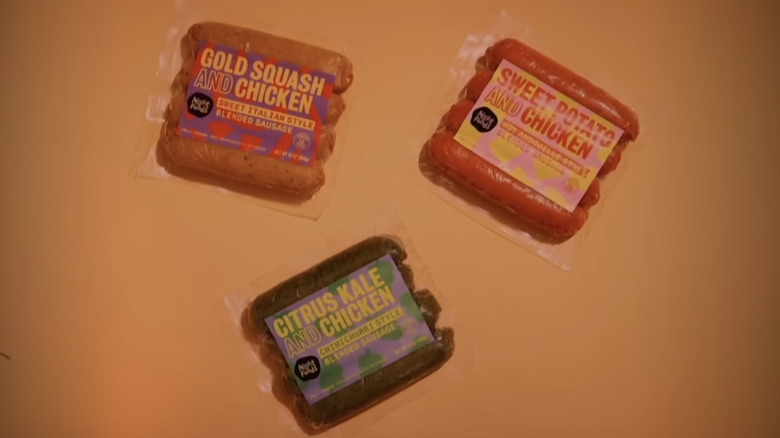
Phil Wong entered the tank seeking $250,000 for 5% of his company. He wasted no time in serving samples of his three blended sausage flavors: Sweet Italian, Chimichurri, and Hot Andouille. The Sharks visibly enjoyed them, but Lori Greiner was the most impressed as she took the time to point out the low sodium content. Wong then disclosed that his company was on track to generate $1.2 million in sales in its first full year on the market. Around 20% of sales were from Whole Foods, while the rest were sold online.
When the Sharks inquired about the production cost, Wong stated that each pack cost $2.91 to manufacture and each unit was retailing for $5.99 to $7.99 while the wholesale price was $4.13. He also admitted that their gross margins might not be remarkable at 29%, but they already hit breakeven in May 2020 and they were spending less than 5% on marketing. Despite hearing all of these promising indicators, Kevin O'Leary quickly tapped out since he had not made money in the refrigerated and frozen business industry in the past. Robert Herjavec also bowed out because, as a vegetarian, he wasn't sold on the half-and-half approach. Guest Shark Daniel Lubetzky offered $250,000 for 15%, while Greiner offered the same amount for 18%. Mark Cuban decided to team up with Lubetzky on his offer, so Wong asked if the two were willing to jointly do $300,000 for 15%. In the end, the two accepted Wong's counteroffer.
Misfit Foods after Shark Tank
All the handshakes and hugs with the Sharks at the end of each successful pitch are never a guarantee of a deal closing. A good example is what happened to JicaFoods on "Shark Tank." Its co-founders landed a deal with Barbara Corcoran during their episode. However, there's no indication that it ever closed. According to Forbes, approximately 73% of the brands in early seasons and 50% in later seasons failed to close their deals, often due to term changes or financial discrepancies. In the case of Misfit Foods, its deal appeared to have closed initially since its name appeared on Daniel Lubetzky's website. Surprisingly, it was later taken down for unknown reasons. Wong eventually admitted that Misfit Foods did not get an investment in the end.
Despite this, Misfit Foods did not have a hard time continuing its operations. The brand benefited from the TV exposure, with Wong and his team doing several interviews after the episode aired. Even Wong's mom, Darlene Kwee, received attention from the press. In an interview with The Montgomery News, Kwee admitted that her son took a different path from his parents, as he was more interested in entrepreneurship, while Wong's dad was a molecular biologist who worked on cancer medicines. On the business side of things, Misfit Food's stocks sold out a few times after the episode aired. The brand reportedly sold over 2 million units of sausages and over 150,000 patties in 2021 alone.
Is Misfit Foods still in business?
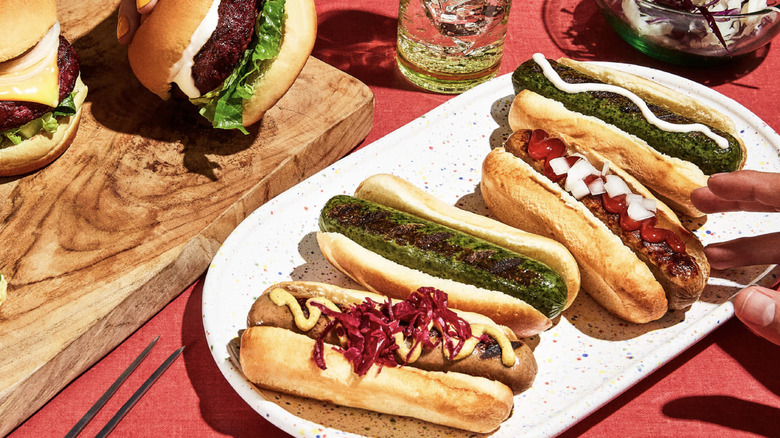
Misfit Foods is still in business; however, it no longer goes by its original name. The company rebranded to Phil's Finest in 2022 and returned to the Georgetown Venture Lab to maximize its support within the startup community while planning its growth and expansion. Addressing the move, Phil's Finest's Andrew Rutledge told Georgetown University: "The Venture Lab not only gives us incredible physical space to work in in terms of operations and storage, but also it's the HQ for when we continue to grow and build capacity as a team." Part of the expansion plans were realized when Phil's Finest started selling in other retailers aside from Whole Foods, including Good Eggs and Sprouts. The brand is reportedly available in over 400 Sprouts Farmers Market locations nationwide.
Phil's Finest is also available on the subscription-based grocery delivery service Misfits Market, even though the two previously engaged in a legal dispute over the misfit trademark. They reached a settlement in 2020 which paved the way for the rebrand two years later. Wong admitted that, more than the trademark issue, the rebrand was necessary in order for the company to move forward with its new identity as a sustainable food brand. All of these changes proved to be beneficial to the company in the end. Based on the latest publicly available figures, its annual revenue is at $1.5 million.