

Lidia Bastianich's Stock Tips For Perfectly Textured Risotto

Anyone who has attempted to make a risotto knows the dish demands a nuanced approach. One wrong step could lead to a mushy texture or rice kernels that aren't fully cooked through. Part of the appeal of the Italian staple is its even, creamy consistency. To achieve that, it's paramount that every aspect of the dish is carefully considered, particularly the quantity of stock used to cook it. Still, famed chef Lidia Bastianich argues that while the volume of stock is important, how it's incorporated into the dish is equally critical.
Whether you're using the standard arborio rice or Bastianich's favorite, carnaroli, the amount of stock used is the same: three cups of stock for every one cup of rice. That gets you about enough risotto to feed a crowd of six. Yet, unlike making a simple batch of rice, dumping those ingredients in the pot at the same time can destroy your chances of attaining a luscious texture.
The kernels should come out al dente, and if you use all the stock at once, that won't be the result you'll walk away with. Bastianich says it should be added slowly so the rice doesn't open up, which allows it to reach the perfect consistency. Equally crucial is ensuring the stock is hot when adding it to the rice. If it enters the mix straight out of the fridge, it can make the kernels congeal, dismantling any hopes you had about enjoying a creamy risotto.
More risotto tips from Lidia Bastianich
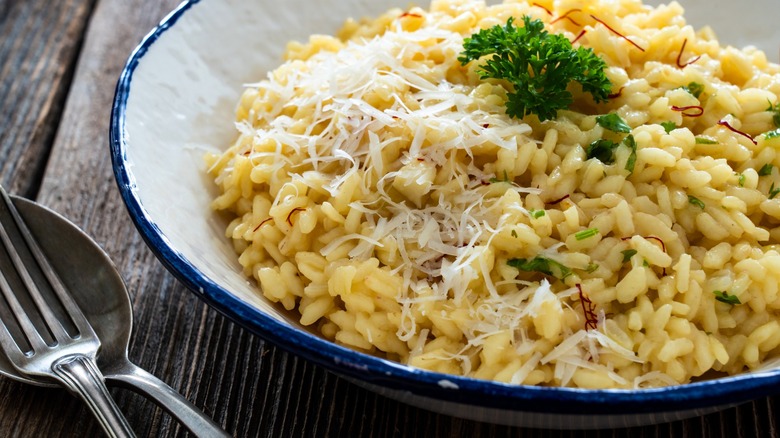
Achieving the ideal texture in a risotto doesn't solely depend on the perfect inclusion of stock. Before softening the rice, Lidia Bastianich toasts it and gives it a splash of olive oil. The idea here is that by giving the kernels a hardened exterior, you have a better chance of ending up with the rice being al dente in the center after cooking it in stock.
Of course, there's more to risotto than just a creamy, consistent texture. It should be full of flavor that makes your mouth do a joyous jig. Understanding that, Bastianich takes steps to flavor the rice before any stock is added. She considers dry white wine an essential liquid for flavoring risotto. After toasting, the rice will be eager to soak up all that wine, contributing acidity to the dish from the get-go.
After toasting, incorporating wine, and adding just the right amount of hot stock slowly, only then should other flavorful ingredients, like butter, be included. Bastianich adds butter after taking the pan off the heat to keep the texture of the dish intact, and the same goes for her go-to cheese, Grana Padano. For the finishing touch, spank the risotto like Giada De Laurentiis does to spread it across the plate, bestowing a restaurant-quality visual appeal to a flavorful, creamy dish.