

Buy Your Favorite Whiskey And Transfer It Out Of The Bottle — Here's Why
We may receive a commission on purchases made from links.
Whiskey should never really go bad if you're leaving it alone on a shelf in the cupboard. However, whiskey usually only lasts a year or two after opening before its flavor takes a hit. Worse still, it may begin drifting away from peak freshness after just two months. There's no way to avoid that decline entirely unless you refuse to open the bottle, but there are certainly methods for keeping a good whiskey safe. We spoke to Chris Blatner, executive bourbon steward and executive director at Bourbon Charity, who recommended transferring whiskey into a smaller bottle once you've drank enough of it.
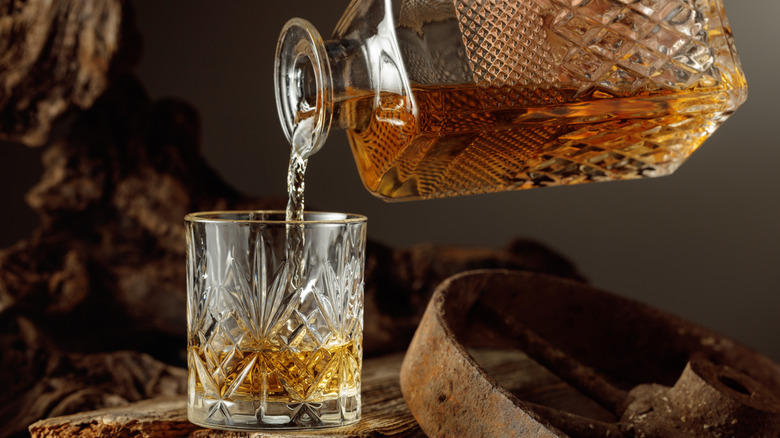
Why do that, you ask? Blatner explained that air exposure is a big problem for whiskey. As you pour whiskey over the course of several evenings, the increasingly empty bottle is going to have more space for oxygen to fill. In bottles which are nearly empty, the deteriorating effects of this surplus oxygen will set in faster. According to Blatner, "Transferring it into a smaller container limits oxidation. It's not necessary for most bottles early on, but it can make sense for long-term storage of a partially full bottle." Once you've drank about two-thirds of the bottle, moving the remaining whiskey into a small decanter or a even a bunch of sample bottles will minimize the air touching your liquor.
Smaller whiskey bottles means less oxygen

Oxygen is useful for aging whiskey while it's still being made, but once whiskey has left its barrel and is officially ready for sale, oxidation can become a whiskey wild card. According to Blatner, "Slow oxidation can dull aromas and flatten flavor over time. Whiskey doesn't spoil like wine, but it can lose vibrancy, especially once a bottle is filled with more air than liquid." It's a gradual, subtle change, in other words. Many people may not even notice the difference in taste for quite some time, especially if they're ruining the whiskey tasting by sniffing it wrong. Still, if you have a good sense of what sets good whiskeys apart from bad and you want to keep a good whiskey safe, there's no harm in transferring bottles.
Of course, oxygen isn't the only threat to a whiskey's freshness. There are other things you can do in tandem with a bottle transfer. Blatner suggests that, in general, you should "store bottles upright, away from heat and light, and keep the cap tightly sealed. Avoid frequent temperature swings." Keeping bottles upright stops the cork from disintegrating and letting in more air, and you always want to keep a close eye on the cork's quality if your container uses one. Sunlight and high temperatures might be more dangerous, but limiting air can help preserve that whiskey for longer.