

According To Science This Is The Best Time To Eat Lunch
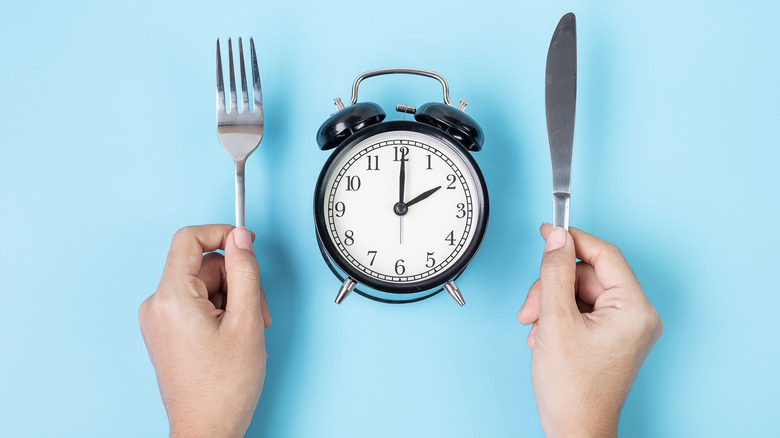
We all know breakfast is called "the most important meal of the day," but according to science, lunch and the time in which you eat it is just as important. Research shows that if you grab lunch between 12 p.m. and 2 p.m., your body will absorb more nutrients and in turn, produce greater and more sustained energy levels.
"The body's digestive system and its ability to effectively process glucose are most active during this time frame," explains Dr. Kezia Joy, Registered Dietician Nutritionist and medical advisor at Welzo. This is largely due to the body's internal clock, known as the circadian rhythm, which regulates different bodily functions, including metabolism, on a 24-hour light and dark cycle. Because the typical lunch falls within the body's natural cycle, Dr. Joy says that it responds better to hunger and fullness signals, making it easier to eat satisfying amounts without overindulging.
Sometimes life happens and we may have to put lunch on the back burner. However, Dr. Joy recommends eating lunch at the same time every day, if possible, to assist in establishing your body's hunger hormone and digestive rhythm. "You don't need to be perfectly consistent with eating lunch every day; small deviations from your usual meal time are acceptable so long as you do not habitually skip or delay lunch for three or four hours," says Dr. Joy.
Choosing the right time and food for lunch

According to studies, eating lunch after 2 p.m. can lead to irregular blood sugar levels and less sustained energy throughout the day. Dr. Kezia Joy adds, "Consuming your last meal of the day (lunch) after 2 p.m. will likely cause you to feel hungrier in the evening hours, which may lead to consuming more calories during the evening meal."
Dr. Joy says determining exactly when to eat lunch within the 12 p.m. to 2 p.m. time frame varies, and should be based on individual factors such as work schedule, sleep quality, and physical activity levels. For instance, those with physically demanding jobs should have lunch around 12 p.m. to maximize energy benefits. Dr. Joy also notes that the type of breakfast you have can influence your lunch timing. A high-protein breakfast, like cottage cheese or greek yogurt, tends to keep you fuller for longer, delaying your hunger until later within the recommended timeframe. Conversely, a less nutrient-dense breakfast that digests quickly, like sugary breakfast cereals (like, say, Fruity Pebbles, which is the worst gluten-free cereal), will likely have you hungry for lunch much sooner.
What you choose to eat for lunch and the amount also matter. "You should include a balance of three things in your lunch: protein, complex carbs, and healthy fats," Dr. Joy recommends. "All three work together to give you steady energy and keep you feeling fuller longer."