

The Color Of Your Store-Bought Tortellini Is Hiding All Sorts Of Quality Information
As much as I've thought about making tortellini from scratch, it's never happened; and in truth, it probably never will. Making it fresh isn't something that happens quickly, and because I've got things to do, it falls into the category of complicated Italian dishes better left to professionals. I'll happily reach for store-bought tortellini when I want to satisfy my filled-pasta craving, but not all brands are equal. According to Giorgia Sinatra (no relation to the crooner who preferred his ice cream boozy), taking a close look at the color of the pasta can reveal whether you should toss it in your shopping cart or move on to another product.
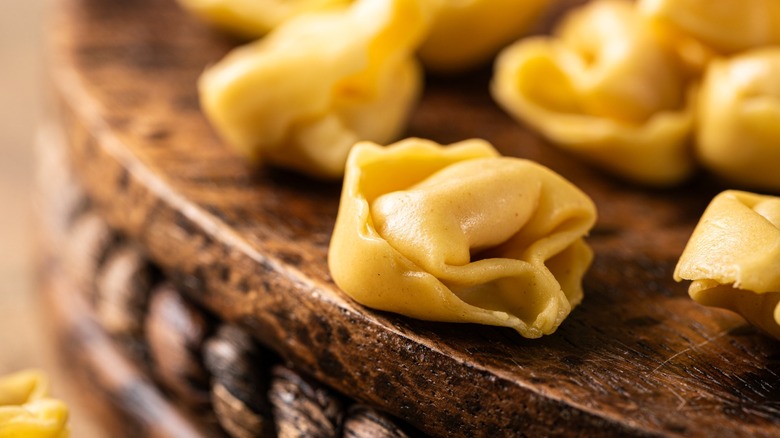
As part of the Northern Italian family behind the beloved Los Angeles pasta shop and restaurant, Pasta Sisters, Sinatra is no stranger to constructing first-class tortellini. "Well-crafted pasta is simple pasta," she said. "For example, our pasta is just eggs, doppio zero flour, and EVOO — literally nothing else." This straightforward combination of ingredients creates a product boasting an exquisite, golden-yellow color which is a clear indication of quality with fresh tortellini.
However, the hue can vary slightly depending how many and what kind of eggs are used. "In fresh pasta, the color and amount of egg yolks used can influence the intensity of the pasta color," Sinatra said. "So, a deeper yellow could mean the yolks used were more orange to red in color — this is common in Italy." And yet, if tortellini appears too yellow, that could be a sign that it contains artificial colors used to fool people into thinking it's top-notch.
What about shelf-stable, store-bought tortellini?
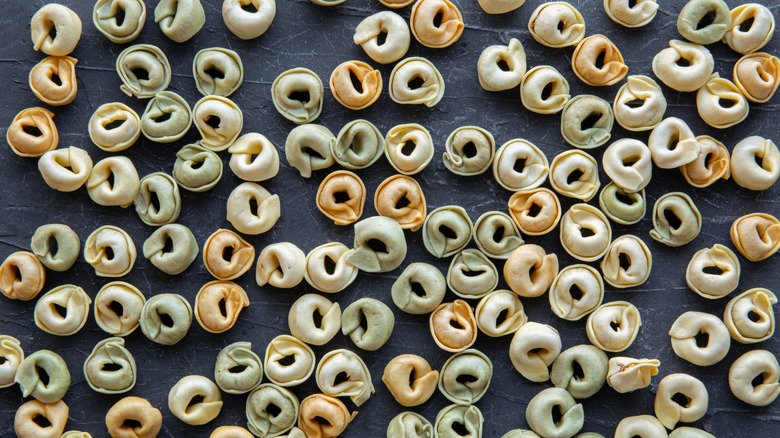
While a gorgeous, golden-yellow hue is an expression of quality with fresh tortellini, the same can't be said for its dried, store-bought counterpart. "For dried pasta, look for a pale, light yellow or white color," said Sinatra. "This indicates that the pasta was air-dried using a slow, low-temperature process, which preserves the flavor and nutritional qualities and makes it easier to digest." Slowly air-drying pasta is a complex process that can't be rushed. If you want the best dried tortellini money can buy, don't be hypnotized in the grocery store by the freshest-looking product, because it's actually subpar.
No one is quite sure about where tortellini originated, but as the dish evolved folks decided that imbuing it with the classic Italian flavors of spinach and tomato would add to its appeal. Nothing wrong with that, unless that's not all it's being infused with. Sinatra said that when purchasing tri-colored tortellini, "Keeping an eye out for colors that occur in nature is a good rule of thumb."
That might seem simple at first glance. After all, tomatoes are red and spinach is green. But do you ever remember seeing a tomato that looked like it was nearly glowing red? Or spinach sporting a radiant shade of green? Likely not. If your store-bought tortellini appears that way, that could be a sign it contains extras you'd rather not have in your pasta. "If you're using high-quality ingredients without additives or preservatives, the pasta color will reflect what you see naturally in the world — perhaps slightly muted due to the incorporation of other ingredients, but it shouldn't skew oddly bright green or red."