

Foods You Should Never Freeze Raw
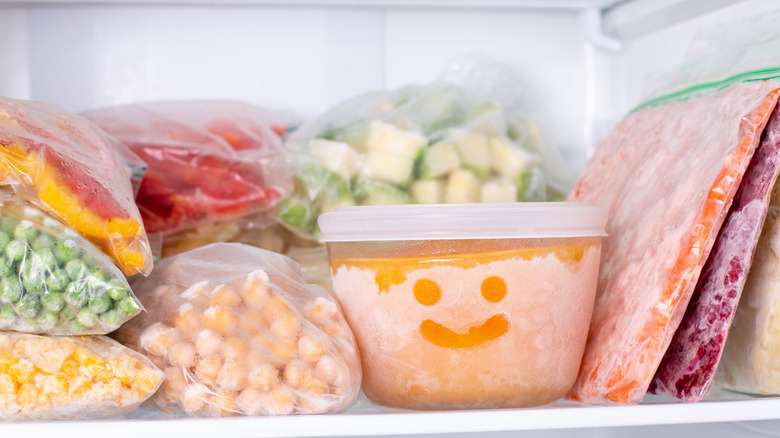
Buying in bulk can save you money and time. It's a well-meaning act. We've all got a lot on our minds, a lot to do, and a lot to buy. But saving money and time by buying in bulk doesn't always translate to saving the food you've purchased.
The freezer is not a magic cure-all. It's also not a time capsule. While it can halt bacterial growth, and keep things from technically "spoiling," it won't stop ingredients from changing in flavor or texture. That's because freezing is not a neutral act. Freezing is not Switzerland. Water expands into ice crystals, fats separate, and delicate plant cells rupture. Spices that were already fading in the fridge can turn dry and grainy once frozen — and that chocolate you decided to freeze? It may retain its nice crunch, but it's also likely to become chalky and muted in flavor. And then there are the mushy vegetables, watery fruit, and curdled dairy that are now all hiding behind frosty doors.
While the freezer is one of the most useful storage tools we have, it needs to be used thoughtfully. Some ingredients thrive in the chill, while others need prep to survive it, and there are some foods that should never be frozen at all. Before you start tossing everything that's on its way out into the freezer, know the foods that shouldn't get the ice treatment when raw — and what to do with them instead.
Leafy greens
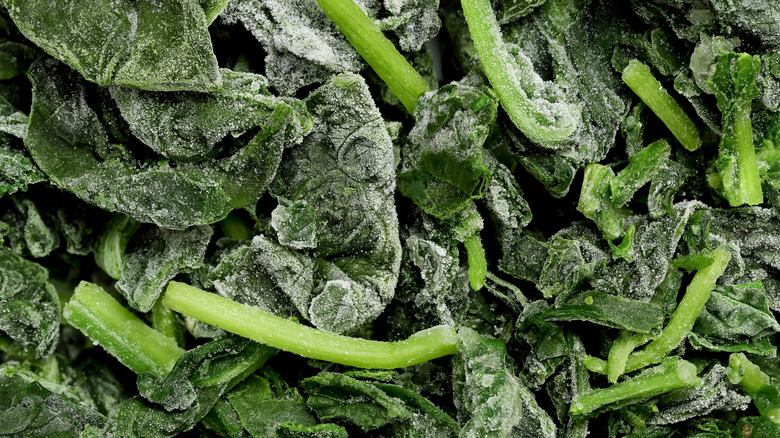
You purchase a whole head of lettuce, only to use half. The basil bought on a summer's day for an elevated caprese salad starts to wilt. The spinach meant for your satisfying morning smoothie begins to turn dark and mushy — so you freeze it all until you can figure out the best solution. Before you know it, your freezer is a graveyard of half-finished foods, and you still have no real plan in sight.
Leafy greens like lettuce, spinach, and basil are about 90% water. When you freeze them, ice forms inside the cell walls, causing those cells to rupture and break down. Due to this high water content and delicate structure, greens are often left limp and mushy once they've been thawed. The greens may lose color, become bitter or slimy, and generally turn unpleasant to eat. Now, you may be thinking: What about all that spinach in the freezer section of the grocery store? That spinach is cooked, which changes its freezing rate. The longer food takes to freeze, the larger the ice crystals that form, increasing possible cell damage and textural problems. Cooked or blanched spinach freezes faster, producing smaller crystals and less damage. It's then destined for smoothies, soups, and sauces.
Basil is trickier still. It has a high water content along with aromatic essential oils. When frozen raw, basil's fragrance dulls, and the leaves often darken. Instead, purée basil with oil before freezing it to preserve both its flavor and usefulness.
Water-dense vegetables
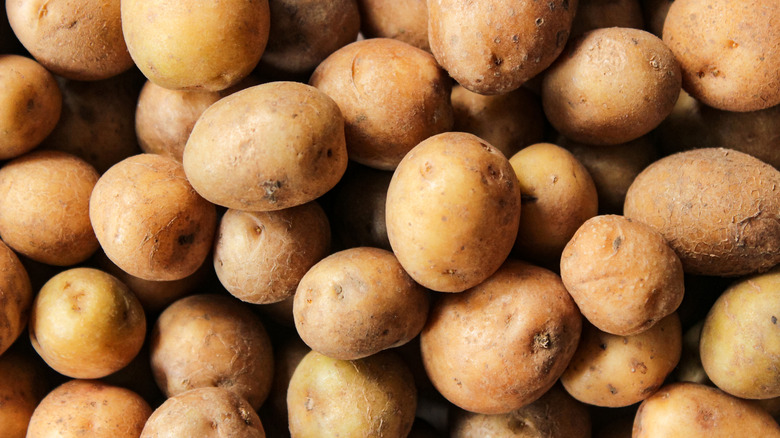
No one likes a sad veggie — and water-dense vegetables like cucumbers, celery, radishes, potatoes, and onions become sad if frozen raw. For some people, it's already a victory to like those vegetables at all, so it's best not to mess around with the flavor.
When frozen raw, cucumbers (normally so crisp) become mushy. Celery (also decidedly crunchy) turns watery. Radishes start to resemble sponges, at least in texture, and raw potatoes become grainy once thawed. Onions, meanwhile, turn soggy and lose their signature punch. And the science behind these changes is much the same as it is for leafy greens: The cells are delicate, so they become damaged when ice crystals form inside. Home freezers aren't as powerful as industrial ones, and slower freezing times create larger ice crystals within the cells.
Let's break it down: The cucumber, our old friend, is about 95% water. If frozen and then thawed, it's left as a pulpy mush. Celery loses all of its crunch, which is arguably its best feature. Radishes also lose their famous bite, and can even turn bitter — which says a lot, considering it's not known for sweetness to begin with. With potatoes, when starch meets freezing water (also known as ice), the result is a watery, grainy texture. Onions are another water-dense vegetable that becomes limp after freezing, in part because of its layered structure.
Melons
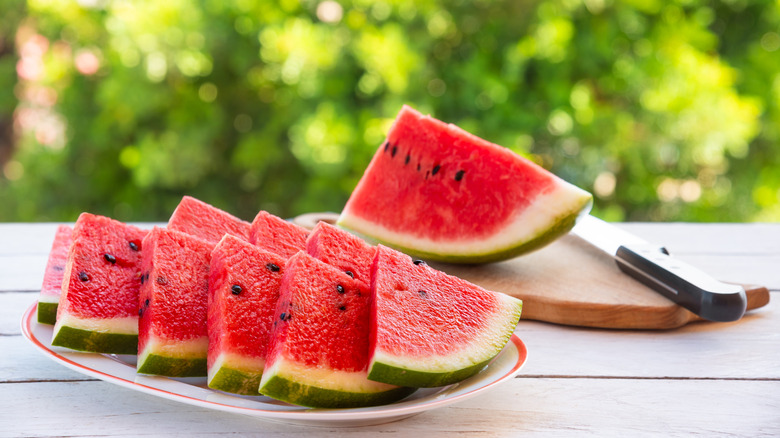
Learning how to pick a perfect watermelon, or a just-right cantaloupe, is a summertime rite of passage. The juicy crunch of ripe melon enjoyed in the hot summer sun is practically synonymous with the season, and (dare it be said) close to ecstasy. These fruits are meant to be savored — when fresh.
Much like their veggie counterparts, as you might guess, melons have a high water content. One might even argue that watermelon is little more than flavored water, given how hydrating it is on a hot day. With that high water content, though, comes a common freezing problem: When it's frozen, ice crystals form and rupture delicate cells. So, unfortunately, you can't bottle up summer in the form of frozen watermelon in your freezer. It just isn't the same. Once thawed, the watermelon will become mushy, extra grainy, and even more water-logged — and it's already about 92% water before freezing.
Cantaloupe fares no better. It turns soft and watery, and that delicate sweetness dulls, leaving behind a pulpy nothingness. But have no fear: There are ways to preserve summer fruits, just not in their original form. When puréed before being frozen, watermelon or cantaloupe can be transformed into popsicles or blended straight into smoothies. A little taste of summer is just one purée away.
Whole citrus
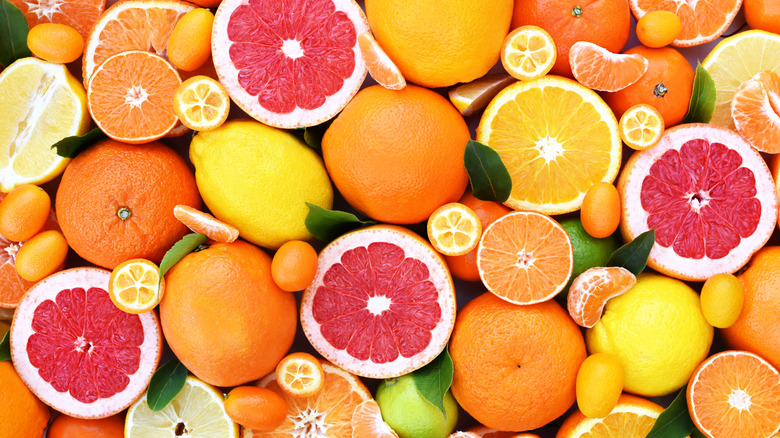
There is nothing better than the zing of freshly squeezed orange juice in the morning, or fresh lemon zest folded into baked goods, or the essence of lime in a fruity cocktail. The citrus family is vast and grand, and its fruits help to enhance the flavor of so many dishes — so we as a species ought to do right by it in all its forms.
One thing citrus doesn't do well is keep in the freezer. That pesky ice ruins the precious cells of citrus, a physical change that leaves it mushy and soft. Oranges and grapefruit, once thawed, lose firmness and flavor. Moisture shifts, texture changes, and that bright, juicy bite you expect disappears.
Lemons and limes suffer the same fate. Once they're frozen and thawed, you are left with a mushy lemon or lime that's softer than desired. After all, citrus is meant to be bright, zingy, and packed with punch. There is hope, however: Citrus can be frozen in the form of juice or zest — just not whole. If you're willing to first do some prep work, you can preserve the flavor for smoothies, cocktails, and baking long after the season has passed.
Dairy
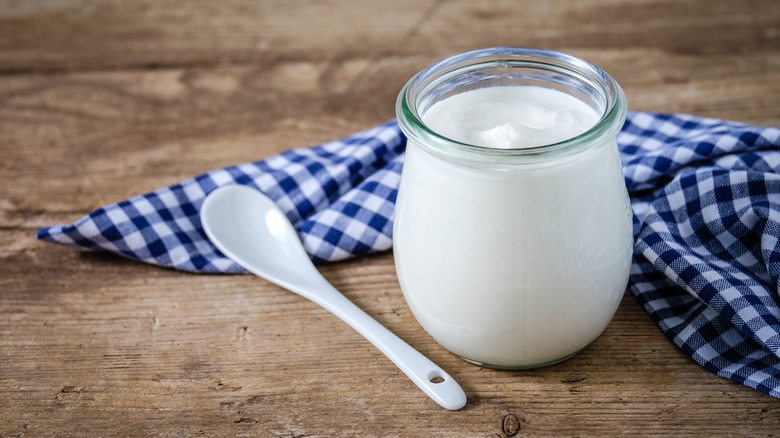
Some dairy products, like butter and ice cream, can keep in the freezer just fine. But if you keep raw dairy — like fresh milk, cream, homemade yogurt or soft cheeses — at home, it's best to skip the freezer. Raw dairy products tend to be mostly water, and as we've seen, foods with a high water content don't freeze well because ice crystals form, which can disrupt both the texture and flavor of the product.
Raw milk and other raw dairy products contain fat and proteins that are held together in a delicate balance. Freezing breaks that structure apart. As the water turns to ice, it separates the fat and protein, which causes whey separation and curdling. The latter is particularly difficult to reverse, and neither is appetizing.
After thawing, milk and yogurt can look thin and watery, with liquid pooling on top. Cottage cheese and other soft cheeses often become grainy, dry, or crumbly instead of smooth and creamy. While the flavor may still work for cooking or mixing into a smoothie, the fresh texture that makes these foods enjoyable is lost. For raw dairy, fresh is pretty much always best.
Whole spices
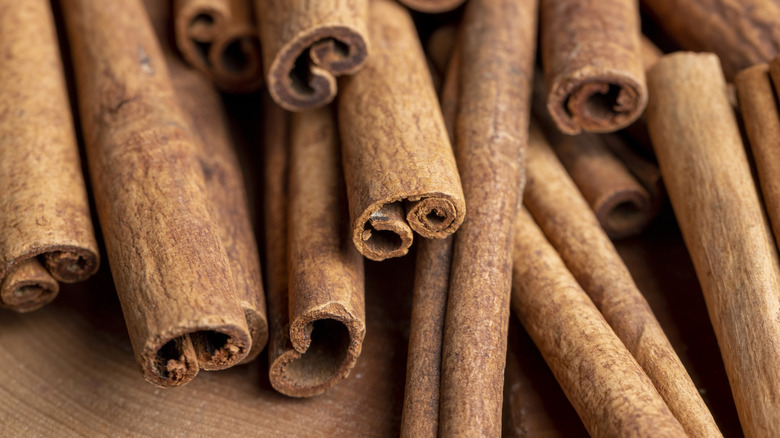
Spices are arguably one of the most important components of a dish or drink. A cup of hot chai, flavorful grilled chicken, a freshly baked apple pie — what would these dishes be without their spices? Spices add depth of flavor and aroma. The taste and smell of a spice should not be undermined by improper storage.
When it comes to freezing raw spices, whole cloves, cinnamon sticks, and peppercorns typically don't fare well. Freezing can produce condensation, which may turn a whole spice into a lumpy, mushy mess once it's thawed. In addition to textural changes, flavor loss is also likely to occur. Aroma and potency can degrade over time when spices are frozen.
In general, ground and bottled spices don't need to be frozen, as they're already shelf-stable, and will keep for a long time when stored properly. At the end of the day, keep your precious spices out of the freezer, and in airtight containers for maximum freshness, best texture, and optimal aroma. For bonus points, be sure to also keep them out of direct sunlight, as sun exposure will also age them.
Whole eggs
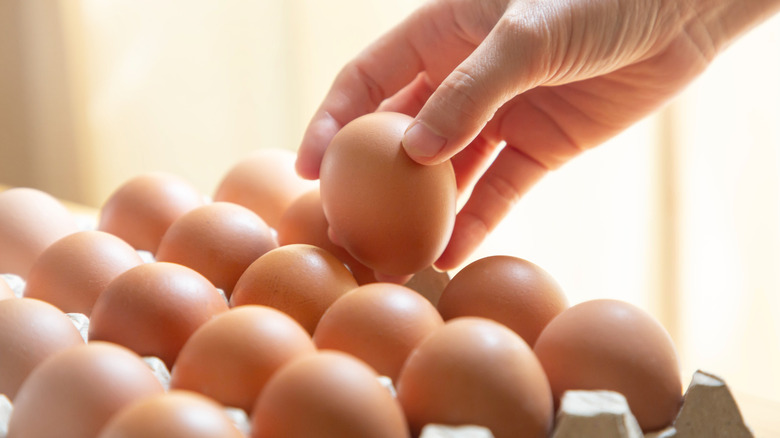
Eggs are a staple for many of us — eaten for breakfast on their own, added to fried rice, used in baked goods, or hard boiled to be enjoyed as a snack or salad ingredient. Eggs are versatile and an excellent source of protein, vitamins, and minerals. But while you can freeze scrambled eggs (it's not ideal, but you can do it), do not freeze raw eggs whole.
Eggs are mostly made up of water and, as we've learned, foods with a high water content don't generally freeze well. As water expands during the freezing process, ice crystals form, pressure builds inside the shell, and the egg has the potential to crack. No one wants a broken egg in their freezer. Beyond inconvenience, a cracked shell also allows bacteria to enter, as the egg's natural protective barrier is no longer intact. And even if the shell doesn't crack, quality issues remain. The consistency of the yolk is likely to change, often becoming thicker or gel-like. The texture of the egg white may also be altered, becoming less reliable for cooking or baking once thawed.
This isn't to say you can't freeze raw eggs; you just shouldn't freeze them in the shell. Eggs can be cracked and frozen safely. Yolks and whites can be frozen separately or whisked together, and they can even be frozen with stabilizers such as sugar or salt, depending on how you plan to use them later. So freeze away — just ditch the shell first.
Avocados
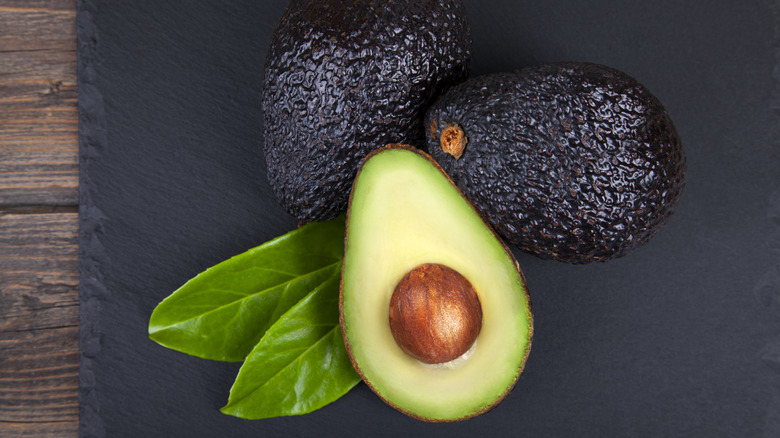
Avocados are all the rage, and there's a reason for that. Their creamy texture makes the perfect complement to eggs, bread, beans — you name it. Whatever you're making, an avocado is likely to make it better.
Texture may be the avocado's defining characteristic, aside from its unmistakable shape and color. Avocados are also known to be a bit pricey, so it's no surprise that some people would try to save a browning avocado that's been forgotten in the back of the fridge. The best way to do that is not in the freezer, however. When an avocado is frozen, ice crystals form. These can damage the fruit's cell structure, which ruins its best asset: the texture. Once thawed, the avocado is likely to be mushy (it's already soft enough as it is) and it may even become watery.
Temperature changes can also accelerate oxidation, meaning that a browning avocado that was tossed into the freezer may come out even browner. Just like that, the pretty avocado toast you'd planned is over before it even began. Avocados come from warm climates, either tropical or Mediterranean; they're not built to withstand the cold. So when your avocado is on its way out, skip the freezer as it can ruin that creamy texture. Instead, a better way to preserve avocados is to make creamy guacamole.
Chocolate
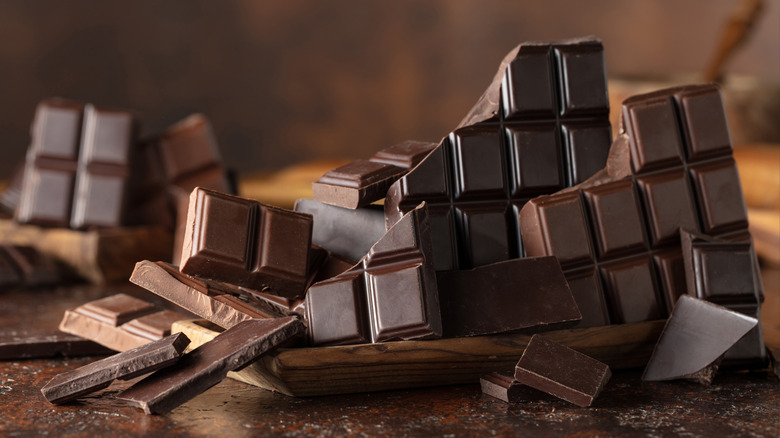
Chocolate is chocolate. There is nothing else like it, with its creamy mouthfeel, glossy finish, satisfying snap, and unmistakable aroma and flavor. Chocolate comes in many forms and in varying degrees, from a hollow chocolate bunny to a rich, dense bar. But what actually is chocolate? It's a complex mixture of cocoa solids, cocoa butter, and sugar.
Given chocolate's cocoa butter content, you might imagine that it wouldn't freeze particularly well — and you'd be right. Freezing chocolate, or even exposing it to repeated temperature changes, can alter both its appearance and flavor. These fluctuations can cause sugar and fat to rise to the surface, creating an undesirable effect known as bloom — and it's not the pretty kind.
There are two types of bloom, sugar bloom and fat bloom. Sugar bloom occurs when moisture condenses on the chocolate, dissolving the sugar, which then recrystallizes and leaves white spots on the surface. So while the crack of a cold piece of chocolate might be satisfying, remember that freezing can compromise the sweet treat. Fat bloom, on the other hand, happens when cocoa butter crystals migrate to the surface, again causing discoloration. Neither type of bloom is harmful, but both can change chocolate's texture, making it chalky or grainy. The flavor and aroma can also become muted. If you must freeze chocolate, be sure to wrap it in an airtight container to minimize moisture and odor absorption.