

You'll Never Break The Yolks On Over-Easy Eggs Again With A Simple Water Trick
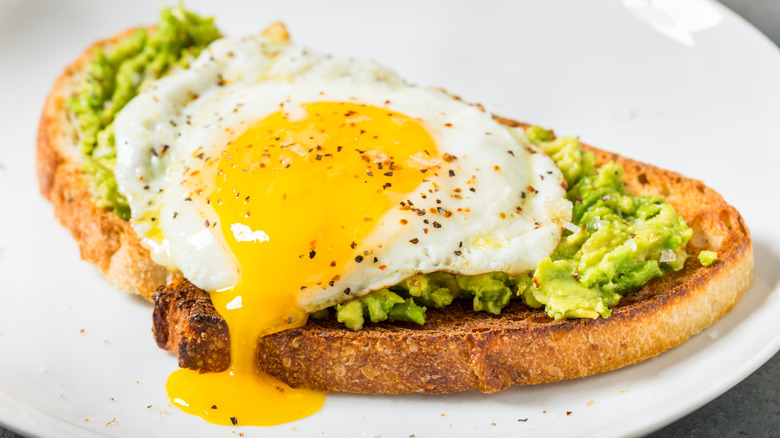
I can't be the only one who's thrown a tantrum over a broken yolk. I've never cried over spilled milk, but I can truthfully say that I have been moved to tears after ruining a fried egg at the end of a particularly trying day. The joy of an over-easy egg is a deliciously runny yolk and just-set white. If I've broken that delicate yellow dome, I might as well have just made a boring scramble.
Fortunately, with some expert guidance from Nelson Serrano-Bahri, chef and director of innovation at the American Egg Board, we can all nail our over-easy eggs every single time with a technique known as steam basting. Adding water and popping a lid on the pan captures the steam which helps cook the eggs without having to baste your fried eggs in oil or attempt a risky flip.
"A small splash of water creates steam, and steam gently cooks the top of the egg (especially the whites) without requiring aggressive heat or flipping," Serrano-Bahri explained to The Takeout. "This helps set the whites evenly while reducing the risk of rupturing the yolk." All you need to do with a spatula is lift out your perfectly cooked over-easy egg and place it right on a piece of avocado toast or a smoky, spicy breakfast sandwich.
How to steam baste over-easy eggs
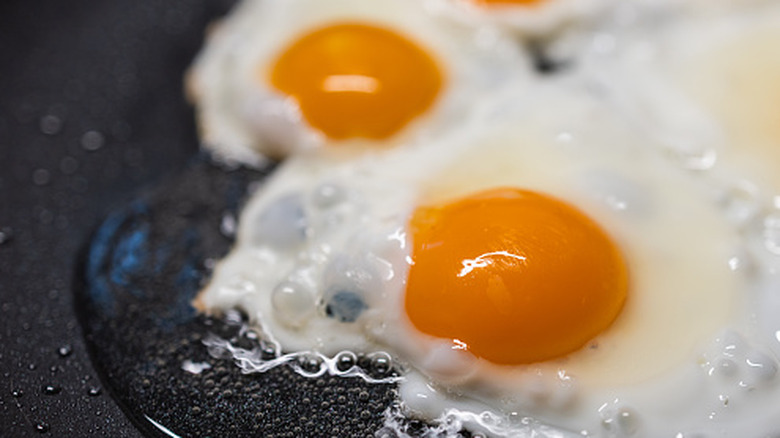
To use this fried egg hack, start cooking the eggs how you normally would using a well-seasoned cast iron or non-stick pan and a bit of butter or oil. Once the whites are starting to set, it's time to add the water. Serrano-Bahri recommended using 1 to 2 teaspoons of water per egg. "You want steam, not a shallow poach," he explained.
"Add the water to an open spot in the pan (not directly on the yolk), then cover immediately for 20 to 60 seconds, depending on how set you want the whites," Serrano-Bahri instructed. You'll know they're done when the thin film of egg white over the yolk turns translucent.
Not only does steam basting eggs mean they'll cook through without the need for flipping, it also helps them cook more evenly and quickly. The steam allows the egg yolk to finish at the same time as the white, and the faster cook time helps keep the whites from turning rubbery and the bottom of the egg from getting overly crispy.