

11 Fine Dining Etiquette Rules That Catch First-Time Diners Off Guard
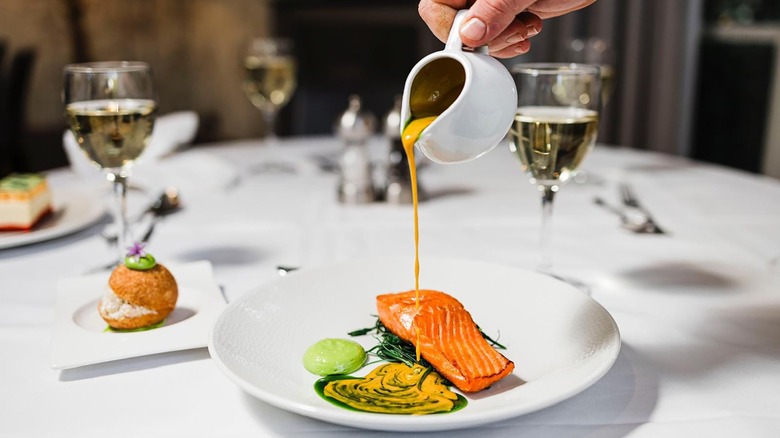
Ever walk into a fine dining restaurant and immediately feel like you have stepped into some alternate universe? You've eaten dinner everyday of your existence, but somehow feel completely unable to navigate this noshing. It's a little like Jed Clampett wandering into a Beverly Hills bistro. No one's being unkind, per se, but you sure feel the awkward friction — like a record scratch from a really bougie DJ booth.
You're not alone. That uneasy feeling when faced with fine dining for the first time is more common than many like to admit. This is because fine dining often comes with a code of do's and don'ts, etiquette rules that are rarely said out loud, much less explained. This can certainly make the average person feel like a fish out of water. It gets even more complicated in the fact that fine dining etiquette isn't always intuitive to the everyday person.
For instance, many routine habits we consider polite, or at least perfectly fine (explaining your reason for stepping away from the table, splitting the check when you've organized the dinner) can actually be seen as absolute faux pas. While you're certainly not intending to be rude, the fact remains that committing these no-nos makes you stand out in a way you definitely don't intend. We feel your pain, which is why we're sharing these 11 fine dining etiquette rules that catch first-time diners off guard.
1. Never lift the menu off the table
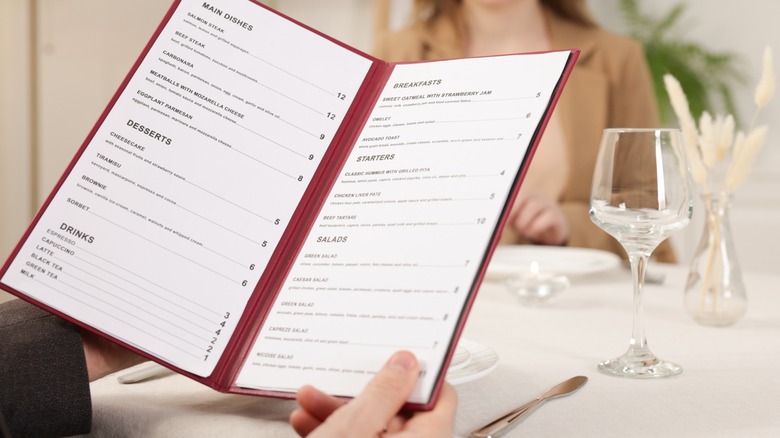
While we've just admitted how intimidating first-time fine dining can be, we still have to admit we love it. So, in the defense of fine dining, and in the spirit of helping you navigate all its ins and outs, let's talk about ordering. We've covered fine dining etiquette when it comes to making specials requests, but what about the menu itself? Specifically, how you are holding the menu when ordering.
In fine dining, your menu should never leave the table. While you may not intend it as rude, holding a menu up often blocks direct eye contact between you and the waiter, which can definitely be seen as off-putting. It also obstructs the view of your lips when ordering, which could make it more difficult for staff to decipher your order. It also creates a barrier (albeit, a subtle one) between you and the rest of your dining party, which lends to a more closed off energy versus a convivial dining vibe.
That being said, slapping the menu flat down on the table, then proceeding to hunch over it is not the right move either. The perfect middle ground is keeping the menu at an angle, while resting its edge on the table (upright enough for easy reading, but not blocking discourse or eye contact between you and other individuals). Think out it like "feng shui" for fine dining menus: Keep the energy good by not blocking important pathways.
2. Observe the 'lip ring' rule
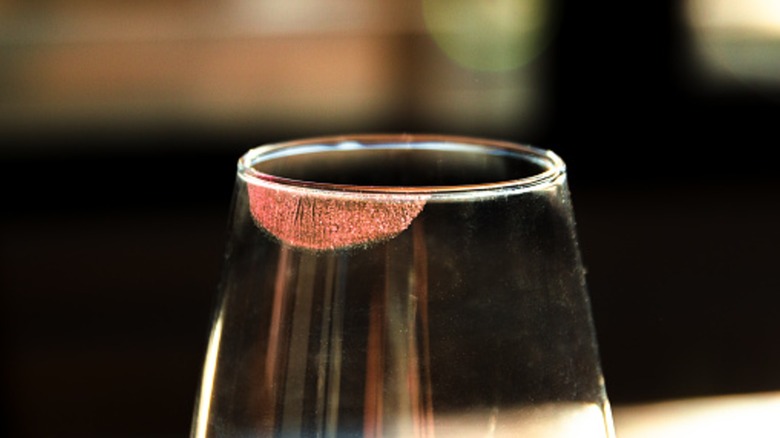
Let's talk about the dreaded lipstick mark on the stemware. It happens, even when fine dining. After all, you're getting all gussied up to go to a glamorous, upscale restaurant, so what better final flourish is there than a killer red lip? But that stunning lip combo that looked incredible when you walked through the restaurant doors doesn't look so hot smeared all around your wine glass by the end of the night. Not classy.
What to do? The first sip stain is pretty inevitable, but it's how you navigate every sip thereafter that separates the fine dining gurus from the having not one clue novices. Just like Will Smith's Hitch teaching Kevin James about "where he lives" and "home" when on the dance floor, the first time you take a sip from your glass when fine dining, that spot becomes your designated spot for the rest of the evening. That is where you (and your lipstick-laced smackers) "live."
The reason for this is that, just like on a party dance floor, we care about how things look. And fine dining is nothing if not all about impeccable aesthetics. And multiple lipstick stains ringing around your entire wine glad rim? It just looks messy — and we can't have mess in fine dining.
3. Never say 'bon appétit'
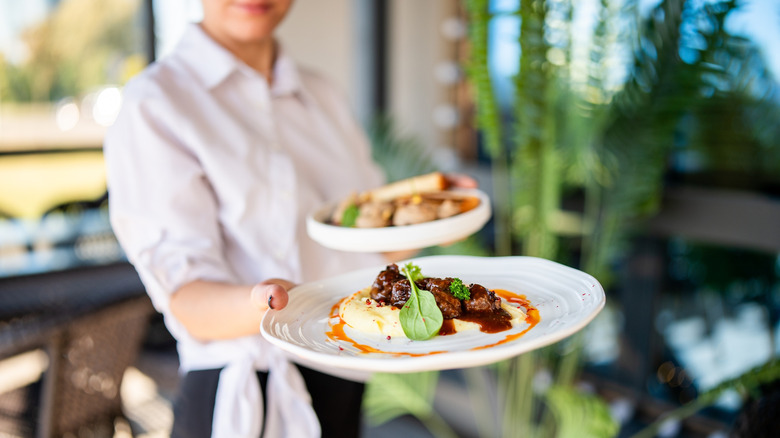
You know those languages that somehow make any phrase, no matter how common it may be, sound fancy? French is definitely among them. This next rule pricks a little, as it has definitely been a pitfall that's already tripped up more than a few of us. One common instance is declaring "bon appétit!" before a meal. More than a few of us were raised with the habit, hearing it at home as a well wish for hearty eating from a parent or sibling, accompanying a toast at a special event, or maybe even during a movie scene as the characters were about to break bread together.
We have always assumed this phrase was a great thing, universally accepted as the equivalent of saying "cheers," but in a way that somehow sounds far more cultured and special when it's proclaimed pre-meal. One might think that, but the reality of the matter is that in the world of fine dining, this oft-used phrase doesn't translate the way you might necessarily think.
Historically, "bon appétit" translates closer to "good digestion" than "enjoy your meal." In old-school etiquette, any mention of bodily functions (digestion, physical hunger, etc.) is considered a bit gauche, or at the very least, unrefined conversation. But before you get too upset, pointing to the fact that so many people still say it, take solace that in everyday meal situations, the phrase isn't so much of a faux pas. It's mainly in fine dining that you demur.
4. Don't ask for an oyster fork
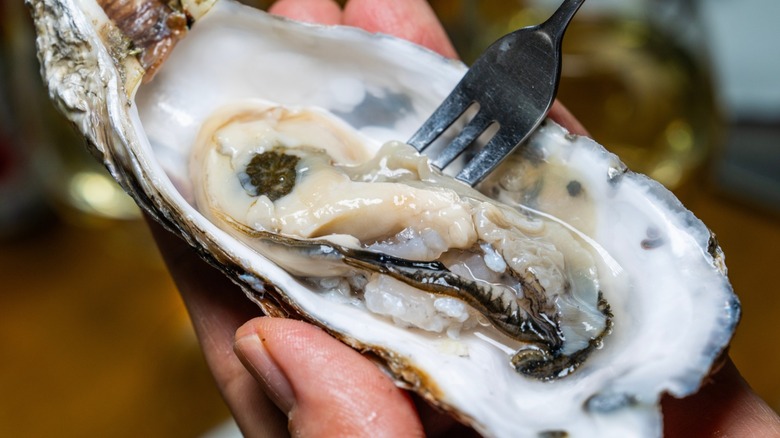
When it comes to this next fine dining etiquette rule, by all means "put a fork in it!" — just don't request one. We're talking about oysters. Specially, when your order of oysters arrives at your table, if that signature teeny tiny fork is not served right alongside it in plain sight, don't ask for one. We understand that the natural instinct will be to immediately lowkey panic and feel something is amiss, while simultaneously turning to your server and requesting that tiny, oyster-specific utensil be brought for your dining enjoyment post-haste.
You're going to want to resist that urge, because in fine dining, this is not the oversight it might seem. It is intentional, signaling to the guest that the kitchen staff have already taken the liberty of loosening your oysters from their shells before they ever left the chef's sanctuary. Knowing this, it makes sense that when a diner asks for an oyster fork, the kitchen could definitely take offense.
Even if unintended, this appears rude, as if you're not trusting that the chef and staff did their due diligence or can handle properly loosing your beloved oysters. Basically, it's the equivalent of taking matters into your own hands (literally), and it does not fly in fine dining. Think of fine dining like a low-stakes trust fall. You pay top dollar so you can trust that everything has been thought out, and is flawlessly being presented to you, exactly as it should be.
5. Always hold wine glass by the stem
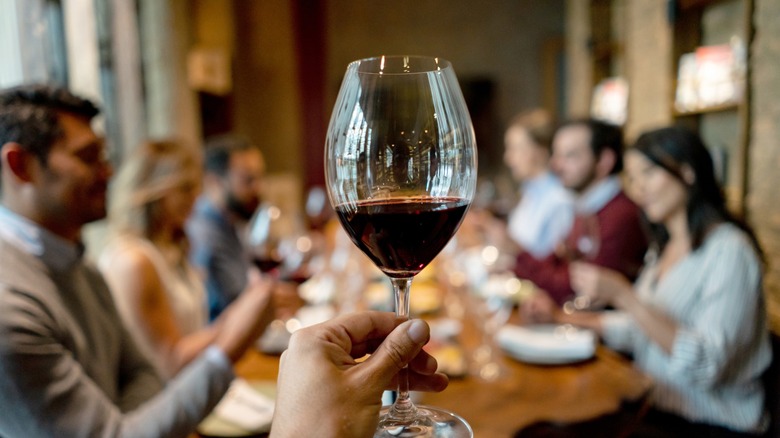
If there's one fine dining mishap that instantly outs inexperienced first-time diners, it is failing to understand how to hold a wine glass the correct way. In fact, holding a wine glass incorrectly is among the most common wine tasting mistakes, according to experts. So, what is the right way? Folks in the know forbid fine diners from ever cupping the bowl of a wine glass when preparing for that first sip. Instead, the rules of fine dining dictate that wine glasses are to be held solely by the stem.
The basis for this rule comes down to temperature and aesthetics. Any good sommelier will tell you, wines are meant to stay cool, so the body heat generated from your hand understandably makes any pressure from your palm an unwelcome caress. As for aesthetics, we've all seen the bakery windows that reveal the telltale smears from kiddie fingers pressed upon the pane.
Consider this a fine dining equivalent, where leaving fingerprints on the bowl is like leaving etiquette at the door. Just like everything at a high-end restaurant, your wine glass should be pristine. Crystal clear and smudge-free for every sip is the fast and hard rule here, so fight that urge to clutch or cup your glass.
6. Never blow on your food to cool it off
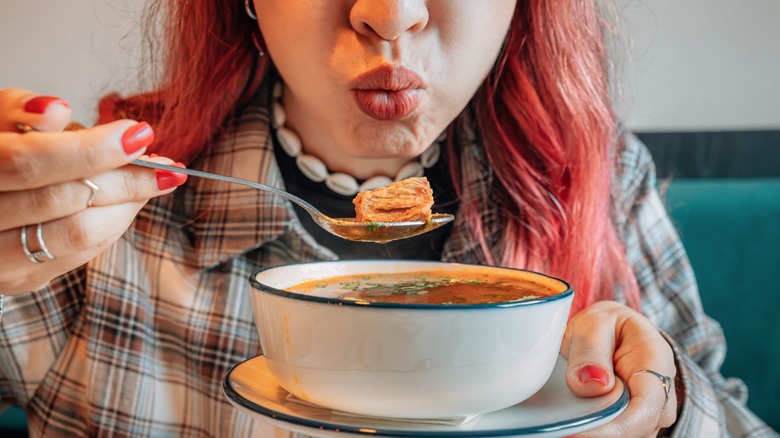
Most of us have committed this next fine dining fax pas. It's a bit maddening really, as it just seems to make sense when that spoonful of soup is too hot, a quick puff of air from the old pipes remedies that too-steamy situation in two seconds flat. In everyday life (like in the safety and anonymity of your kitchen at home), this may be no big deal and definitely gets the job done.
In fine dining, cooling your dish this way is anything but cool. Not only does it appear unrefined (and can even sound appalling, too, depending on how much gusto you put into it), but it also subtly suggests an impatience that is anything but fine when fine dining. Recall a time when you've witnessed a fellow diner doing this very thing, blowing on their food like a bumbling pufferfish with zero poise. Not mindful. Not demure.
Quite the opposite, in fact. It's noisy, noticeable, and draws attention to the physically functional mechanics of eating, taking away from the eliteness of the experience itself. One must remember, when fine dining, the approach is far less about physically feeding the body in a perfunctory way, and more about savoring the extraordinary magic of the moment. Have patience, let that soup sit a second and cool on its own, while you enjoy the wine, the conversation, the elite atmosphere.
7. Bread should be broken, not cut
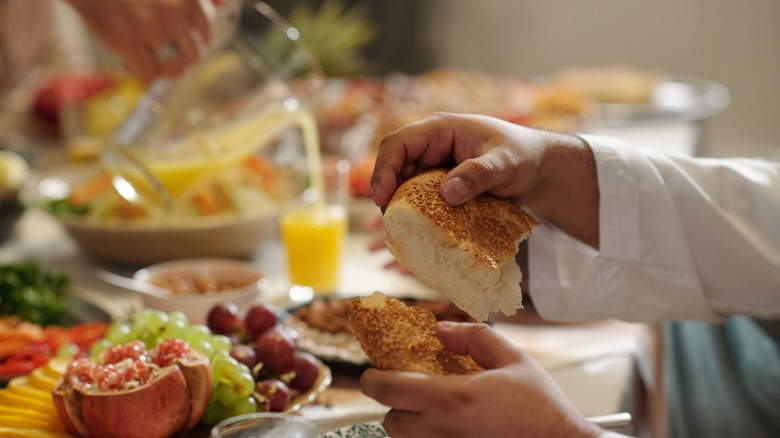
Let's talk about your bread and butter. And no, not how you make a living. We mean literally, and specifically, your bread and butter etiquette at a fine dining restaurant. It may arrive at the table all soft, squishy, and seemingly benign, but that roll of bread can quickly become your first fine dining blunder. The second that bread is brought to the table, the natural instinct might be to grab that roll and immediately reach for a knife to slice it, making way for the very best part: the butter. But, not so fast.
Fine dining etiquette eschews the blade entirely, at least when it comes to making ready that roll for its heavenly dairy slather. At high-end restaurants, an easy way to think of it is that you are expected to literally "break bread" with one another, using your hand to tear off one small piece at a time. Once that piece is torn away and in your hand, proper protocol is to butter only that portion while holding it over your plate (not waving it midair, willy-nilly).
After it's buttered to your preference, gracefully eat that portion, then repeat the process until done. This way of doing things has many reasons, from keeping the table neat and tidy (no crumbs shattering and scattering as they meet a blade's edge) to avoiding any unnecessary noise (scraping sounds while cutting can really create quite the cacophony).
8. Excuse yourself, but don't announce destination
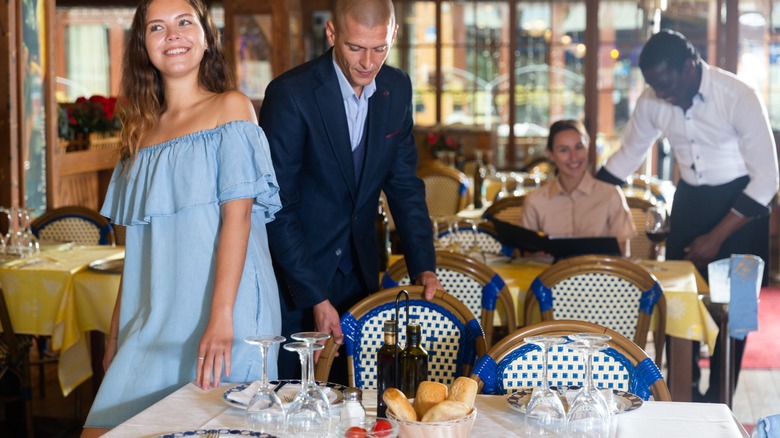
As you have clearly been shown so far, fine dining etiquette is not always as easy as one-two-three. It's not even clearcut when it comes to numbers one or two. We're getting into the nitty gritty here, regarding bathroom etiquette when fine dining. There's that all too true saying, "When you gotta go, you gotta go!" But, at least when fine dining, how you excuse yourself from the table to go is what separates those who are used to upscale environments from those who are not.
While it may feel like an explanation is fitting when taking your leave to get some relief, fine dining etiquette deems any discourse surrounding pre-sewer happenings as absolutely not necessary, and actually quite undesired. Here, less is definitely more, and a simple "excuse me" when scootching your chair from the table avoids that TMI territory. After all, no one needs a play-by-play of your field trip to the powder room (much less the reminder of body functions while trying to enjoy their amuse-bouche).
As we said before, fine dining gets a little squeamish when it comes to any reference to those private, but very human, functions. While we all know bathrooms exist, and things do indeed happen behind those closed doors — but they don't need to be discussed.
9. Correctly position napkin when leaving the table
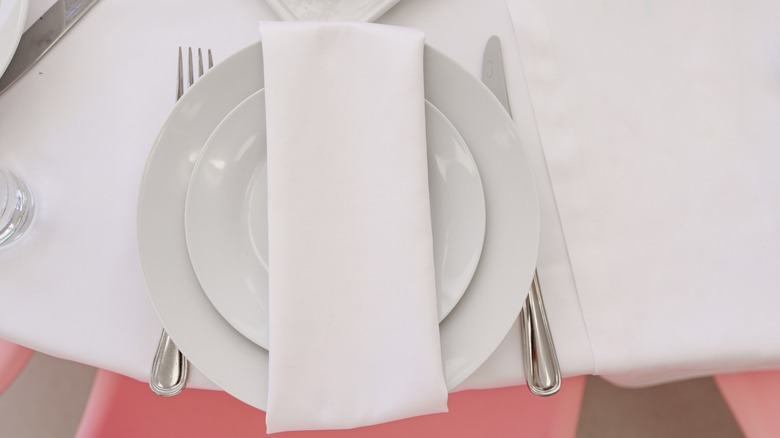
Even in the magical world of fine dining, the servers do not have superpowers. Meaning, your waiters are not mind readers, so you must at least give them cues to ensure all things flow smoothly when fine dining. We have already discussed how not every message is conveyed aloud while eating among the upper echelon. In fact, some of the most vital information is delivered wordlessly, with a napkin of all things. Specifically, where you place said napkin when stepping away from the table. Before you ever push back your chair, you must make a choice: Are you an Elvis or the Terminator? Elvis "has left the building," but the Terminator "will be back." The napkin is how you make that distinction crystal clear, without uttering a word.
If you're just excusing yourself (for the restroom, a phone call, or quickly stepping outside), your napkin belongs on your chair. That seat placement lets the staff know in no uncertain terms: Don't touch anything, we're still working on this meal. When you place that same napkin on the table, that's when you're unleashing Elvis, letting everyone know you've finished eating and have taken the night's final bow. Staff will know the evening's culinary curtain has closed, and plates may be cleared. So when you stand up, choose wisely.
10. Leave one small bite behind
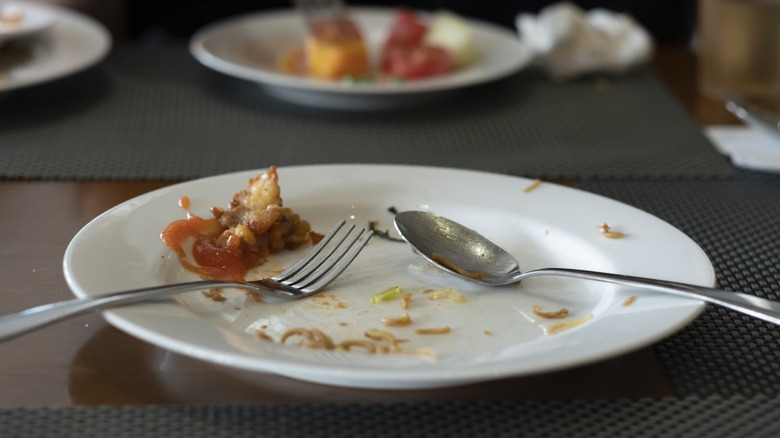
If there is one etiquette rule on this list that may ruffle more than a few feathers, it's that proper fine dining protocol is leaning one small bite behind. For those raised according to the near-holy "clean your plate" rhetoric, leaving even one crumb might feel downright criminal.
Yet in the world of fine dining, polishing off every last morsel might be sending an unintended (and unflattering) message. In many high-end restaurants, especially those outside the United States), leaving a bit on your plate signals you were satisfied by the meal entirely — so much so that you didn't even need to finish it. It is saying kudos to the chef, and that you felt properly fed versus feeling under-served via stingy portions.
To be fair, we must note that this is one of the rules that exists in a bit of the gray area. There probably won't be a whole uproar if you do decide to finish every bite of that Beef Wellington. This is especially the case in more modern fine dining establishments. Still, when we are talking about the old school establishments, as well as certain international ones, practically "licking" the plate clean still reads as "common" behavior.
11. Hosts are generally expected to pay
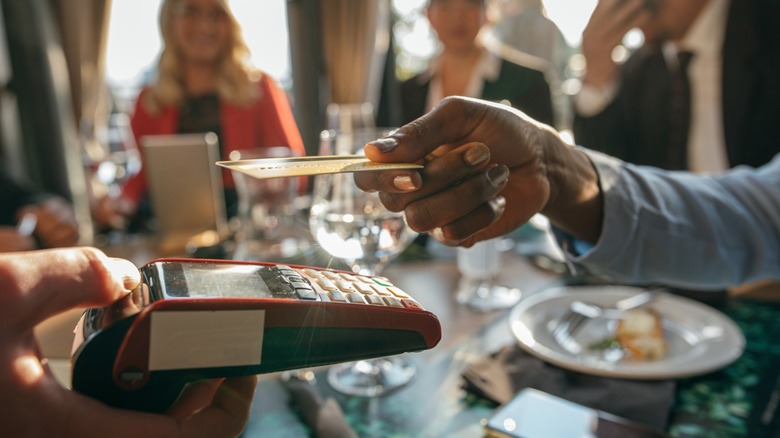
We've covered the best way to split the bill at a restaurant, but for fine dining, it's an entirely different ball game. In fine dining, the host pays — period. If you did the inviting or organizing, the bill is generally considered your responsibility. So, if you're hosting a dinner at a fancy establishment, make sure you can pony up for that high-priced wine and filet mignon.
We (mostly) speak in jest, but we are completely serious when it comes to the expectation that the host should cover the bill. Now, this may sound strange to some, but this rule isn't even entirely about money. It's also about care — as in, it's the host's job to "take care" of each guest and make sure they feel relaxed and worry-free from the first bite to the final wave goodbye. So, you know what that means: There's no room for anxiety about who is going to reach for the check come closing time.
In an ideal world, in fact, payment will already have been taken care of discreetly ahead of time, so no check would even be seen, thus eliminating any chance of anxiety (or awkwardness) entirely. So, in summary: If you invite folks to your fancy table, don't pass the plate.